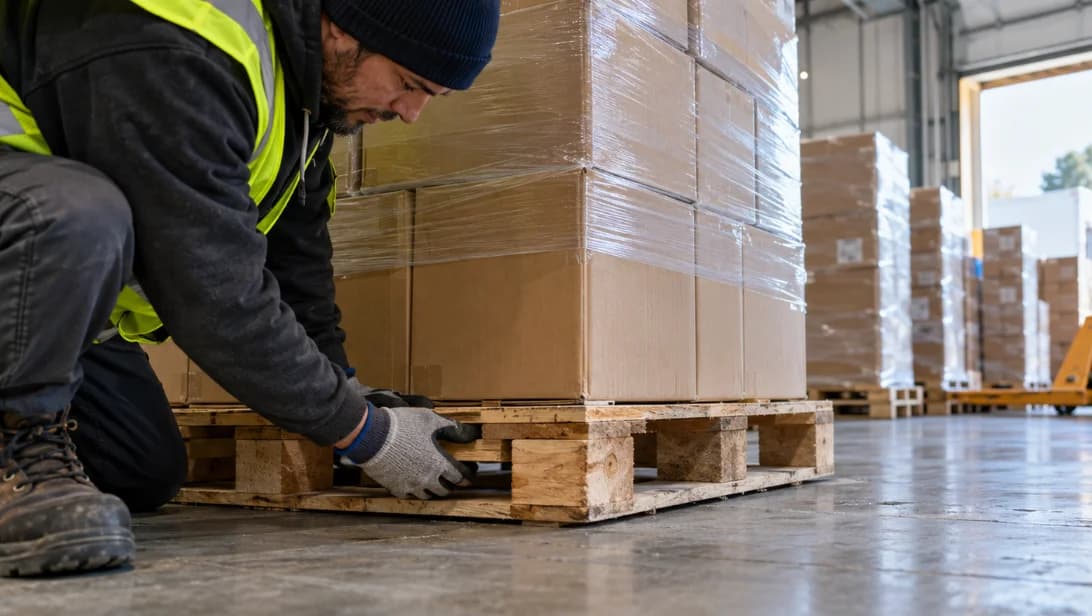
A 3PL warehouse can reduce pallet mix-ups by setting account-specific pallet rules before the first customer shipment arrives. Good 3PL pallet onboarding clarifies which pallets belong to the customer, which the warehouse can reuse, and which approved wood pallets can go into a recycling stream. It also gives each shift a clear place to check when a pallet’s status is uncertain.
At The Pallet Squad, we work with warehouses and distribution centers on pallet pickup and drop trailer recycling. A drop trailer can give unwanted pallets a regular destination, but the warehouse first needs a process for confirming that those pallets are cleared for removal.
Start with pallet rules for the new account
During account setup, document the pallet requirements that affect receiving, storage, outbound orders, and returns. Don’t assume a new customer follows the same rules as an existing account. One may expect pallets to return with freight, while another may allow the warehouse to reuse suitable pallets for that account.
Ask the customer and your operations team to clarify:
- Which pallets the customer owns or expects back
- Whether the warehouse can reuse inbound pallets for outbound shipments
- Any required pallet size, grade, marking, or condition
- How to handle damaged or unidentified pallets
- Who approves a pallet for removal or recycling
Use the customer’s contract and operating instructions as the source for account-specific requirements. If the documents leave a question open, resolve it before go-live and record the decision where receiving and warehouse staff can find it.
Map the pallet path from receiving to removal
A new account’s pallet rules should follow the pallet through the building. Write down what happens when pallets arrive, when employees unload or move product, and when pallets leave active use. Include return shipments and any customer-specific exchange process.
This map can be brief. It needs to show the next step for each pallet category, along with the person or team responsible for moving it. For example, a pallet that needs customer approval could go to a marked review area. A pallet cleared for reuse could move to the account’s designated stock. An unwanted pallet approved for recycling could move to the facility’s collection area.
The exercise often reveals gaps before they become daily workarounds. If the instructions don’t say where to place an unidentified pallet, employees will make that decision during a busy shift. A defined hold location gives them a safe next step while someone checks the account’s requirements.
Mark pallet areas so employees can act quickly
Set up the physical locations before the first shipment arrives. Mark areas for customer return pallets, approved reusable pallets, pallets awaiting review, and wood pallets cleared for recycling. The layout will depend on your docks and floor plan, but each zone should have a clear label and enough room to use it as intended.
Use the same account names and category labels in signs, work instructions, and inventory records. When labels vary from place to place, employees have to interpret them instead of following a consistent rule.
Keep pallet zones out of active traffic routes. OSHA’s warehousing hazards and solutions guidance discusses warehouse hazards and material handling. Follow your facility’s safety procedures when assigning storage areas and travel paths.
Train the teams who handle the first loads
Share the pallet instructions with receiving, inventory control, forklift operators, supervisors, and anyone assigned to pallet removal. A short walkthrough at the actual work area can make the rules easier to use than an email alone.
Use a sample pallet or shipment to show how the team should check its status. Explain what to do when the pallet has no clear marking, the paperwork is incomplete, or two instructions appear to conflict. In those cases, employees should place it in the review area and contact the person named in the account instructions.
A new account may go live across different shifts or work areas. Include the pallet process in shift handoffs so employees don’t have to rely on whoever happens to be nearby for an answer.

Keep the recycling stream separate from customer inventory
A recycling collection point should receive only pallets the operation has approved for removal. Customer pallets that require return, reuse, or review should stay in their assigned zones until someone confirms their status.
This rule matters when several employees load pallets over the course of a shift. One unclear pallet in a collection area can easily end up in a trailer with approved material. Put the eligibility rule near the loading area and explain how to handle anything that falls outside it.
For facilities with regular volumes of unwanted wood pallets, our drop trailer pallet recycling service places a trailer at the facility for ongoing collection. Your team loads approved pallets as they accumulate, and we coordinate pickup and trailer exchange based on the service arrangement.
Check the process after the account goes live
The first few weeks show whether the written rules work on the floor. Review the new account’s pallet zones and watch how employees handle incoming shipments. Ask whether anyone had to stop and guess about pallet ownership, reuse, or removal.
If pallets repeatedly end up in the review area, find out why. The customer may need to clarify a requirement, the receiving paperwork may need another field, or a zone label may be hard to see. Update the instructions when the team finds a real gap, then communicate the change to every affected shift.
Keep this review specific to the account’s workflow. A broad warehouse policy can set the baseline, but it may not cover a customer’s return terms or special pallet specification.
Plan drop trailer service around approved volume
Once your team has a reliable way to identify eligible pallets, estimate how many unwanted wood pallets the account and the rest of the facility generate over a typical week. Consider whether volume changes during busy periods and where a trailer can sit without disrupting yard activity.
That information gives your pallet service provider a clearer picture of the location and pickup needs. The Pallet Squad’s Nashville pallet services page includes pallet pickup and drop trailer options for businesses in the area. We coordinate pallet services nationwide.
If you’re planning a program, request a pallet service quote with your location, approximate quantity, common pallet sizes, and how often approved surplus accumulates. We can review those details with you as we discuss the pickup or drop trailer setup.
Make pallet rules part of account launch
A new 3PL account needs clear instructions for the pallets that arrive with freight, move through the warehouse, and leave active use. Document the customer’s requirements, assign visible zones, train the teams handling the pallets, and keep the recycling stream limited to material approved for removal.
That work gives employees a usable process from the first shipment. It also gives a drop trailer program a clean starting point: the trailer receives eligible unwanted wood pallets, while customer pallets with another destination stay in the proper stream.