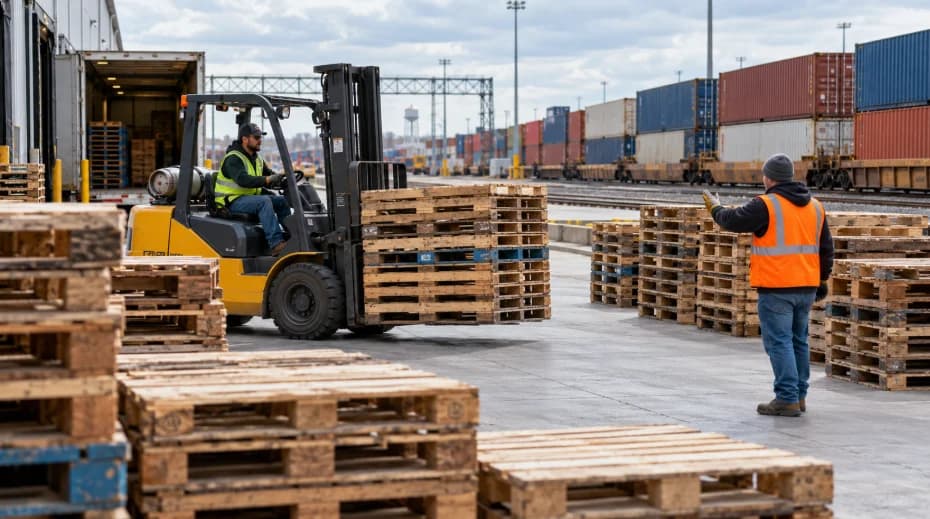
When intermodal freight arrives in surges, the number of used wood pallets at a warehouse can climb just as quickly. Joliet pallet recycling works best when the facility has a clear process for sorting eligible pallets, moving them out of active work areas, and arranging removal that matches the pace of incoming freight. At The Pallet Squad, we coordinate pallet pickup and drop trailer service for businesses nationwide, including facilities that need to plan around changing volume.
A surge can leave a warehouse with more pallets than its usual staging area can handle. The right removal setup depends on how often those peaks occur, how many pallets the operation generates, and whether the yard has room for a trailer.
Why Intermodal Freight Surges Affect Pallet Flow
A warehouse may receive freight in waves rather than at an even daily pace. After a concentrated period of unloading, employees may have stacks of empty or unwanted pallets to move while they’re also clearing dock space and processing the next loads.
That creates several decisions at once: which pallets can return to use, which need to stay available for a customer or carrier, and which are cleared for recycling or removal. If those decisions happen only after a pile forms, employees may move the same pallets multiple times or use space needed for receiving and outbound staging.
Start by tracking the pattern through a typical operating period. Note when pallets accumulate, where they come from, and how quickly the staging area fills during a busy week. Compare that with a quieter period. This gives your team a better basis for choosing between scheduled pickup and a drop trailer.
Separate Pallets by Their Next Step
Before sending pallets for removal, establish simple categories that employees can follow. For example, a facility might separate:
- Pallets cleared for recycling or removal
- Pallets approved for reuse
- Pallets that need an ownership or condition check
Keep pallets with uncertain ownership or customer requirements out of the removal stream until someone confirms their status. This matters in intermodal operations where freight may pass between carriers, customers, and warehouse teams. A clear hold area gives employees a place to put questionable pallets without treating them as scrap.
Use the same labels and instructions across shifts. A short written rule should tell employees which pallets can go to the collection area, where to leave pallets awaiting review, and who can approve an exception. That reduces guesswork when a surge brings in more freight than the day shift can process.
Choose a Removal Setup That Fits the Volume
A one-time or recurring pickup may suit a warehouse that sees occasional surpluses and has enough room to stage pallets between collections. Your team can gather the pallets in an accessible area and arrange removal based on the facility’s needs. Our pallet pickup service covers one-time and recurring removal for businesses with used, excess, or unwanted wood pallets.
When pallet volume continues week after week, a drop trailer may offer a more consistent collection point. We place an enclosed trailer at a qualifying facility, and the warehouse team loads eligible pallets as they accumulate. When the trailer is ready, we coordinate removal and exchange according to the service arrangement. See how our drop trailer pallet recycling service works for high-volume facilities.
A surge alone doesn’t determine which option fits. If the warehouse handles one unusually large inbound project, a planned pickup may be sufficient. If each freight peak leaves a growing stack that returns shortly after pickup, a drop trailer may be worth evaluating.
Plan the Trailer Around Yard and Dock Activity
A drop trailer needs a practical place to sit. Before arranging service, review the yard during a busy shift, not only when traffic is light. Check whether a trailer location would interfere with dock doors, active trailer staging, equipment routes, or the space drivers need to access the yard.
Also trace how employees would move pallets from their point of origin to the trailer. A location that is easy for a driver to reach may create extra forklift travel for warehouse staff. A location close to receiving may be convenient for employees but unsuitable if it blocks a working dock or staging lane.
Your facility should assess placement under its own safety procedures. OSHA’s warehousing hazards and solutions guidance covers common warehouse concerns involving material handling, powered industrial trucks, and storage areas. Use your site’s layout and operating rules to decide where staging and loading can happen safely.
Set a Plan for the Next Freight Peak
A recycling process should still work when the normal pallet volume changes. Review the previous busy periods and estimate how many eligible pallets accumulated during each one. If the operation has seasonal or customer-driven volume changes, include those in the estimate you share when discussing service.
Assign one person or role to monitor the collection area or trailer. That person can report when capacity is getting low and coordinate the next pickup or exchange. The rest of the team needs to know what to do if a surge fills the approved staging space before removal occurs.
Keep a basic record of pallet counts, pickup dates, and any periods when the usual process fell behind. Those details can show whether the current setup matches the facility’s actual flow or needs adjustment.
Get Joliet Pallet Recycling Details Ready
Before requesting service, gather the facility address, an approximate pallet count, common sizes, general condition, and how frequently pallets accumulate. If the volume changes during freight surges, describe both a typical week and a peak week. Also note where a trailer could sit, if you’re considering a drop trailer.
The Pallet Squad coordinates pallet pickup and drop trailer programs nationwide. Joliet isn’t listed in our online location directory, so contact us with your exact facility address to confirm availability and discuss a suitable setup. A pallet service quote request can include the location and pallet details our team needs to review your request.
When freight volume rises, a defined pallet process keeps employees from having to solve the same pileup from scratch. Track the pattern, separate pallets by their next step, and choose removal based on how consistently the volume returns.