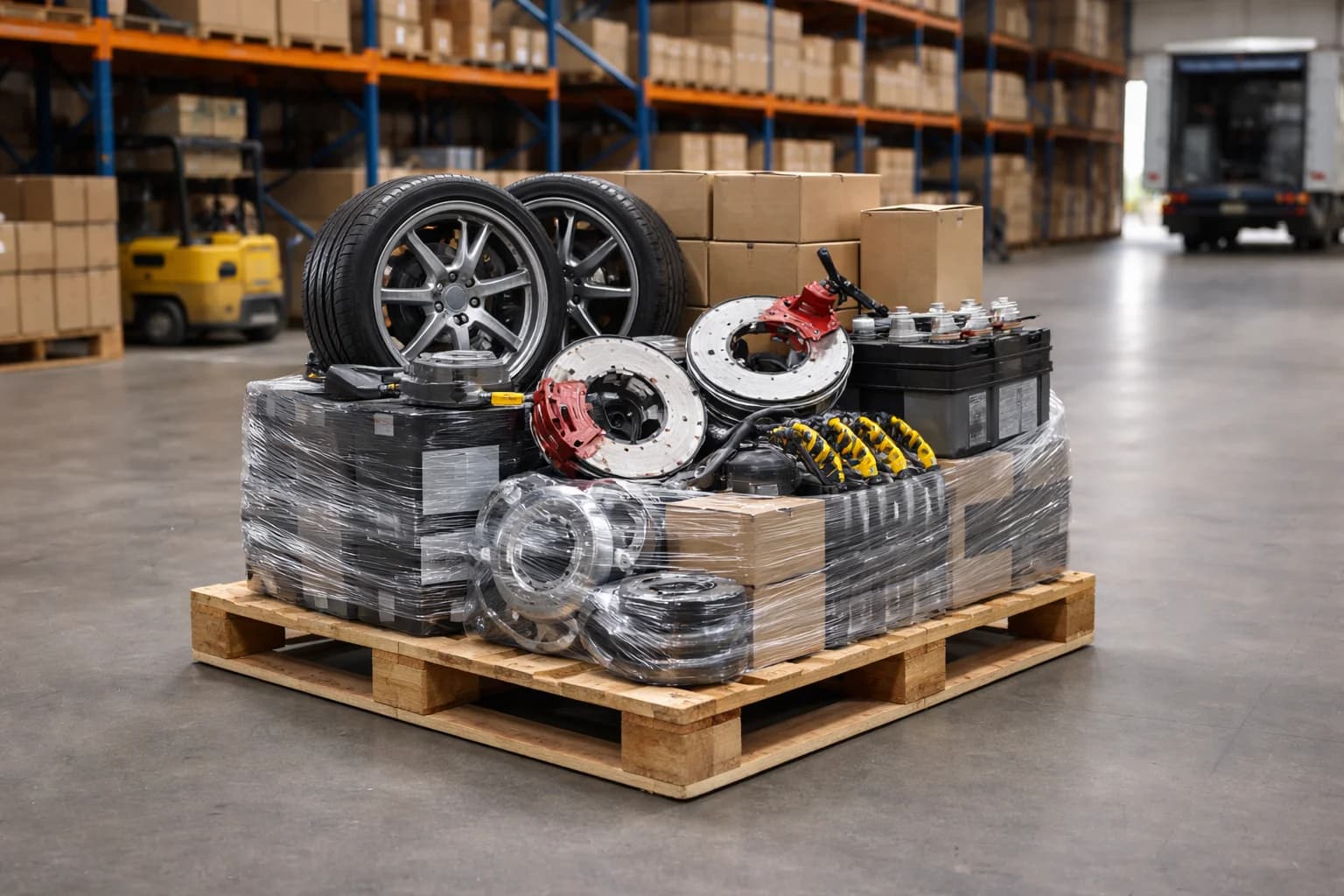
Few industries move products as heavy, diverse, and globally distributed as the automotive sector. From engines and transmissions to bumpers, electronics, castings, and small hardware kits, every component must flow through a highly synchronized supply chain where downtime is measured in thousands of dollars per minute.
Behind this movement is a quiet, but essential, piece of equipment: the automotive pallet.
Automotive pallets are engineered to handle irregular shapes, dense materials, and sensitive components while maintaining safe handling across assembly plants, sequencing centers, suppliers, distribution hubs, and global freight networks. Choosing the right pallet design is critical to preventing damage, improving handling efficiency, and keeping production lines running without interruption.
1. Why Automotive Supply Chains Depend on Specialized Pallets
Automotive manufacturing has unique challenges compared to general consumer goods:
- Heavy loads such as engines, gearboxes, brake assemblies, and cast components
- Odd dimensions that don’t align with standard pallet sizing
- Just-in-time (JIT) and just-in-sequence (JIS) delivery models with tight timing
- High handling frequency across multiple facilities
- Strict safety requirements to protect workers and equipment
- Multi-modal transportation (trucks, containers, rail)
This complexity requires pallets that are durable, consistent, and tailored to each product’s footprint and weight distribution.
Automotive facilities can’t afford cracked boards, weak stringers, or poorly sized pallets that cause instability. One faulty pallet can disrupt everything upstream and downstream.
2. Key Features of Effective Automotive Pallets
Strength for High-Weight Loads
Automotive components often weigh far more than traditional packaged goods.
Effective automotive pallets include:
- Thicker deck boards
- Reinforced stringers
- Close board spacing for even load distribution
- Full perimeter bases for stability with tall or heavy items
These specifications prevent deflection and reduce the risk of fork-entry damage.
Support for Odd-Shaped or Irregular Components
Unlike uniform boxes, automotive parts come in:
- Curves
- Cast shapes
- Sharp edges
- Uneven weight distribution
- Long or bulky assemblies
Custom-sized wood pallets can be tailored to the load, ensuring:
- Full footprint support
- No product overhang
- Safer stacking and handling
This reduces rework and significantly minimizes product damage.
Compatibility with High-Velocity Material Handling
Automotive warehouses rely heavily on:
- Forklifts
- AGVs
- Tuggers
- Conveyor-fed lines
Reliable automotive pallets must perform well under repeated handling, including:
- Multiple touches per day
- Long travel distances
- Quick lift-and-turn movements
- Racking and staging environments
Durability prevents breakdowns that cause line stoppages or slowdowns.
3. Automotive Parts That Require Pallet Precision
Different automotive components have unique pallet demands:
Engines & Transmissions
- Very heavy, high point loads
- Often require reinforced bases or custom cradling
Body Panels & Bumpers
- Oversized and prone to scratching
- Need full-deck support and anti-shift design
Suspension & Brake Components
- Dense, irregular shapes
- Require strong boards and strategic spacing
Electrical Components & Electronics
- High sensitivity
- Stability and secure palletization are essential
Small Parts & Kitting
- High volume
- Need consistent palleting for sequencing operations
Each application benefits from pallet designs that match the product, not the other way around.
4. Custom Pallet Solutions for Automotive Manufacturing
The most efficient automotive operations use custom-size pallets designed specifically for each product line.
Benefits include:
- Improved load stability
- Reduced damage to high-value components
- Better trailer and container utilization
- Easier integration with racking and sequencing systems
- Safer handling by plant personnel
Custom pallets often support lean manufacturing principles by enabling standardized material flow and more predictable throughput.
5. The Role of Pallet Recycling in Automotive Supply Chains
Automotive industries operate massive pallet volumes, which means recycling and retrieval programs are essential for cost control and ESG goals.
A strong automotive pallet recycling program provides:
Cost Savings
Refurbished pallets reduce the need for constant new pallet purchases.
Consistent Quality
Repaired pallets meet standardized specs for weight and handling.
Waste Reduction
Damaged pallets are sorted, repaired, or broken down for reclaimed lumber.
Inventory Control
Retrieval programs prevent pallet shortages and yard overflow.
For automotive suppliers and OEMs, closed-loop pallet programs improve supply continuity across multi-facility networks.
6. Why Multi-Site Automotive Suppliers Need Coordinated Pallet Programs
Automotive supply chains often stretch across:
- Several Texas manufacturing plants
- Tier 1 and Tier 2 suppliers across multiple states
- Distribution centers feeding assembly lines
- Export operations shipping to Mexico or overseas plants
To stay efficient, these networks require:
- Standard pallet specifications across facilities
- Reliable delivery schedules to support JIT/JIS
- Consistent recycled pallet quality
- Centralized procurement combined with local responsiveness
- Retrieval and repair programs to keep pallets in circulation
A pallet supplier capable of supporting multiple states or regions becomes a strategic partner, not just a vendor.
7. Safety Matters: Protecting Workers and High-Value Parts
Faulty pallets put more than products at risk — they endanger employees and equipment.
Strong automotive pallets prevent:
- Leaning or collapsed stacks
- Forklift accidents due to broken boards
- Load shifts during transport
- Racking failures from inadequate support
Safer pallets lead to safer operations and lower incident rates.
Automotive supply chains are complex, high-speed, and demanding — and the pallets that support them must be engineered to keep pace. Whether moving engines, brakes, panels, or mixed components, the right automotive pallets ensure:
- Stronger load stability
- Safer handling
- Lower product damage
- Better throughput
- More reliable material flow across multi-site networks
A well-designed pallet program doesn’t just support automotive operations — it optimizes them.
Contact The Pallet Squad
Need durable, high-performance automotive pallets for engines, components, or manufacturing workflows?
Contact The Pallet Squad to build a custom pallet program that supports safe, efficient movement across your entire automotive supply chain.