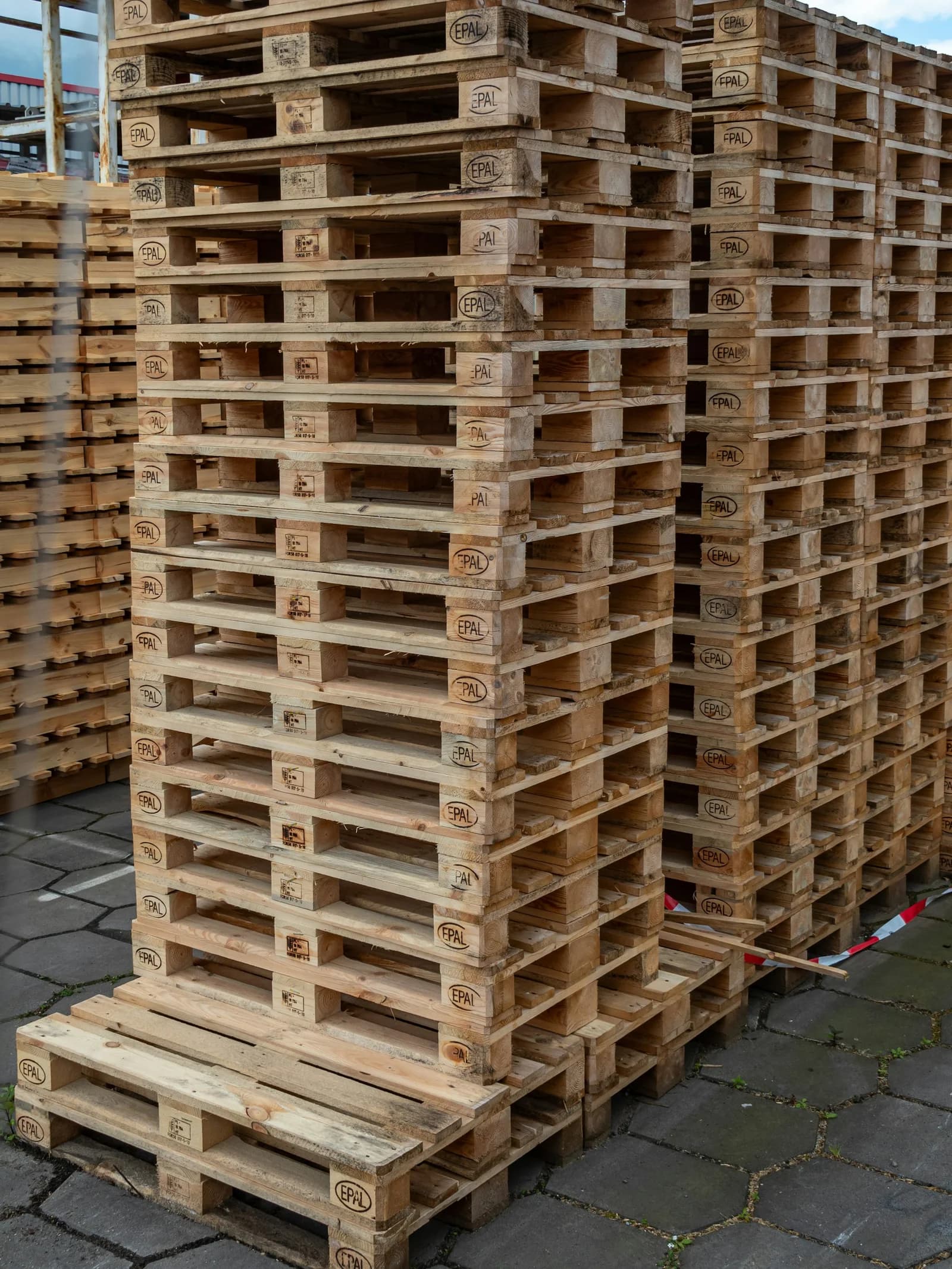
After pickup, wood pallets are assessed for condition and reuse. Pallets that remain usable may return to circulation as recycled pallets, and some that need repair can be restored first. Pallets that aren’t suitable for reuse may go through a wood recycling route. The exact next step depends on the pallet’s condition, size, quantity, location, and the service arrangement.
At The Pallet Squad, we pick up unwanted wood pallets and coordinate pallet recycling for businesses nationwide. Here’s what generally happens after a load leaves your facility, and why not every pallet follows the same path.
What happens to pallets after pickup?
Pickup moves pallets from your facility into a recovery process. The load is reviewed to determine which pallets can be reused, which could be repaired, and which are better suited for recycling.
That distinction matters because a pallet with a broken board may still be repairable, while one with extensive damage may not be worth restoring. Size, condition, quantity, and current demand also affect whether pallets have resale value. Our used pallet selling process explains the details we consider when reviewing a load.
A pickup doesn’t automatically mean every pallet will be resold or recycled in the same way. The load’s contents and the agreed service determine the appropriate route.
Reusable pallets may return to circulation
Pallets that meet reuse requirements can reenter the supply stream. Before that happens, pallets are evaluated for condition and separated according to their grade and repair needs.
Some used pallets need little work before another business can use them. Others require repairs, such as replacing a damaged board or addressing a structural issue. If the repair makes sense for the pallet and its intended use, the restored pallet can go back into circulation.
This is one reason a stack of used pallets isn’t automatically scrap. A pallet may show ordinary wear and still be usable. The key question is whether it remains structurally sound or can be repaired to meet a suitable standard.
Damaged pallets may be repaired or recycled
When a pallet can’t safely return to service as it is, a recycler evaluates whether repair is practical. A small repair may restore a pallet’s usefulness. Severe damage, rot, contamination, or missing structural components can make repair unsuitable.
Pallets that cannot be reused as complete units may still contain recoverable wood. Depending on the condition and available recycling options, wood may be separated or processed for another use. North Carolina’s environmental agency describes several uses for wood chips from recycled pallets, including landscape mulch and animal bedding. Actual options vary by location and material.
The U.S. EPA’s waste management hierarchy places reuse ahead of recycling when reuse is practical. That principle fits pallet recovery: keep a serviceable pallet in use when it meets the next application’s needs, and recycle the material when it no longer works as a pallet.
Why pallets from one pickup can have different outcomes
A warehouse load may include several pallet sizes, grades, and conditions. One group may be reusable, another may need repair, and a third may be unsuitable for either. Those differences affect how the load is evaluated and what happens next.
A few details can make the review more accurate:
- Pallet dimensions and general style
- Approximate quantity
- Overall condition, including visible damage
- Whether the pallets belong to your business
- Where the pallets are located and how they can be accessed
Ownership is especially important. Some pallets belong to rental or pooling companies and need to return to their owners. Keep those separate from pallets your business owns until you confirm the right process.
Photos and a realistic count give us a better picture of the load before pickup. If your pallets accumulate regularly, tell us how often that happens, too. That can inform whether one-time pickup, recurring removal, or a drop trailer pallet recycling program fits the volume.
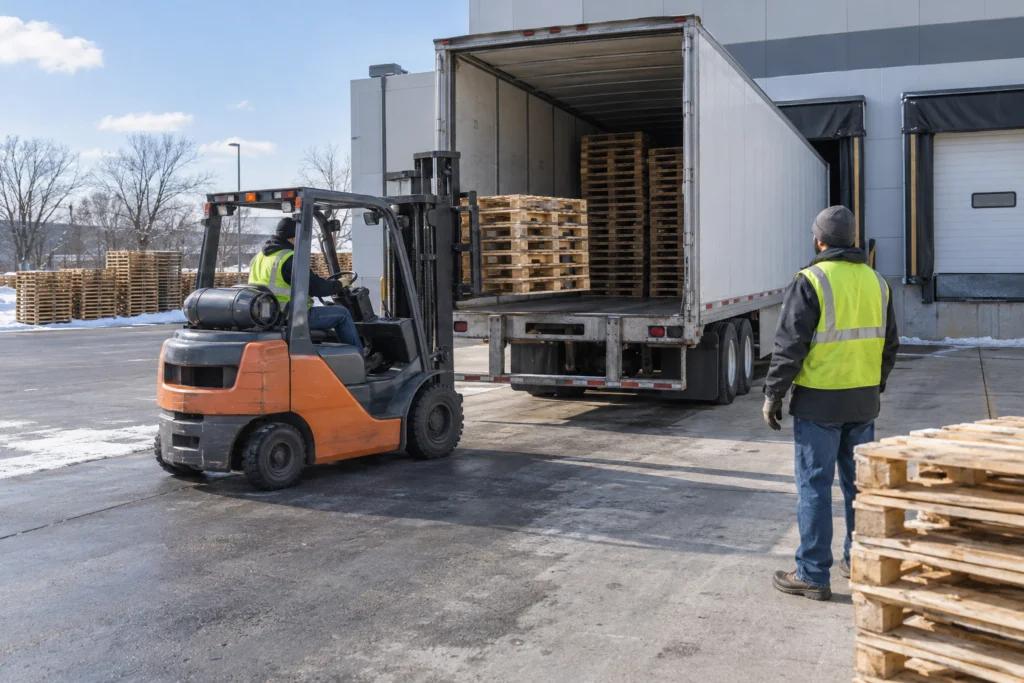
What happens with a drop trailer pickup?
With drop trailer service, an empty enclosed trailer stays at a qualifying facility while the team loads unwanted wood pallets as they accumulate. When the trailer is ready, we coordinate its pickup and replacement according to the service arrangement. The trailer serves as a collection point; the pallets still need to be reviewed and routed based on their condition and the agreed terms.
The Pallet Squad’s drop trailer page lists capacity of up to 600 pallets per trailer, depending on pallet type and how they’re loaded. Steady volume can make this a practical collection setup for warehouses and distribution centers that generate pallets throughout the week.
For details about one-time and recurring removal, visit our commercial pallet pickup service. If your operation produces a consistent volume, include your location, approximate quantity, and pickup frequency when you request a quote.
What to ask before scheduling pallet pickup
Before pallets leave your property, get clear on which pallets the pickup covers and how the service handles them. Ask whether reusable pallets could qualify for purchase, whether damaged pallets can be included, and whether any fees apply to the load.
It also helps to confirm what information the provider needs and where to stage pallets for access. Keep unrelated waste out of a pallet trailer, and flag pallets with unclear ownership or unusual condition before employees load them.
At The Pallet Squad, we coordinate pallet pickup, buyback, and drop trailer service for businesses nationwide. Send us the pallet details and photos, and we’ll review the load and discuss the available service arrangement. Knowing the likely route before pickup makes it easier to manage the pallets on your property and set expectations for what happens next.