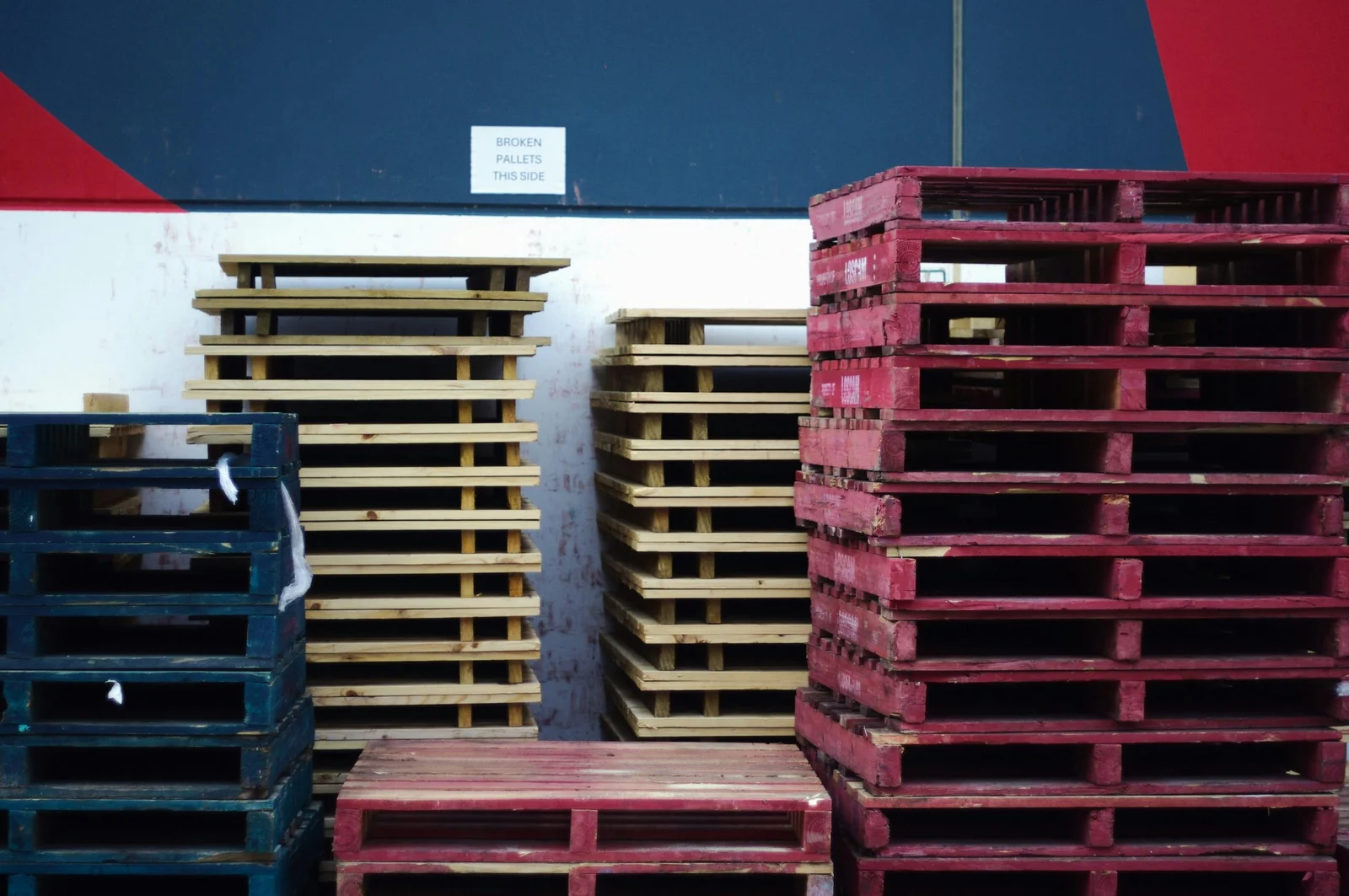
When businesses evaluate pallet purchases, many focus primarily on the upfront price. After all, a pallet is just a simple platform used to store and move goods, right? Not quite. The true cost of pallets involves more than just what’s printed on the invoice. Buyers need to consider lifespan, the potential for product damage, and end-of-life disposal costs, factors that can significantly impact operational budgets and supply chain efficiency.
The Pallet Lifespan: Durability Pays Off
It’s easy to assume that the cheapest pallet is the best deal, especially when ordering in bulk. But short-term savings can turn into long-term losses if the pallets don’t last.
- Wood pallets can generally be reused between 5 and 10 times before needing repair or replacement, depending on their quality and how they’re handled.
- Plastic pallets, while more expensive upfront, can often last for hundreds of trips and are more resistant to weather, chemicals, and moisture.
- Composite or metal pallets, though typically used in niche applications, offer the longest lifespan and require minimal maintenance.
Choosing a more durable pallet type might cost more at the outset, but it often saves money by reducing the frequency of replacements.
Hidden Costs: Damaged Goods and Disruptions
One of the most overlooked aspects of pallet purchasing is how the wrong pallet can lead to product damage. Cracked slats, exposed nails, or unstable structures can cause:
- Shifting loads during transport results in crushed or broken items.
- Warehouse accidents are due to unstable stacking or collapsing pallets.
- Rejected shipments, especially in retail or export settings where damaged goods are a nonstarter.
This kind of damage can ripple across your logistics operation, adding costs for repacking, refunds, reshipping, or even loss of customer trust. In other words, poor-quality pallets can sabotage your bottom line.
The Disposal Dilemma: Paying at the End of the Road
Disposal is another cost that rarely gets factored into pallet purchasing decisions. When pallets reach the end of their life, companies are left with two choices: dispose of or recycle.
- Landfilling pallets involves disposal fees, and depending on your location, those costs can add up quickly. Wooden pallets, in particular, take up significant landfill space.
- Recycling or pallet buyback programs offer a more sustainable and often more economical solution. Many providers will haul away broken or old pallets for refurbishing or material recovery, which can reduce your environmental impact and lower disposal costs.
Forward-thinking companies are now integrating closed-loop pallet systems, where pallets are continuously reused, repaired, and reintroduced into the supply chain, minimizing both costs and waste.
What Buyers Should Really Consider
When assessing the cost of pallets, ask yourself:
- How many uses can I reasonably expect from this pallet?
- What are the risks of damage to my products if I choose a lower-grade option?
- What will it cost me to dispose of or recycle these pallets at the end of their life?
- Is there a more sustainable or long-term solution that could reduce my total pallet spend?
Final Thoughts
A pallet might look like a simple wooden or plastic frame, but its impact on your business is far-reaching. Choosing the cheapest option without considering lifespan, performance, and disposal is a short-sighted strategy that can lead to unexpected expenses down the road.
To truly optimize your logistics budget, take a holistic view of the true cost of pallets; it’s a small change in thinking that can deliver big results for your bottom line.