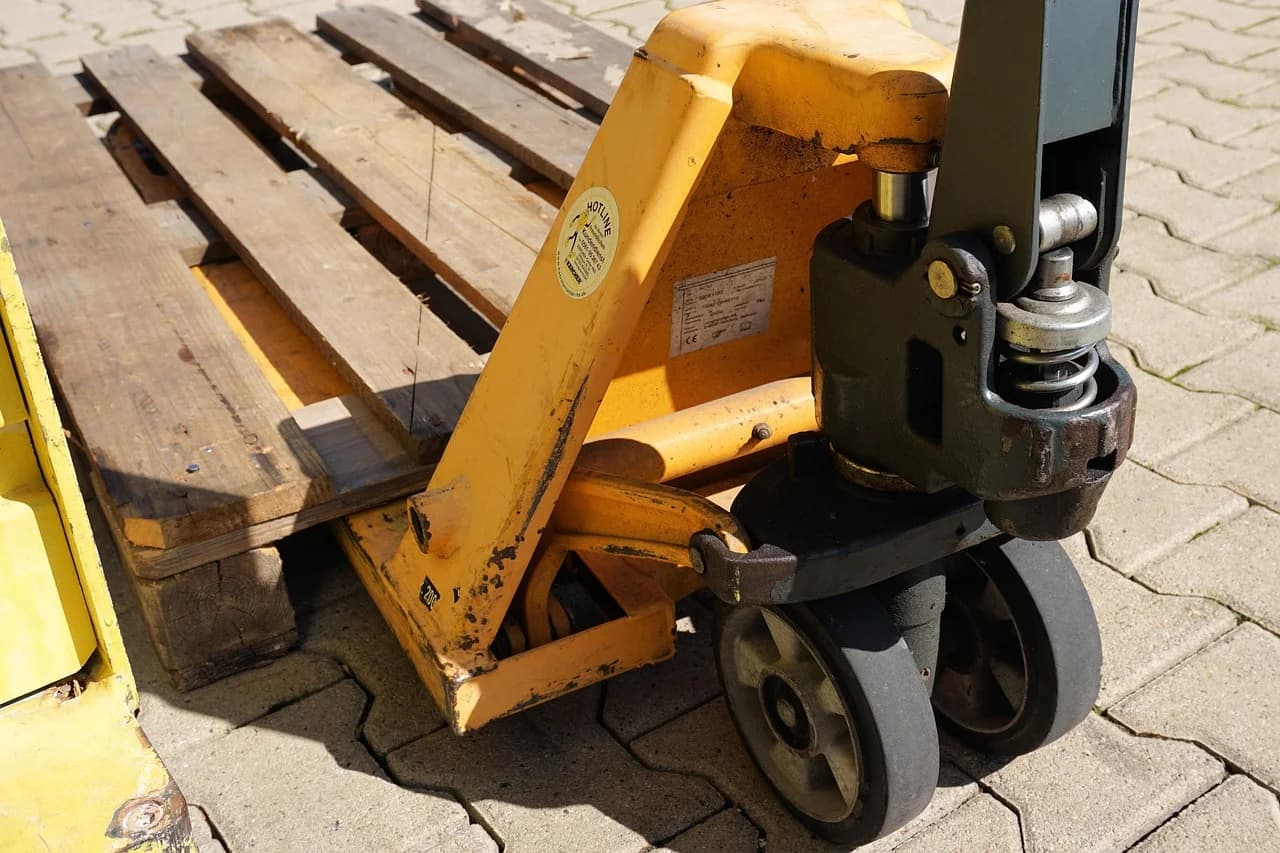
When you’re moving steel plate, machine bases, gearboxes, pipe, or other dense industrial products, “standard pallets” stop being good enough. Loads get heavier, centers of gravity get uglier, and the risk of damage or failure goes way up. That’s when you need to start thinking in terms of heavy duty pallets and choosing them as carefully as you choose your lifting equipment or racking.
The wrong pallet for a 4,000–8,000 lb load isn’t just an inconvenience. It can bend, crack, or collapse, leading to:
- Equipment damage
- Lost product
- Unsafe conditions for operators
This guide walks through how to evaluate, spec, and select heavy duty pallets specifically for steel, machinery, and industrial loads, so you can match design and material to real-world conditions instead of guesswork.
1. What Makes a Pallet “Heavy Duty”?
“Heavy duty pallets” aren’t just regular pallets with a thicker deck board. They’re engineered around:
- Higher load ratings (static, dynamic, and racking)
- Reinforced deck and stringer/block designs
- Stronger materials (higher-grade lumber, engineered wood, reinforced plastic, or metal)
- Better stiffness and deflection control under concentrated point loads
For context, a typical 48″ x 40″ wood pallet often handles around 4,000 lb static and 2,500 lb dynamic in general-duty designs, depending on build and species. Heavy duty designs push beyond that, sometimes significantly, but the right choice depends entirely on how the load is applied and handled.
2. Start With the Load: Weight, Footprint, and Handling
Before you even look at pallet catalogs, get crystal clear on what you’re putting on them and how they’ll move.
Key questions:
- How much does the load weigh?
- Single machine base at 3,500 lb?
- Steel bundle at 5,000+ lb?
- Stacked product up to 8,000 lb static on the floor?
- What does the footprint look like?
- Full-deck coverage (evenly distributed), or
- Point loads from skids, feet, or small contact patches?
- How will it be handled?
- Forklift only, or also pallet jacks?
- Long travel distances or just short moves?
- Frequent moves (dynamic stress) vs mostly static storage?
- Where will it sit?
- On the floor (static)
- In selective racking with full support
- In racks supporting just the edges of the pallet (edge-rackable condition)
The more concentrated and dynamic the load (for example, a 4,000 lb machine on four feet), the more you should lean toward reinforced or specialty heavy duty pallets and higher safety factors.
3. Understanding Load Ratings: Static, Dynamic, and Racking
Heavy duty pallet selection lives and dies on load ratings, so it’s worth a quick refresher.
- Static load – Maximum weight a pallet can safely hold while sitting at rest on a flat surface (no movement). Heavy-duty designs can easily exceed 6,000–10,000 lb static, depending on material and construction. The Daily Iowan+1
- Dynamic load – Maximum weight while the pallet is being lifted or moved by a forklift or pallet jack. Typical heavy-duty dynamic ratings range roughly 3,000–5,000 lb, but some plastic or metal pallets can go higher when properly designed.
- Racking load – Maximum weight a pallet can support in a rack where only the edges are supported (no full deck support). Racking capacities are usually significantly lower than static and dynamic and are often the limiting factor.
For steel, machinery, and industrial loads, dynamic and racking loads are often more critical than static, because:
- The pallet is moved frequently, and
- Many facilities use racking that only supports the pallet on two beams.
Practical rule of thumb
Choose a pallet rated well above your maximum expected dynamic load, especially when dealing with point loads or imperfect handling conditions.
4. Material Choices for Heavy Duty Pallets
There’s no one “best” material, the right choice depends on load type, environment, and budget. Here’s a structured way to think about it:
Heavy-Duty Wood Pallets
Best for:
- Steel components, castings, building materials
- Machinery bases and crated loads
- General industrial applications
Pros:
- High load capacity with the right design and lumber grade
- Repairable and customizable (extra deck boards, thicker stringers, blocks)
- Cost-effective for high-weight, low-hygiene applications
Cons:
- Susceptible to moisture, splitting, and damage if abused
- Less hygienic for food or pharma
- Heavier and sometimes less dimensionally consistent than molded options
Heavy-Duty Plastic Pallets
Best for:
- Automated lines and conveyor systems
- When hygiene or moisture resistance matters
- Repeated, long-life use with consistent load patterns
Pros:
- Very high static load capacity (some heavy-duty models reach 20,000–30,000 lb static); dynamic and racking loads depend on design
- Excellent dimensional consistency and compatibility with automation
- Non-porous, easier to clean, and often fully recyclable at end of life
Cons:
- Higher upfront cost
- Damage is typically less repairable on-site
- Very heavy-duty models can weigh more and require careful handling
Metal / Steel Pallets
Best for:
- Extremely heavy or high-value loads
- Harsh environments (high heat, oil, chemical exposure)
- Situations where very low deflection is required
Pros:
- Highest load capacities and rigidity
- Extremely durable when properly specified
- Good for repeated, high-stress industrial cycles
Cons:
- Highest cost
- Heavier (impacts handling and freight)
- Can damage forklifts or floors if not used correctly
5. Matching Pallet Type to Application
Let’s tie this back to real-world use cases.
Steel and Metal Products
Typical loads:
- Plate, bar, pipe, fabricated assemblies, coils
Key challenges:
- Very dense loads in small footprints
- Sharp edges, abrasive contact points
- Sometimes stored in racking for long periods
What to prioritize:
- Heavy-duty wood or steel pallets with reinforced stringers or blocks
- Extra deck board thickness and closer spacing
- Edge protection or dunnage to avoid point loading directly on boards
- Strong racking load rating if stored off the floor
Machinery and Equipment
Typical loads:
- Machine bases, skids, gearboxes, motors, pumps
Key challenges:
- High center of gravity
- Loads resting on feet, rails, or skids (point loads)
- Often moved multiple times (build area → test area → shipping)
What to prioritize:
- Pallets with high dynamic ratings and minimal flex
- Full-perimeter base or block pallet designs for stability
- Custom deck layouts or blocking to match equipment feet
- Clear labeling of load orientation (“this side toward forks”)
Industrial Components & Assemblies (Automotive, Construction, Aerospace, Oil & Gas)
Applications:
- Automotive sub-assemblies and heavy parts
- Precast or bagged construction materials
- Aerospace assemblies requiring low deflection and high stability
- Oil & gas equipment, valves, pipe fittings, and spools
What to prioritize:
- Standardized heavy duty pallet specs across sites (multi-location consistency)
- Material choice matched to environment (e.g., moisture or outdoor storage)
- Compatibility with racking, conveyors, and export requirements where applicable
- Strong inspection and repair practices to keep heavy loads safe over time
6. Compatibility: Racks, Forklifts, and Handling Equipment
You don’t choose heavy duty pallets in isolation, they have to work with the rest of your material handling system.
Check these before you commit:
- Racking compatibility
- Can your beams safely support the heavier loads you’re planning?
- Are pallets rated for edge-rackable loads consistent with your rack manufacturer’s specs? Mustang Material Handling+1
- Forklift and pallet jack compatibility
- Are fork entries sized and reinforced correctly for your equipment?
- Does pallet weight plus load stay within truck capacity and floor load limits?
- Conveyors and automation
- Is pallet stiffness sufficient to avoid dragging, jamming, or sensor misreads?
- Are bottom deck and stringer patterns compatible with rollers or chain conveyors?
Heavy duty pallets solve the load problem, but if they stress your racks, forklifts, or conveyors beyond their own ratings, you’ve just moved the weak link, not eliminated it.
7. Best Practices for Heavy-Duty Pallet Programs
Once you’ve selected the right pallet type, keep it performing:
- Inspect regularly
- Check for cracked stringers, broken boards, loose fasteners, or bent metal.
- Pull damaged pallets out of heavy-load service immediately.
- Segregate by duty class
- Don’t mix light-duty and heavy-duty pallets in the same stack if they look similar.
- Clearly label or color-code pallets intended for high-weight applications.
- Train operators
- Emphasize balanced loading and correct fork placement.
- Avoid impacts, dragging, and pushing loads on the floor.
- Track and analyze
- Use basic pallet tracking (even barcode-based) to understand failure patterns.
- Work with your supplier to adjust specs if you see recurring damage patterns.
A disciplined heavy duty pallet program sharply reduces failures, surprises, and unplanned downtime, especially around steel and machinery moves.
For steel, machinery, and industrial loads, heavy duty pallets are as fundamental as the forklifts that move them. The right pallet:
- Matches static, dynamic, and racking ratings to real-world use
- Uses the right material and design for your load and environment
- Integrates safely with racking, forklifts, and conveyors
- Supports long-term cost control, safety, and reliability
Treating pallets as engineered load-bearing equipment, not just wooden platforms, is what separates reactive firefighting from professional industrial logistics.
Contact The Pallet Squad
Need help specifying or sourcing heavy duty pallets for steel, machinery, or industrial loads?
Contact The Pallet Squad today to design a pallet program that matches your real load requirements with the right materials, ratings, and delivery options to keep your operation moving safely and efficiently.