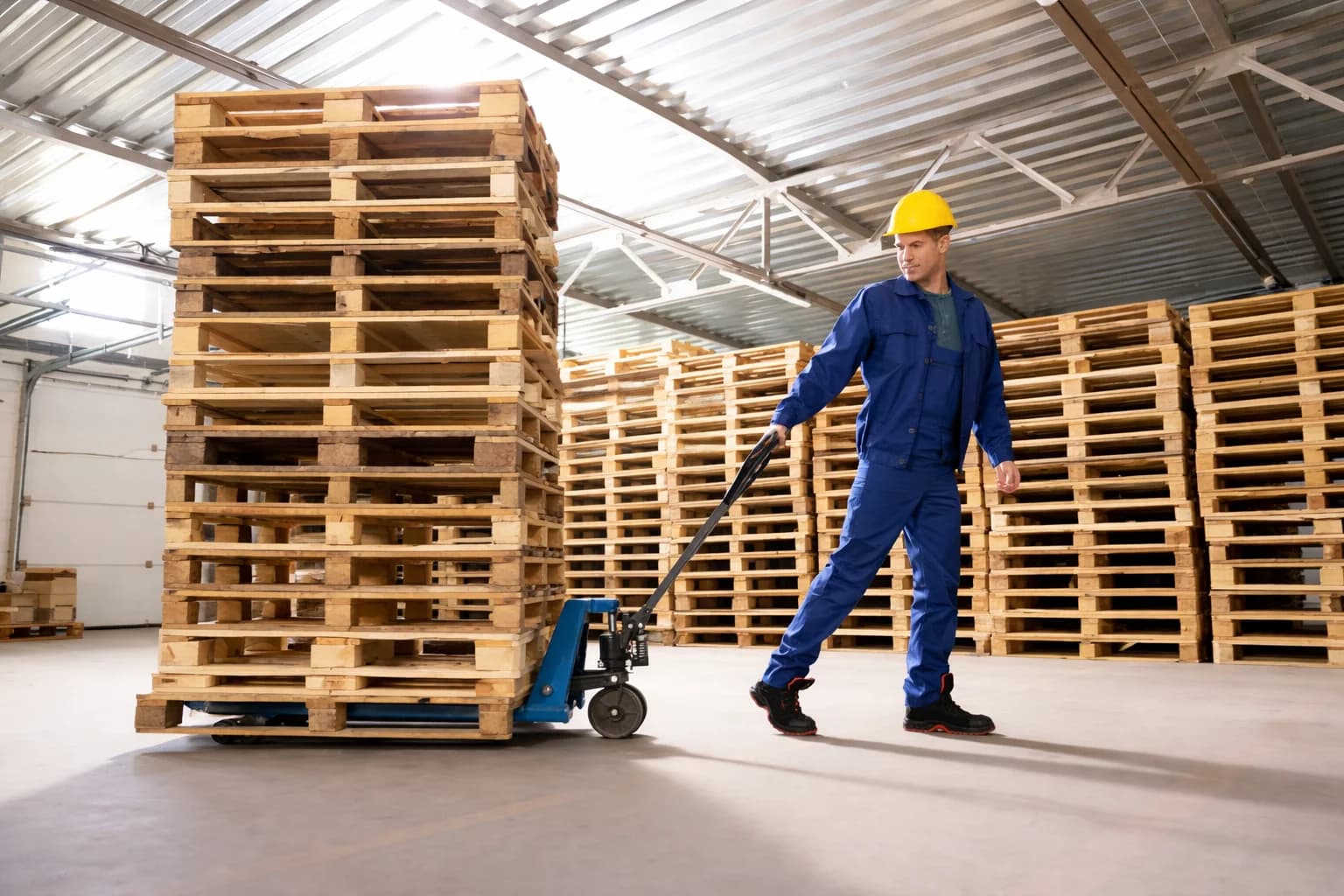
In today’s supply chain, sustainability is no longer “nice to have”, it’s a measurable business requirement. Companies are under increasing pressure to reduce waste, lower carbon emissions, and document responsible material handling across their logistics network. One of the most effective and often overlooked tools for achieving those goals is pallet return programs.
A well-designed pallet return program allows businesses to recover, sort, and recycle pallets across multiple customer locations or distribution points, creating a closed-loop system where materials stay in circulation instead of ending up in landfills or costing money to replace.
For operations managers, sustainability teams, and logistics leaders, this approach doesn’t just protect the environment, it improves efficiency, reduces spend, and stabilizes pallet availability.
1. What Is a Pallet Return Program?
A pallet return program is a structured system for retrieving pallets after they’ve been shipped out, instead of letting them accumulate, get discarded, or disappear into third-party recycling streams.
In a closed-loop model:
- You ship your products on pallets.
- The receiver stacks and stages pallets after unloading.
- A retrieval partner collects them.
- Pallets are sorted, repaired, and re-entered into your supply cycle.
This closed-loop cycle keeps wood pallets in circulation as long as possible, maximizing both sustainability and cost control.
2. Why Closed-Loop Retrieval Outperforms Traditional “One-Way” Shipping
Most companies lose 20–30% of their pallets annually due to:
- Customers disposing of them
- Third parties hauling them away
- Damage from overuse or improper handling
- Lack of coordinated retrieval
A pallet return program dramatically reduces these losses and transforms an uncontrolled asset into a managed one.
Key benefits include:
Lower Total Pallet Spend
Recovered pallets can be repaired and reused, allowing operations to buy fewer new pallets. Over time, this can cut pallet purchasing costs by double-digit percentages.
Better Supply Stability
With more pallets returning to your cycle, you’re less vulnerable to market spikes, shortages, or long lead times.
Lower Disposal Costs
Pallet removal fees, dumpster overflows, and landfill charges shrink when recovery becomes systematic.
Stronger Sustainability Metrics
Every pallet that’s reused instead of scrapped reduces:
- Wood waste
- Carbon emissions from new pallet production
- Transport emissions tied to emergency or excess procurement
This supports ESG targets and sustainability reporting.
3. How Pallet Return Programs Reduce Waste Across the Supply Chain
Pallets are built to be repaired and reused, sometimes for years. Closed-loop retrieval supports the circular economy, where materials circulate instead of being discarded after a single use.
Maximizing pallet life
Recovered pallets are inspected, repaired, and reinforced if needed, extending their usable lifespan.
Minimizing landfill waste
Pallets that can’t be recovered are broken down into:
- Mulch
- Clean biomass fuel
- Reclaimed lumber for repairs
Very little ends up discarded.
Reducing raw material demand
Fewer new pallets means less lumber consumption and fewer emissions from harvesting, milling, and manufacturing.
Cleaner yards and docks
Customers benefit from return programs by prevent piles of junk pallets from accumulating behind stores, plants, or receiving docks.
The result is a cleaner, more controlled system from end to end.
4. How Closed-Loop Retrieval Improves Operational Flow
Sustainability is important, but pallet return programs also deliver very real operational benefits.
Faster turnarounds and more yard space
Consistent pallet retrieval cleans up receiving docks and warehouse yards, improving forklift flow and safety.
Reduced shrinkage and asset loss
Pallets become trackable assets instead of disposable materials. Even simple reporting helps reduce pallet disappearance.
Predictable inventory for multiple sites
Multi-location operations see major improvements when all sites contribute to the same recovery system instead of working in silos.
Better load quality and consistency
Repaired pallets are returned to specification which reduce load failures and improving customer satisfaction.
This is where retrieval becomes a powerful logistics tool rather than just a sustainability measure.
5. Designing an Effective Pallet Return Program
Not all pallet return programs are created equal. The best ones share a few key components:
A standardized pallet type or mix
Consistency improves repair efficiency, increases reuse rates, and simplifies retrieval.
Clear communication with customers or receivers
Partners need to know:
- Where to stage pallets
- How to separate good pallets from damaged ones
- What to avoid (e.g., throwing pallets in trash compactors)
Simple signage and instructions go a long way.
Regular pick up schedules
Predictable retrieval reduces clutter and keeps circulation steady.
Sorting and repair infrastructure
Returned pallets must be inspected and repaired to maintain quality across the network.
Reporting and accountability
Basic reporting, even monthly summaries, helps:
- Track return rates
- Measure pallet life cycles
- Optimize shipping patterns
- Support sustainability reporting
The program becomes smarter and more efficient over time.
6. The Sustainability Impact: Measuring What Matters
Companies increasingly need to prove, not just claim, their sustainability progress.
A pallet return program supports measurable improvements such as:
- Reduced landfill waste (fewer discarded pallets)
- Lower carbon emissions (due to reuse instead of new production)
- Lower freight emissions (fewer emergency trips or waste hauls)
- Better resource efficiency (reclaimed lumber used for repairs)
These metrics translate directly into ESG reporting categories for:
- Waste reduction
- Circular material use
- Scope 3 emissions reductions
- Sustainable sourcing
A closed-loop pallet system is one of the easiest sustainability wins a business can implement.
7. Which Businesses Benefit Most From Pallet Return Programs?
Closed-loop retrieval adds value in almost every sector, but it’s especially impactful for:
- Food and beverage distribution
- Manufacturing and assembly plants
- Retail and grocery networks
- Industrial suppliers
- Regional distributors with recurring customers
- High-volume shippers of any kind
If your pallets frequently return to the same customer base or geographic region, a pallet return program can transform your supply chain efficiency.
A pallet return program is one of the smartest, most cost-effective ways to create a sustainable, efficient, and circular logistics model. By recovering pallets, repairing them, and putting them back into service, companies reduce waste, cut costs, and create a more resilient pallet supply — all while meeting environmental goals.
Closed-loop retrieval isn’t just good for the planet. It’s good for operations, budgets, and long-term supply chain stability.
Contact The Pallet Squad
Ready to reduce waste and improve pallet efficiency across your network?
Contact The Pallet Squad to implement a customized pallet return program that supports closed-loop retrieval, sustainability, and reliable pallet supply for every facility you operate.