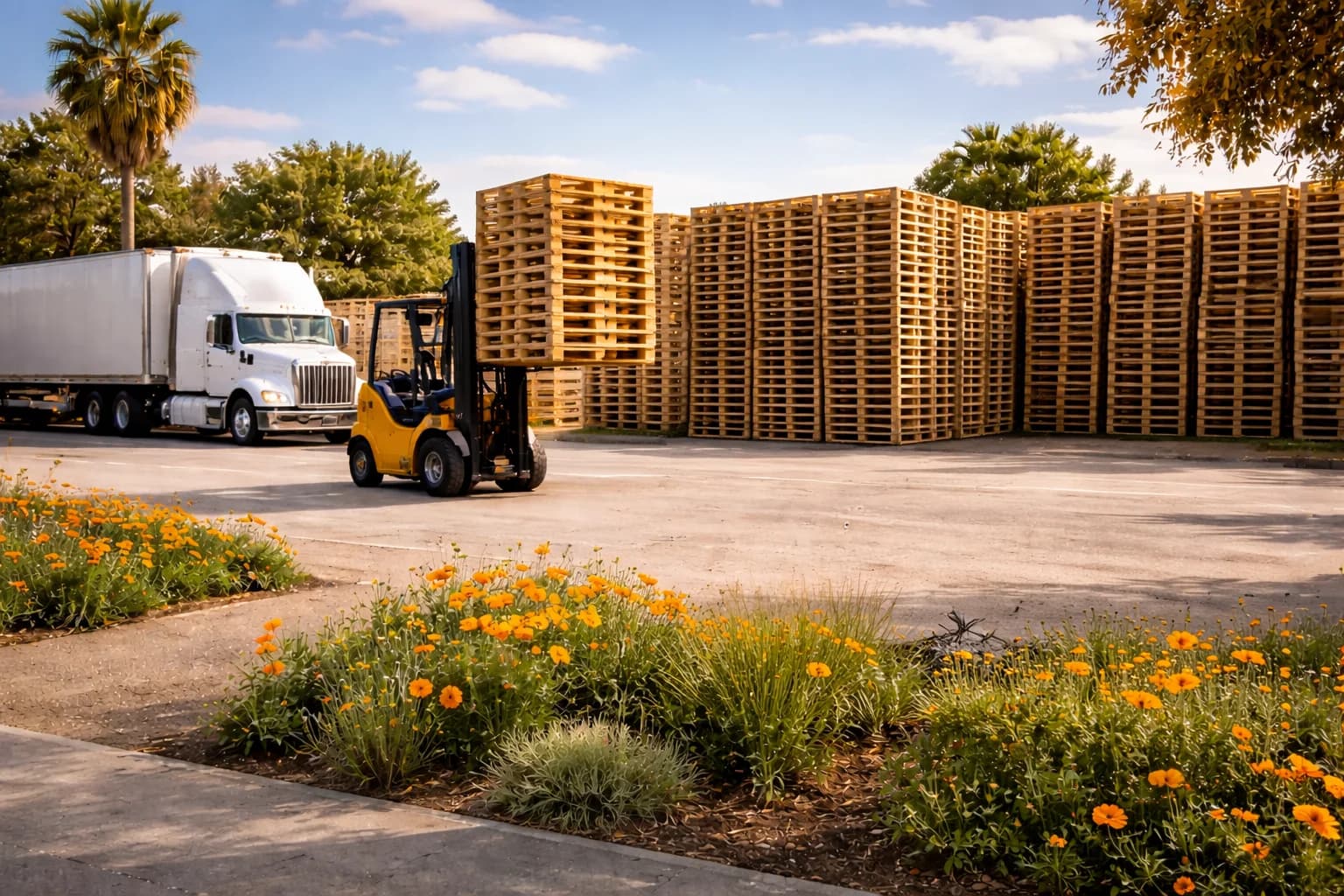
Proper pallet stacking plays an important role in warehouse safety, operational efficiency, and inventory management. Whether you’re storing empty pallets for future use or managing loaded pallets, poor stacking practices can lead to damaged inventory, wasted space, and safety risks.
In this guide, we’ll cover best practices, common mistakes to avoid, and practical tips to help businesses maintain a safer, more organized storage environment.
Quick Answer: What Is the Best Way to Stack Pallets?
The safest way to stack pallets is to use stable, uniform stacks on level surfaces, inspect pallets for damage before stacking, maintain clear access around storage areas, and follow facility safety guidelines. Proper pallet stacking helps improve warehouse efficiency while reducing the risk of product damage and workplace accidents.

Table of Contents
- Why Proper Pallet Stacking Matters
- Pallet Stacking Best Practices
- Empty vs. Loaded Pallet Stacking
- Common Pallet Stacking Mistakes
- Proper vs. Improper Pallet Stacking
- How to Know If Your Warehouse Needs Better Pallet Storage Practices
- FAQs About Pallet Stacking
- Request a Quote
Why Proper Pallet Stacking Matters
Pallets are essential to modern shipping, warehousing, and distribution operations. However, when pallets are stacked improperly, they can quickly become a source of operational challenges.
Proper pallet stacking can help businesses:
- Improve warehouse organization
- Maximize available storage space
- Reduce product damage
- Improve employee safety
- Simplify inventory handling
- Support more efficient material movement
For businesses that handle large pallet volumes, effective storage practices can contribute to smoother day-to-day operations.
Best Pallet Stacking Practices
Inspect Pallets Before Stacking
Before adding pallets to a stack, inspect them for broken boards, damaged stringers, protruding nails, or other structural issues.
Damaged pallets can compromise stack stability and increase safety risks.
Use Stable, Uniform Stacks
Whenever possible, stack pallets of similar size and type together.
Uniform stacks are generally easier to manage and less likely to become unstable over time.
Store Pallets on Level Surfaces
Uneven flooring can affect stack stability and increase the likelihood of shifting or tipping.
Choose storage areas with level, stable surfaces whenever possible.
Maintain Clear Access Areas
Pallet stacks should not block aisles, emergency exits, loading docks, or equipment access routes.
Maintaining clear pathways helps improve both safety and operational efficiency.
Follow Facility Safety Policies
Stacking requirements can vary based on facility layout, pallet type, load weight, fire codes, and operational procedures.
Businesses should always follow their internal safety policies and applicable regulations when determining appropriate stacking practices.
Empty vs. Loaded Pallet Stacking
Empty Pallet Stacking
Pallets without product on them are often easier to store because they do not add product weight.
Best practices include:
- Keeping stacks organized by pallet type
- Separating damaged pallets from reusable inventory
- Avoiding leaning or uneven stacks
- Storing pallets in designated areas
Proper management of empty pallets can help prevent clutter and improve warehouse organization.
Loaded Pallet Stacking
Loaded pallets require additional considerations because product weight and load stability affect stacking safety.
Businesses should consider:
- Product weight distribution
- Packaging stability
- Load integrity
- Equipment handling requirements
- Facility-specific storage guidelines
Careful planning helps reduce the risk of damaged products and unstable pallet loads.
Common Pallet Stacking Mistakes
Several common mistakes can create unnecessary safety and operational concerns.
Stacking Damaged Pallets
Using damaged pallets within a stack can weaken overall stability and increase the risk of collapse.
Mixing Pallet Sizes
Combining different pallet sizes within the same stack can create uneven weight distribution and reduce stability.
Blocking Operational Areas
Pallet stacks placed near aisles, exits, or loading areas can interfere with workflow and create hazards.
Ignoring Regular Inspections
Storage areas should be reviewed regularly to identify damaged pallets, unstable stacks, and other potential concerns.
Proper vs. Improper Pallet Stacking
| Factor | Proper Stacking | Improper Stacking |
|---|---|---|
| Stability | Uniform and organized | Uneven or unstable |
| Safety | Reduced risk of accidents | Increased safety concerns |
| Space Utilization | Efficient use of storage space | Wasted storage capacity |
| Inventory Handling | Easier movement and access | More difficult to manage |
| Product Protection | Better load support | Increased risk of damage |
| Warehouse Efficiency | Improved workflow | Potential operational disruptions |
How to Know If Your Warehouse Needs Better Pallet Storage Practices
Your business may benefit from improved pallet storage procedures if:
- Pallets frequently accumulate in work areas
- Storage space is becoming limited
- Employees spend excessive time relocating pallets
- Damaged pallets are mixed with usable inventory
- Stacks regularly become unstable
- Pallet pickup schedules are inconsistent
Addressing these challenges can help create a safer and more efficient warehouse environment.
Workplace Safety
Safe pallet stacking is an important part of overall warehouse safety.
The Occupational Safety and Health Administration (OSHA) recommends maintaining organized material storage areas and following safe material handling practices to reduce workplace hazards.
Businesses should regularly evaluate storage procedures, employee training, and pallet conditions to help maintain a safe working environment.
FAQs About Pallet Stacking
How high should pallets be stacked?
There is no universal stacking height that applies to every facility. Appropriate stack heights depend on pallet type, load weight, facility policies, fire codes, and operational requirements.
What is the safest way to stack pallets?
The safest approach is to create stable, uniform stacks on level surfaces, inspect pallets regularly, and follow facility-specific safety guidelines.
Should damaged pallets be stacked?
Damaged pallets should be removed from active inventory and evaluated for repair, recycling, or disposal rather than being included in storage stacks.
How should pallets be stored outdoors?
When storing pallets outdoors, businesses should protect them from excessive moisture, maintain organized storage areas, and inspect pallets regularly for signs of damage.
What causes pallet stacks to become unstable?
Common causes include damaged pallets, uneven surfaces, mixed pallet sizes, poor weight distribution, and improper stacking practices.
Request a Quote
Effective stacking is about more than organization; it’s an important part of maintaining warehouse safety, protecting inventory, and improving operational efficiency.
Need help managing pallet inventory, pallet pickups, or pallet supply? Request a quote today and speak with The Pallet Squad about solutions to support your operation.