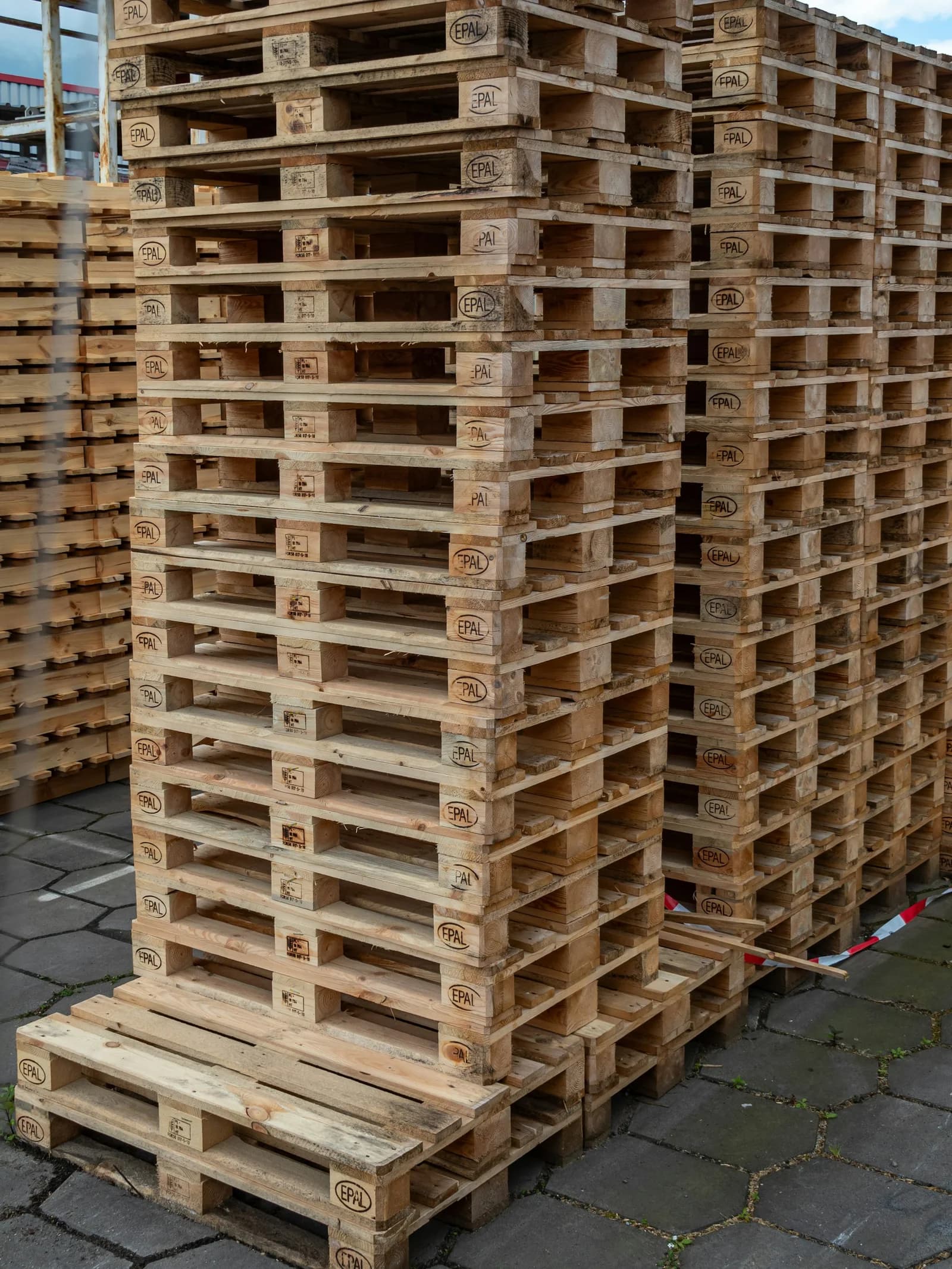
When businesses talk about the standard pallet size, they are usually referring to the 48″ × 40″ wooden pallet. This size has become the go-to option across warehouses, distribution centers, grocery suppliers, manufacturers, and shipping operations throughout North America.
There are other pallet sizes available, but the 48″ × 40″ pallet continues to lead the industry because it works. It fits common racking systems, supports efficient loading, works well with forklifts and pallet jacks, and keeps supply chains moving with fewer complications.
For companies that depend on reliable pallet supply, understanding why this size matters can help improve ordering, storage, transportation, and overall logistics planning.

Quick Answer: What Is the Standard Pallet Size?
The standard pallet size in North America is 48 inches by 40 inches. This is often called a GMA pallet, which originally referred to standards used by the Grocery Manufacturers Association.
The 48″ × 40″ footprint became widely used because it offered a practical balance of strength, space efficiency, and compatibility. It is large enough to carry a wide range of products while still being easy to move, stack, store, and load.
At The Pallet Squad, 48″ × 40″ pallets are a core part of everyday pallet supply. Businesses can source common options such as Grade A 4-way pallets, Grade B 4-way pallets, Grade B 2-way pallets, and 48″ × 40″ block pallets depending on their operation and budget.
Table of Contents
- What Is the Standard Pallet Size?
- Why 48″ × 40″ Became the Industry Standard
- Benefits of Using Standard 48″ × 40″ Pallets
- Need Standard 48″ × 40″ Pallets?
- New vs. Recycled Standard Pallets
- 2-Way vs. 4-Way Standard Pallets
- When a Standard Pallet Size May Not Be Enough
- Why Standard Pallet Size Matters for Your Bottom Line
- Work With a Reliable Standard Pallet Supplier
Why 48″ × 40″ Became the Industry Standard
The reason 48″ × 40″ pallets are so common is simple: they make logistics easier.
The history of wooden pallets shows how simple shipping platforms evolved alongside forklifts, warehouses, and modern supply chains, eventually making standardized pallet sizes like 48″ × 40″ essential for efficient material handling.
Warehouses, trucks, loading docks, pallet racks, forklifts, and distribution systems are often built around common pallet dimensions. When a business uses a standard pallet size, it reduces the chance of storage issues, loading delays, wasted trailer space, and handling problems.
A standard pallet helps create consistency across the supply chain. If your supplier, warehouse, carrier, and customer are all using the same general pallet footprint, products can move more smoothly from one point to the next.
Benefits of Using Standard 48″ × 40″ Pallets
Better Warehouse Efficiency
A consistent pallet size makes it easier to plan floor space, pallet racking, staging areas, and inventory flow. Instead of adjusting for multiple pallet sizes, warehouse teams can build repeatable systems around one common footprint.
This helps with stacking, storage, picking, loading, and overall organization.
Easier Transportation and Loading
The 48″ × 40″ pallet is widely used because it fits well in common freight and distribution environments. For businesses moving large volumes of products, even small improvements in trailer space and loading consistency can make a difference.
Using a standard pallet size helps reduce wasted space and makes loading more predictable.
Forklift and Pallet Jack Compatibility
Standard pallets are designed to work with common material handling equipment. Many 48″ × 40″ pallets offer 4-way entry, allowing forklifts or pallet jacks to access the pallet from multiple sides.
That flexibility matters in busy warehouses where speed, space, and safety all matter.
Reliable Supply
Because 48″ × 40″ pallets are so widely used, they are generally easier to source than uncommon sizes. That matters when businesses need pallets quickly, consistently, and in large quantities.
The Pallet Squad supports businesses with pallet supply, delivery, pickup, recycled pallets, custom pallets, and on-site pallet services, making it easier to keep operations stocked and moving.
New vs. Recycled Standard Pallets
Not every business needs brand-new pallets. Many operations can save money by using recycled 48″ × 40″ pallets, especially for general shipping, warehousing, and distribution.
New pallets may be the right choice when a business needs consistent appearance, specific strength requirements, or clean, uniform pallet conditions. Recycled pallets can be a smart option when cost control, availability, and everyday shipping performance are the priority.
The best choice depends on what you are shipping, how the pallet will be handled, and whether your customers have specific pallet requirements.
2-Way vs. 4-Way Standard Pallets
When choosing standard pallets, businesses should also consider entry style.
A 2-way pallet can be accessed from two sides. A 4-way pallet can be accessed from all four sides, making it more flexible for forklifts and warehouse movement.
For busy distribution centers, 4-way pallets are often preferred because they give teams more options when loading, unloading, and moving products. However, 2-way pallets can still work well depending on the application and handling process.
When a Standard Pallet Size May Not Be Enough
While 48″ × 40″ pallets work for many businesses, they are not the right fit for every product. Oversized items, unusually shaped products, heavy loads, or specialized shipping requirements may call for a custom pallet size or design.
That is why it helps to work with a pallet supplier that can provide more than one option. The Pallet Squad offers standard, recycled, custom, and specialized pallet services so businesses can match the pallet to the job instead of forcing every load onto the same solution. View the different sizes we offer.
Why Standard Pallet Size Matters for Your Bottom Line
Pallets may seem like a small part of the supply chain, but the wrong pallet can create expensive problems. Poor sizing can lead to unstable loads, wasted storage space, slower handling, damaged products, and higher transportation costs.
Choosing the right standard pallet size helps businesses:
Improve warehouse organization
Reduce loading and unloading issues
Support safer stacking and handling
Keep products moving through the supply chain
Control pallet costs
Maintain more consistent inventory flow
For many companies, the 48″ × 40″ pallet remains the most practical and reliable option.
Work With a Reliable Standard Pallet Supplier
If your business needs standard 48″ × 40″ pallets, The Pallet Squad can help you find the right pallet solution for your operation. Whether you need new pallets, recycled pallets, pallet pickup, drop trailer service, or a more structured pallet supply program, our team is built to support everyday warehouse and shipping needs.
The standard pallet size became the industry favorite for a reason. It is practical, reliable, easy to handle, and built for the way modern supply chains move.
Contact The Pallet Squad today to request a quote and keep your pallet supply running smoothly.