In the logistics and supply chain industries, “skids” and “pallets” are often used interchangeably, but they refer to two distinct platforms for handling goods. Understanding the differences between wood skids and pallets is crucial for optimizing their use and ensuring efficient and cost-effective operations. Here’s a comprehensive guide to help you differentiate between the two and determine what best suits your needs.
What Are Wood Skids?
Wood skids are the simpler of the two platforms. They consist of a top deck board supported by runners (also known as stringers) underneath, but they do not have a bottom deck. This design gives them a lower profile and makes them less expensive to produce than pallets.
Critical Characteristics of Wood Skids
- Single Deck: Skids have a single deck, which makes them lighter and easier to maneuver in some cases.
- Low Profile: The absence of a bottom deck gives skids a lower height, making them suitable for specific storage and transport needs.
- Cost-Effective: Generally cheaper to produce than pallets due to less material being used.
- Versatile Use: Often used for heavy machinery and equipment that require a stable platform without the need for forklift compatibility from all sides.
Common Uses for Wood Skids
- Storage of Heavy Machinery: Ideal for stationary storage of heavy items that do not need frequent movement.
- Temporary Transport: Useful short-term or one-way transportation where pallet return logistics are not feasible.
- Custom Applications: Skids can be easily customized for specific applications, such as construction sites or manufacturing facilities.
What Are Pallets?
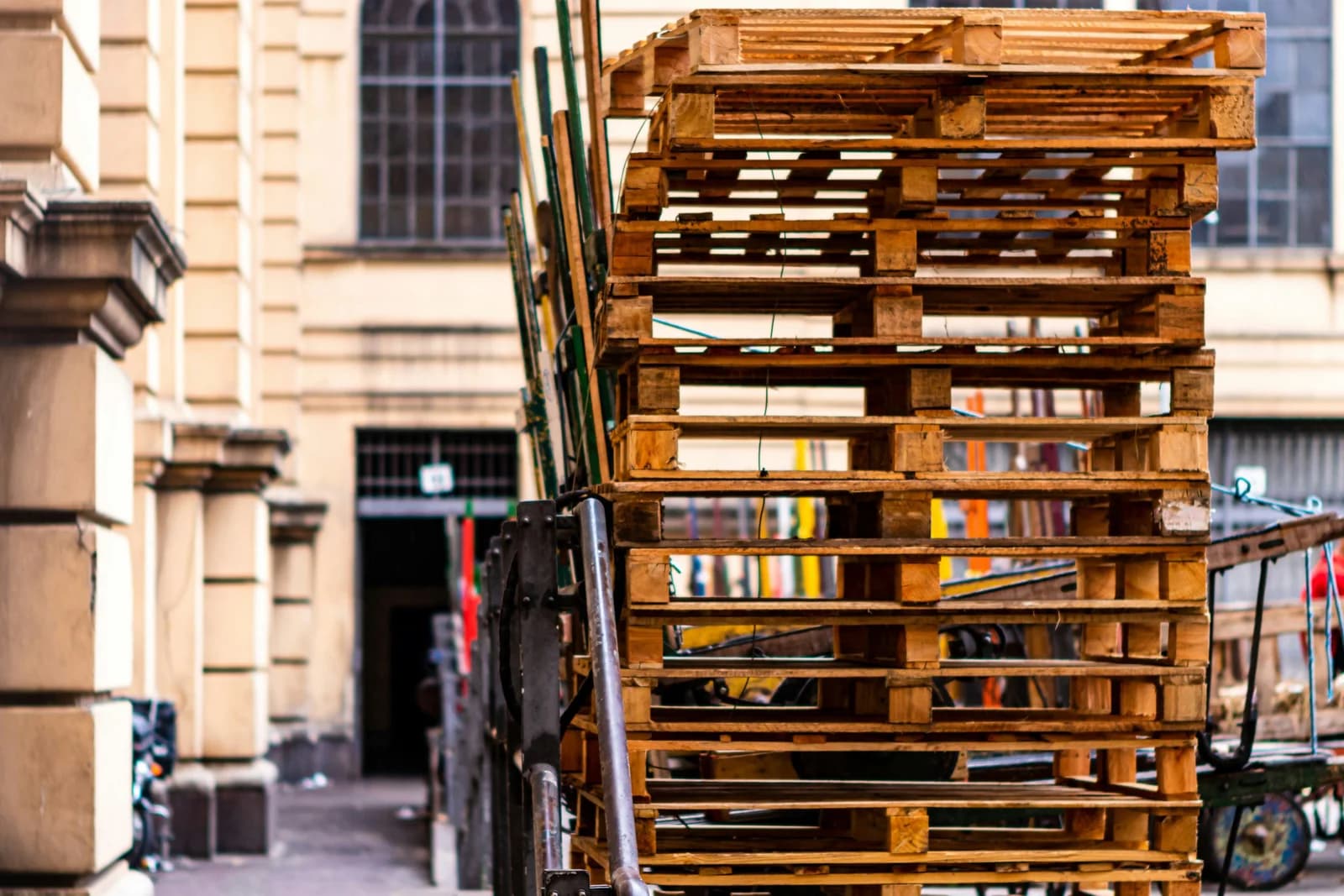
Pallets are more complex structures compared to skids. They typically have both a top and a bottom deck, making them sturdier and more versatile. Pallets are designed to be moved using forklifts, pallet jacks, and other handling equipment from all four sides.
Key Characteristics of Pallets
- Double Deck: Pallets have both a top and bottom deck, providing more stability and protection for the goods they carry.
- Forklift Compatibility: Designed to be easily lifted and transported by forklifts and pallet jacks from any direction.
- Standardization: Pallets come in standardized sizes, such as the 48×40-inch pallet, widely used in North America.
- Reusable and Durable: Built to withstand multiple uses, it can be repaired and reused, making it a cost-effective option in the long run.
Common Uses for Pallets
- Warehouse Storage: Widely used in warehouses for storing and organizing products.
- Transportation: Essential for shipping goods both domestically and internationally due to their standard sizes and ease of handling.
- Retail Display: Often used in retail environments to display products neatly and organizedly.
Comparing Wood Skids and Pallets
Cost
- Skids: Generally less expensive due to more straightforward construction and fewer materials.
- Pallets: Higher initial cost but can be more cost-effective over time due to their durability and reusability.
Durability
- Skids: Suitable for heavy, stationary loads but may not withstand repeated handling and movement.
- Pallets: Designed for durability and repeated use, making them ideal for long-term storage and transportation.
Versatility
- Skids: Best for specific applications where movement is minimal.
- Pallets: Highly versatile and suitable for various industries and applications.
Handling
- Skids: Easier to maneuver in tight spaces due to their lower profile but limited lifting options.
- Pallets: These can be lifted and moved from all sides, making them more flexible in handling situations.
Choosing the Right Platform for Your Needs
When deciding between wood skids and pallets, consider the following factors:
- Nature of Goods: Determine the type and weight of the goods you need to store or transport. Heavy, stationary items might be better suited for skids, while goods requiring frequent movement are better on pallets.
- Handling Requirements: Consider how the goods will be handled. Pallets are the better choice if you need to move the platform with a forklift or pallet jack.
- Cost Considerations: Evaluate your budget and the cost-effectiveness of each option. While skids might be cheaper initially, pallets can offer better value through reusability.
- Application Specifics: Think about the application and the platform’s environment. For example, skids might be ideal for a construction site, whereas pallets are perfect for a warehouse setting.
Understanding the differences between wood skids and pallets is essential for optimizing their use in your operations. Skids, with their low profile and cost-effectiveness, are ideal for specific applications where minimal movement is required. With their durability and versatility, pallets are perfect for environments that demand frequent handling and transportation. By carefully considering your specific needs and the characteristics of each platform, you can make an informed decision that enhances efficiency and cost-effectiveness in your supply chain.