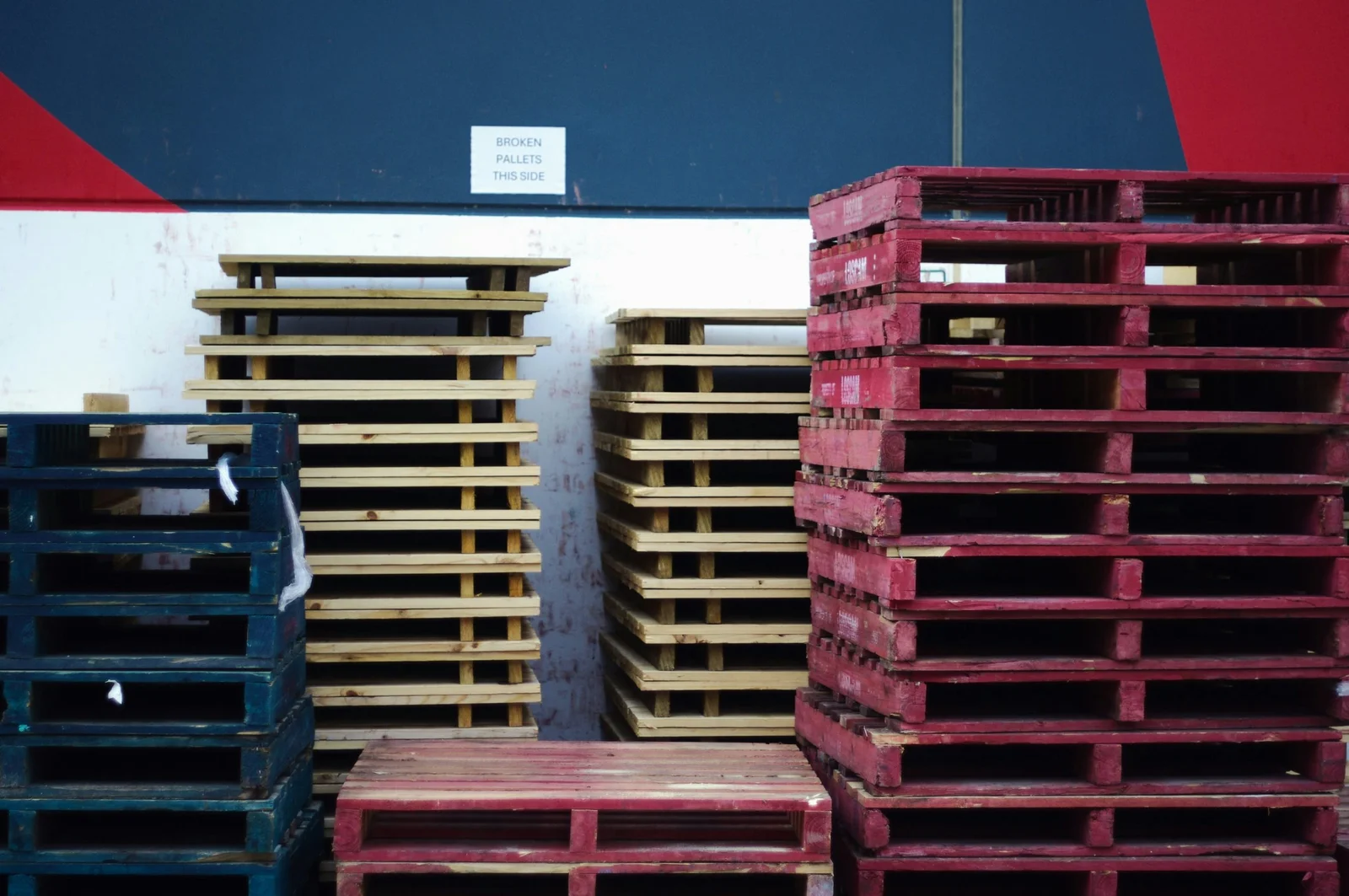
If you’re searching for 48×40 pallets for sale, you’re looking at the most commonly used pallet size in North America. From warehouses and manufacturing facilities to retailers and distribution centers, 48×40 pallets have become the standard because they’re versatile, efficient, and compatible with most shipping and storage systems.
In this guide, we’ll explain why 48×40 pallets are so widely used, the different pallet types available, and how to determine which option is right for your operation.
Quick Answer: Why Are 48×40 Pallets the Industry Standard?
48×40 pallets are considered the industry standard because they work efficiently with most warehouse racking systems, shipping trailers, forklifts, and distribution networks. Their standardized dimensions make transportation, storage, and inventory management more efficient across a wide range of industries.

Table of Contents
- Why 48×40 Pallets Are the Industry Standard
- Common Types of 48×40 Pallets
- Industries That Use 48×40 Pallets
- Benefits of Using Standard-Sized Pallets
- How to Choose the Right 48×40 Pallet
- Purchasing 48×40 Pallets From a Nationwide Supplier
- FAQs About 48×40 Pallets
- Request a Quote
Why 48×40 Pallets Are the Industry Standard
Standardization plays a major role in supply chain efficiency. Because 48×40 pallets are used throughout warehouses, shipping facilities, and distribution centers, businesses can move products more efficiently through every stage of the supply chain.
The 48×40 footprint works well with:
- Standard warehouse racking systems
- Most forklifts and pallet jacks
- Truck trailers and freight systems
- Distribution centers
- Manufacturing facilities
- Retail supply chains
The widespread use of this pallet size helps businesses simplify inventory management and transportation planning while reducing compatibility issues.
The 48×40 pallet is among the most commonly used pallet sizes in North America, making it a practical choice for businesses that need compatibility across multiple facilities and logistics networks.
Common Types of 48×40 Pallets
Not all 48×40 pallets are the same. Businesses can choose from several options depending on their application, budget, and load requirements.
48″ x 40″ #1 Grade A 4-Way Pallet
Grade A pallets are generally considered one of the highest-quality recycled pallet options available. They typically have minimal repairs and are often preferred for businesses that want a cleaner appearance and greater consistency.
Best for:
- Retail distribution
- Consumer goods
- Manufacturing
- Warehousing
48″ x 40″ #2 Grade B 4-Way Pallet
Grade B pallets may contain repaired components but remain fully functional for many shipping and storage applications.
Best for:
- General warehousing
- Manufacturing
- Distribution operations
- Cost-conscious pallet programs
48″ x 40″ #2 Grade B 2-Way Pallet
These pallets allow forklift access from two sides rather than four. They are commonly used in applications where full four-way access is not required.
Best for:
- Storage applications
- Certain manufacturing environments
- Internal product movement
48″ x 40″ Block Pallet
Block pallets provide forklift access from all four sides and often offer improved handling flexibility.
Best for:
- High-volume distribution
- Automated systems
- Complex warehouse operations
Industries That Use 48×40 Pallets
One reason 48×40 pallets remain the standard is their versatility across industries.
Warehousing and Distribution
Distribution centers rely on standardized pallet sizes to maximize storage efficiency and simplify material handling.
Manufacturing
Manufacturers use 48×40 pallets to transport raw materials, work-in-progress inventory, and finished products.
Retail
Retail supply chains often require standardized pallet dimensions to maintain consistency between suppliers, warehouses, and stores.
Food and Beverage
Many food and beverage companies use 48×40 pallets because they fit efficiently within established shipping and storage systems.
E-Commerce
E-commerce fulfillment operations benefit from pallet sizes that integrate seamlessly with warehouse infrastructure and transportation networks.
Benefits of Using Standard-Sized Pallets
Improved Supply Chain Efficiency
Using a standardized pallet size reduces compatibility issues and streamlines transportation throughout the supply chain.
Better Equipment Compatibility
Forklifts, pallet jacks, warehouse racking systems, and trailers are commonly designed around standard pallet dimensions.
Easier Inventory Management
Consistent pallet sizing helps improve storage planning and warehouse organization.
Greater Availability
Because 48×40 pallets are widely used, businesses often have more sourcing options than they would with custom pallet sizes.
Cost-Effective Purchasing
Pricing varies by pallet grade, condition, quantity, and location, but standard pallet sizes are often easier to source than custom sizes.
How to Choose the Right 48×40 Pallet
The best pallet depends on your specific operation.
A Grade A pallet may be ideal if appearance and consistency are important.
A Grade B pallet may be a cost-effective option for general warehouse use.
A block pallet may be the better choice if your facility requires four-way forklift access and enhanced handling flexibility.
When requesting a quote, consider:
- Load requirements
- Frequency of use
- Storage environment
- Transportation needs
- Budget considerations
Working with an experienced pallet supplier can help ensure you select the right pallet for your application.
Purchasing 48×40 Pallets From a Nationwide Supplier
For businesses operating across multiple locations, purchasing pallets from a nationwide supplier can simplify procurement and logistics.
Rather than managing multiple regional vendors, businesses can often source pallets, coordinate deliveries, schedule pickups, and manage pallet recovery programs through a single provider.
A nationwide supplier can also help maintain consistency in pallet quality and availability across locations, supporting more efficient operations as your business grows.
FAQs About 48×40 Pallets
Why are 48×40 pallets so common?
They are widely used because they work efficiently with standard warehouse equipment, transportation systems, and storage infrastructure throughout North America.
What is the difference between Grade A and Grade B pallets?
Grade A pallets typically have fewer repairs and a more uniform appearance, while Grade B pallets may contain repaired components but remain suitable for many shipping and storage applications.
What is a 4-way pallet?
A 4-way pallet allows forklift access from all four sides, making it easier to handle in busy warehouse environments.
Are recycled 48×40 pallets reliable?
Yes. Many recycled pallets remain highly durable and are commonly used throughout warehousing, manufacturing, and distribution operations.
How do I choose the right 48×40 pallet?
Consider factors such as load requirements, handling equipment, storage conditions, and budget when selecting a pallet.
Request a Quote
Whether you’re looking for Grade A pallets, Grade B pallets, block pallets, or ongoing pallet supply support, choosing the right pallet can help improve efficiency throughout your operation.
The Pallet Squad provides nationwide pallet solutions, including new pallets, recycled pallets, pallet pickups, pallet buy-back programs, and pallet management services.
Ready to find the right 48×40 pallets for your business? Contact The Pallet Squad today and speak with our team about your pallet needs.