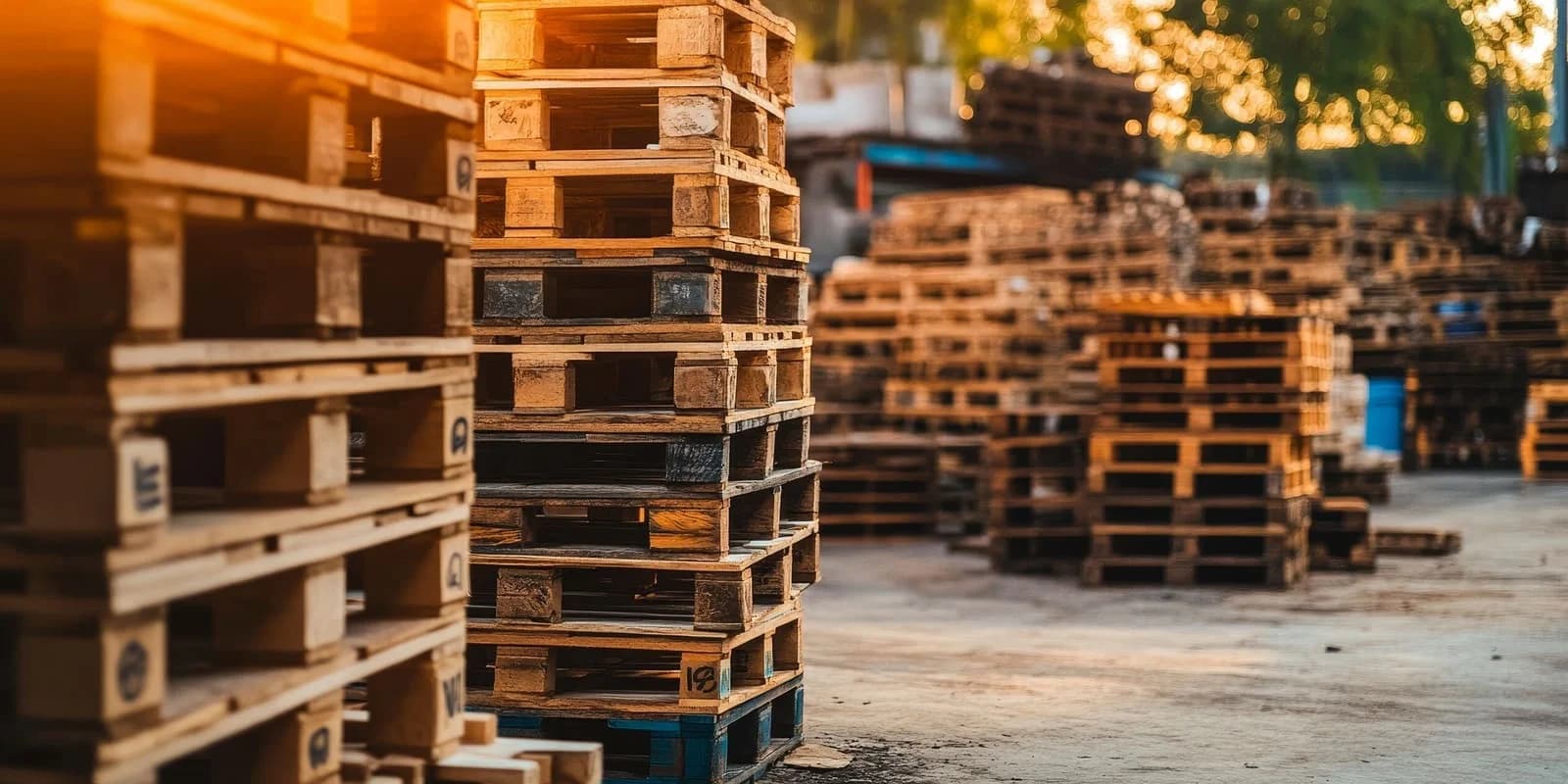
Excess pallets can quickly become a problem for warehouses, distribution centers, manufacturers, and retailers. Fortunately, there are several options available. Depending on the condition of your pallets and your business needs, you may be able to reuse them, sell them, schedule a pallet pickup service, or establish an ongoing pallet management program. In this guide, we’ll explain the best ways to handle excess pallets and how to determine which solution is right for your operation.
Quick Answer: What Should You Do With Excess Pallets?
If you have excess pallets taking up valuable warehouse space, your best options are to reuse them internally, sell reusable pallets, schedule a pallet pickup service, recycle damaged pallets, or implement an ongoing pallet management program. The right solution depends on pallet condition, volume, and how frequently excess pallets accumulate at your facility.+

Table of Contents
- Why Excess Pallets Become a Problem
- Options for Managing Excess Pallets
- When to Sell Used Pallets
- When to Schedule a Pallet Pickup Service
- One-Time Pickup vs. Ongoing Pallet Management
- Safety Considerations for Excess Pallets
- What to Do With Excess Pallets at Your Warehouse
- FAQs About Excess Pallets
- Request a Quote
Why Excess Pallets Become a Problem
Many businesses don’t think much about pallet inventory until excess pallets start consuming valuable warehouse space.
Over time, unused pallets can create several challenges:
- Reduced storage capacity
- Cluttered work areas
- Increased handling requirements
- Safety hazards
- Reduced operational efficiency
For facilities with high shipping volumes, pallet accumulation can become an ongoing issue if there isn’t a plan for pallet removal, recycling, or resale.
Options for Managing Excess Pallets
The best solution depends on the quantity and condition of your pallets.
Reuse Pallets Internally
If your operation regularly receives and ships products, some excess pallets may be suitable for future use.
Reusing pallets internally can help reduce purchasing costs and maximize the value of existing inventory.
Sell Used Pallets
Many pallets retain value even after they’ve been used multiple times.
If your pallets are in good condition, a pallet buyback program may help you recoup some of your investment while freeing up warehouse space.
This option is particularly attractive for businesses that routinely accumulate large quantities of standard-sized pallets.
Schedule a Pallet Pickup Service
If pallets are taking up space and you need them removed quickly, a pallet pickup service can be one of the simplest solutions.
Instead of dedicating labor and transportation resources to disposal, businesses can schedule pickups directly through a pallet provider.
Recycle Damaged Pallets
Not all pallets can be resold or reused. Damaged pallets may be suitable for recycling rather than disposal.
Implement a Pallet Management Program
If excess pallets are a recurring issue, a long-term pallet management strategy may provide greater efficiency than handling pickups individually.
Ongoing pallet management can help streamline pallet recovery, pickups, inventory tracking, and logistics coordination.
When to Sell Used Pallets
Selling pallets may be the best option if:
- Pallets are still structurally sound
- You have large quantities available
- Storage space is limited
- You want to recover value from excess inventory
Common pallet types that may qualify for buy-back programs include:
- 48″ x 40″ #1 Grade A 4-Way Pallets
- 48″ x 40″ #2 Grade B 4-Way Pallets
- 48″ x 40″ Block Pallets
- Other standard-sized pallets in reusable condition
Providing pallet counts, dimensions, and photos can often help suppliers evaluate potential buy-back opportunities.
When to Schedule a Pallet Pickup Service
A pallet pickup service may be the right choice if:
- Pallets are occupying valuable floor space
- You need fast removal
- Transportation is difficult to arrange internally
- You have mixed pallet grades
- You regularly accumulate excess pallets
Professional pallet pickup services help businesses remove excess inventory efficiently while reducing the burden on warehouse staff.
One-Time Pallet Pickup Service vs. Ongoing Pallet Management
| Feature | One-Time Pickup | Ongoing Pallet Management |
|---|---|---|
| Best For | Occasional pallet accumulation | Recurring pallet volume |
| Scheduling | As needed | Planned and ongoing |
| Inventory Visibility | Limited | Greater oversight |
| Logistics Coordination | Individual requests | Continuous support |
| Long-Term Efficiency | Moderate | Higher |
| Scalability | Limited | Better for growing operations |
Businesses that frequently generate excess pallets often find that a pallet management program provides more consistent results than scheduling individual pickups throughout the year.
Safety Considerations for Excess Pallets
Excess pallets don’t just consume space—they can also create safety concerns.
Large pallet stacks can obstruct walkways, limit access to inventory, and increase handling risks within busy warehouse environments.
Maintaining organized pallet storage and removing excess inventory promptly can help improve workplace safety and operational efficiency.
What to Do With Excess Pallets at Your Warehouse
If excess pallets have become a recurring challenge, start by evaluating:
- Pallet condition
- Quantity available
- Available warehouse space
- Pickup requirements
- Future pallet needs
- Ongoing accumulation patterns
From there, you can determine whether selling pallets, scheduling a pickup, recycling damaged inventory, or implementing a pallet management program makes the most sense for your business.
FAQs About Excess Pallets
Can I sell used pallets?
Yes. Many pallet suppliers purchase reusable pallets through pallet buy-back programs, particularly standard pallet sizes in good condition.
Will someone pick up pallets from my warehouse?
Many pallet providers offer pallet pickup services that allow businesses to remove excess pallets without arranging transportation themselves.
How many pallets do I need for a pickup?
Minimum quantities vary by provider, location, and pallet condition. Contacting a supplier directly is often the best way to determine eligibility.
What types of pallets can be sold?
Standard pallet sizes, including many 48″ x 40″ pallets, are often eligible for resale or buy-back programs if they remain in usable condition.
What happens to damaged pallets?
Damaged pallets may be repaired, recycled, repurposed, or processed through pallet recycling programs depending on their condition.
Request a Quote
Excess pallets don’t have to consume valuable warehouse space or create operational headaches. Whether you’re looking to sell used pallets, schedule a pallet pickup service, or implement a long-term pallet management solution, choosing the right approach can improve efficiency and free up valuable resources.
The Pallet Squad provides nationwide pallet pickup services, pallet buy-back programs, pallet recycling solutions, and full-service pallet management support.
Looking to clear out excess pallets? Request a Quote with The Pallet Squad today and speak with our team about the best solution for your operation.