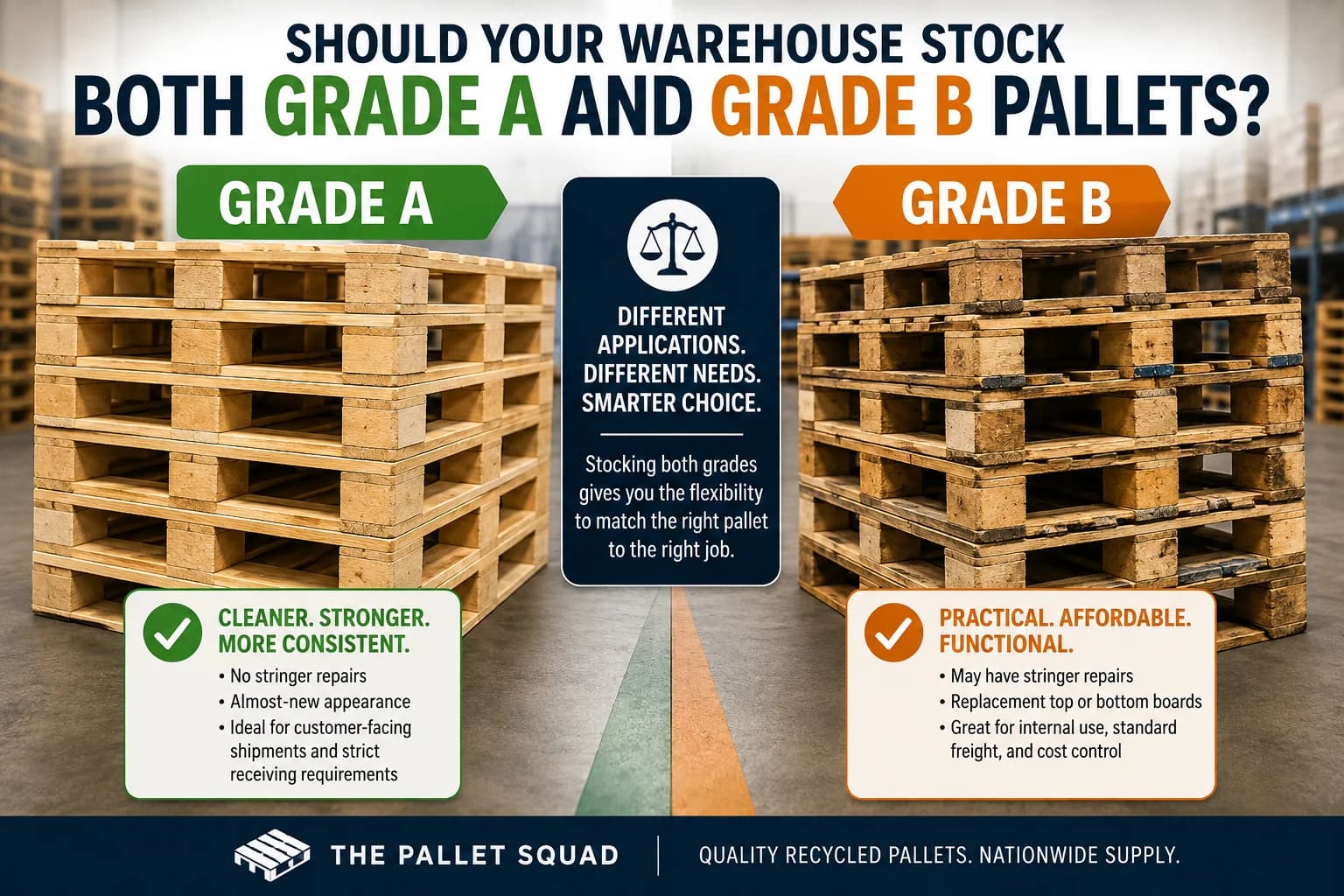
For many warehouses, the choice between Grade A vs. Grade B pallets doesn’t require one grade for every shipment. Some operations benefit from stocking both. Grade A works well for loads that need a cleaner, more consistent recycled pallet. Grade B fits routine applications where repaired pallets meet the job.
At The Pallet Squad, we supply recycled wood pallets to businesses across the country. We carry both Grade A and Grade B options. The best inventory mix depends on how each facility uses pallets and where those pallets go.
Grade A vs. Grade B Pallets: What’s the Difference?
We classify 48 x 40 Grade A #1 pallets as our highest-quality recycled pallets. They have no stringer repairs and usually show less visible wear.
Our Grade B #2 pallets may include repaired stringers and replacement top or bottom boards. They often show more signs of previous use than Grade A pallets.
Grade A gives warehouses a more consistent option when condition and appearance matter. Grade B allows more repair history and usually costs less. That makes Grade B practical for applications where cosmetic condition matters less.
Pallet grading terms can vary between suppliers. A purchase order should include more than the grade name. Buyers should also list dimensions, entry style, condition requirements, and any customer-specific specifications.
Industry groups publish broader wood packaging standards that address wood packaging quality and performance. Those standards offer useful guidance. Buyers still need clear pallet specifications for each order.
Why Some Warehouses Carry Both Grades
A warehouse may handle several types of shipments during the same week.
One customer may require a cleaner pallet with fewer visible repairs. Another shipment may only need a sound recycled pallet for standard freight. Internal transfers may have different requirements again.
Using Grade A for every application can increase pallet costs without adding value to each load. Using Grade B everywhere can create problems when a customer expects a tighter condition standard.
Stocking both grades gives warehouse teams more control. They can match the pallet to the job instead of using one grade for everything.
That system works best when each grade has a clear purpose. Employees need to know which loads require Grade A and which can use Grade B.
When Grade A Pallets Make Sense
Grade A pallets fit shipments that call for a cleaner and more consistent recycled pallet.
Some customers may limit repaired pallets in their receiving specifications. Other operations may prefer Grade A for finished products or customer-facing loads.
Our 48 x 40 Grade A #1 pallets use a four-way entry design for common warehouse handling. They give businesses a recycled pallet with no stringer repairs.
That consistency can matter in facilities with standardized handling processes. It can also matter when customers expect a certain pallet condition at receiving.
Grade alone doesn’t determine whether a pallet fits the load. Warehouse teams also need the correct size, entry style, and construction for the application.
Using Grade A where it serves a clear purpose keeps purchasing decisions tied to actual shipping requirements.
Where Grade B Pallets Fit
Grade B pallets often work well for routine shipping, storage, and warehouse use.
These pallets may contain repaired stringers or replacement deck boards. They usually show more visible wear than Grade A pallets.
For many operations, that repair history doesn’t create a problem. Grade B can suit internal transfers, standard freight, or customers that accept repaired recycled pallets.
We supply 48 x 40 Grade B four-way pallets for businesses that don’t need Grade A condition on every load.
Grade B can also support better cost control. A warehouse can reserve Grade A inventory for loads that truly require it. Other approved shipments can move on Grade B.
This approach gives purchasing teams a reason for carrying both grades. Each one fills a specific need instead of competing for the same job.
Pallet Grade Shouldn’t Be the Entire Specification
A purchase order that says “Grade B pallets” still leaves several questions unanswered.
Buyers need to specify pallet dimensions and entry style. They should also define the expected grade and include any customer-specific requirements.
For example, a warehouse might use an inventory description such as:
48 x 40 Grade A #1, four-way entry
Another item might read:
48 x 40 Grade B #2, four-way entry
Complete descriptions keep purchasing, receiving, and warehouse teams aligned. They also reduce confusion between pallets that share the same grade label.
Two pallets can carry the same grade and still have different configurations. Those differences can affect how equipment handles them on the warehouse floor.
Businesses that place regular orders can review our pallet supply options when building a purchasing program.
Keep Grade A and Grade B Inventory Separate
Warehouses that stock both grades need a simple storage system.
Keep Grade A and Grade B pallets in separate locations. Clear floor markings, rack labels, or yard signs make each stack easy to identify.
Receiving teams should follow the same process. They can count each delivery by grade and move it directly to the correct storage area.
Mixed stacks create unnecessary work. Employees may need to sort pallets later or inspect individual units before use.
Separate inventory counts also improve purchasing decisions. A warehouse may have hundreds of pallets on hand but still lack enough Grade A inventory.
Tracking each grade separately gives purchasing a clearer picture. It also makes shortages easier to spot before they affect shipping.
A simple system usually works better than asking employees to identify every pallet by appearance. Clear storage locations remove much of that guesswork.
Set Reorder Points by Grade
Grade A and Grade B inventory may move at very different rates.
Grade B may handle most routine freight and turn over faster. Grade A may serve a smaller group of customers with tighter requirements.
Purchasing teams should track usage for each grade separately. Recent shipment volume gives a useful starting point for reorder levels.
Large customer accounts can also affect timing. A customer that regularly requires Grade A may justify keeping more of that grade available.
Seasonal changes matter too. A facility that ships more product during certain months may need to adjust pallet orders before volume increases.
Separate reorder points reduce emergency orders. They also prevent a warehouse from carrying plenty of pallets that don’t match upcoming shipments.
The total pallet count tells only part of the inventory story. Grade-specific counts show what the operation can actually use.

Look at How Pallets Move Through the Facility
The decision to stock both grades should reflect everyday warehouse activity.
Start with outbound shipping. Review which customers require a specific pallet grade or condition.
Then look at internal pallet use. Some facilities use recycled pallets for storage, staging, or transfers between locations.
Receiving practices matter as well. Employees need enough space to keep Grade A and Grade B inventory separate after delivery.
Warehouse equipment should also factor into purchasing decisions. Grade doesn’t replace the need to choose the correct pallet configuration.
These details make it easier to decide whether two grades serve a real operational purpose.
When One Pallet Grade Is Simpler
Not every warehouse needs both grades.
A facility with one standard pallet requirement may benefit from using a single grade. That approach simplifies ordering, storage, inventory counts, and employee training.
Limited storage space can also make one grade more practical. Two grades need separate areas if the warehouse wants to avoid mix-ups.
Review the actual shipping mix before adding another grade. Look at customer requirements, internal transfers, storage use, and recent pallet demand.
If the same pallet works for almost every load, one grade may make more sense.
Some operations have enough variation to justify both. In those facilities, separate Grade A and Grade B inventory can give teams more control over pallet spending.
Build Pallet Inventory Around the Shipping Operation
The Grade A vs. Grade B pallets decision should start with the shipping operation.
Grade A fits loads that need a cleaner recycled pallet with no stringer repairs. Grade B works well where repaired pallets meet the application.
Some warehouses will save time by standardizing on one grade. Others will gain flexibility by keeping both grades on hand.
A strong system gives each grade a defined job. The warehouse should also keep the inventories separate and track usage independently.
At The Pallet Squad, we work with businesses that need ongoing pallet supply across the country. Facilities can order Grade A, Grade B, or a combination based on their needs. To discuss an upcoming order, request a pallet quote with the grade, dimensions, quantities, and other pallet requirements.