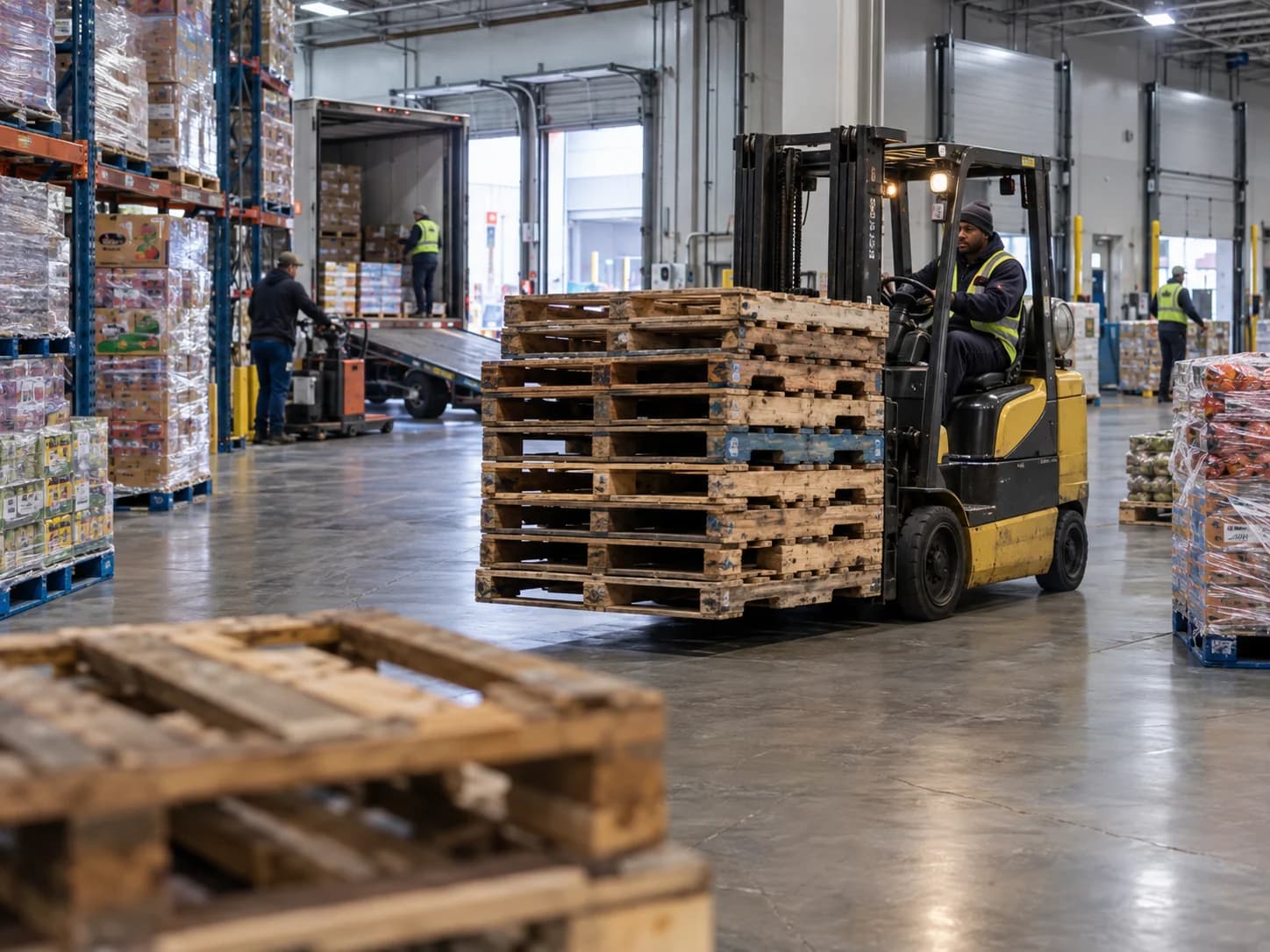
Memphis pallet removal works best for food distribution operations when used wood pallets have a defined path out of receiving before they turn into a dock or yard problem. For facilities that generate excess pallets every week, scheduled pickup or an on-site drop trailer keeps that material moving as part of normal warehouse activity instead of waiting for a pile to force another cleanup.
At The Pallet Squad, we work with Memphis warehouses and food distribution operations that need recurring pallet pickup and drop trailer pallet recycling. Our background also includes operating a food distribution company for more than a decade, so we understand how quickly receiving volume and limited dock space can turn excess pallets into another daily material-handling task.
Why Used Pallets Build Up in Food Distribution
Food distribution creates a steady inbound flow. Product arrives, employees unload it, and the pallets that carried it do not always have a place in the next outbound move.
Some pallets remain useful for internal storage or future shipments. Others no longer match the facility’s requirements, have damage, or simply exceed the number the operation needs to keep on hand. Pallets with uncertain ownership need separate review before anyone places them into a recycling stream.
That creates an operational question at receiving: where does each pallet go once the product comes off it?
Without a defined answer, employees tend to make temporary stacks near dock doors, staging areas, or open yard space. Those stacks then need to be moved again when the area becomes busy. A recurring pallet issue turns into repeated forklift travel and extra sorting.
For Memphis facilities dealing with this week after week, the removal process should start where the pallet leaves active circulation.
Build Memphis Pallet Removal Into the Receiving Workflow
A useful Memphis pallet removal process gives warehouse employees a short, repeatable decision path. They should know which pallets stay in inventory, which require ownership review, and which approved pallets go directly toward removal.
Start by identifying the point where employees normally separate product from the pallet. Then choose a nearby route to the approved collection area that fits existing equipment traffic and dock activity.
The written process does not need to be complicated. It should answer practical questions such as:
- Which pallets does the facility own and have authority to recycle or sell?
- Where should employees place pallets that are still usable?
- Where do questionable or third-party pallets wait for review?
- Where do approved unwanted pallets go?
- Who monitors the collection area or trailer and requests service?
Food distribution teams already make fast decisions while unloading, checking product, staging orders, and keeping receiving moving. Pallet removal works better when it becomes part of that existing routine rather than a separate cleanup job later.
Our Memphis pallet services include pallet pickup and drop trailer service for local commercial operations that need a consistent removal option.
Keep the Pallet Collection Area Separate From Active Food Handling
A food distribution facility has its own sanitation, pest-control, and housekeeping procedures. Used pallet collection should fit those procedures and stay out of the way of active product handling.
The FDA’s Current Good Manufacturing Practices for food facilities address areas including plant grounds, sanitary operations, facility sanitation, and production controls. Each facility needs to apply the rules and food-safety requirements that govern its operation.
From a pallet-removal standpoint, that means choosing a collection point intentionally. Avoid allowing unwanted pallets to spread into receiving lanes, product staging areas, or other spaces the facility needs to keep controlled and accessible.
The pallet recycling provider handles pallet removal. Your food-safety team remains responsible for deciding how the collection point fits the facility’s sanitation plan, traffic pattern, pest-control program, and internal procedures.
When Memphis Pallet Removal Needs a Drop Trailer
Scheduled pickup makes sense for operations that generate a manageable amount of excess pallets and can stage them between service visits. A recurring high-volume operation may need a more permanent collection point.
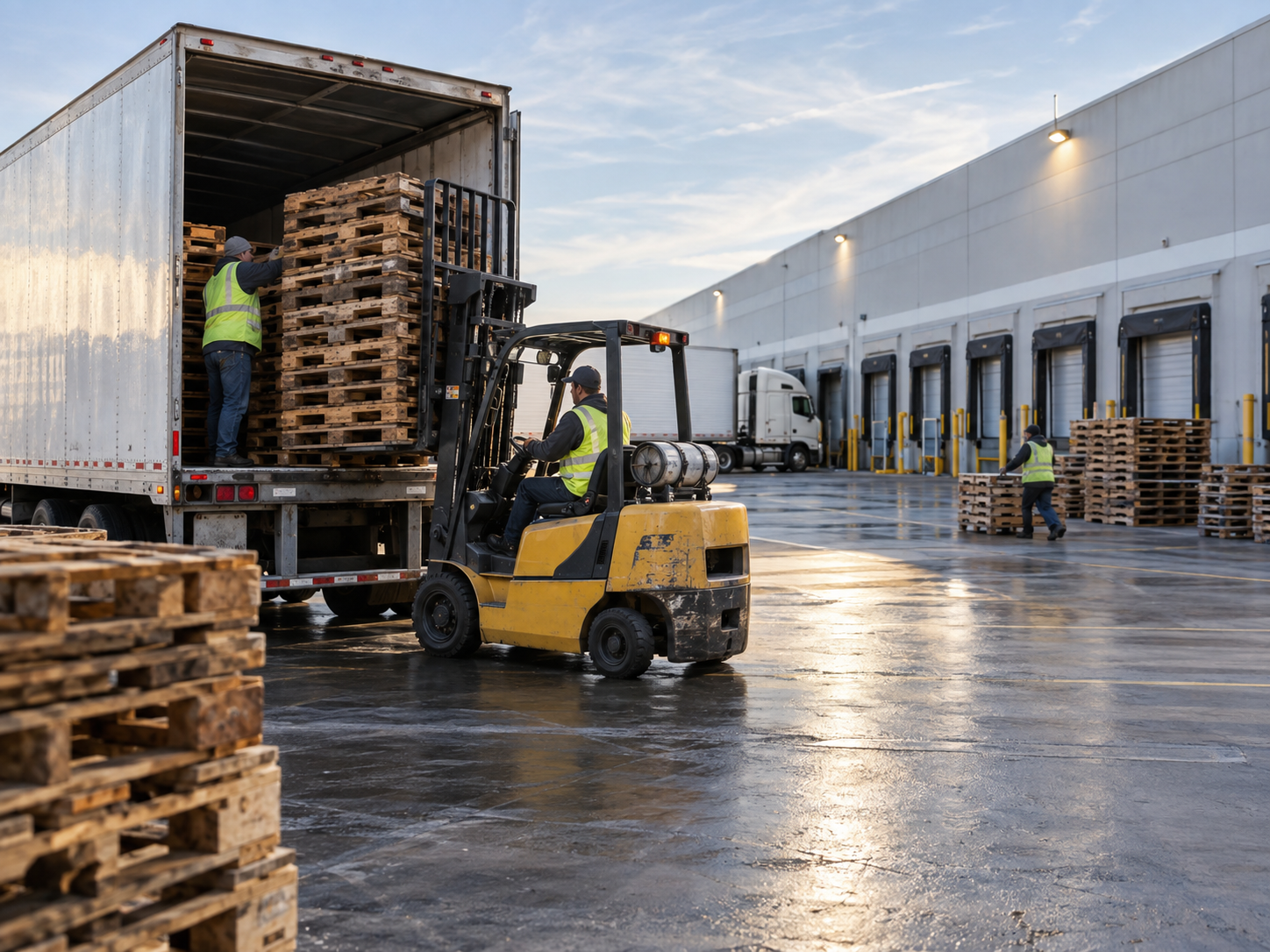
The Pallet Squad’s drop trailer pallet recycling service places an empty enclosed 53-foot semi-trailer at the facility. Your team loads eligible used wood pallets into the trailer throughout the week. When the trailer fills, we coordinate pickup and swap it with another empty trailer according to the service arrangement.
The listed capacity is up to 600 pallets per trailer, although the actual load depends on the pallet mix and how the trailer is loaded.
For a food distributor, the main advantage is consistency. Employees already know where approved unwanted pallets go. The trailer becomes part of the receiving and warehouse flow, so the operation does not need to create a new outdoor stack each time inbound volume rises.
A drop trailer is most useful when the same pallet accumulation keeps returning. If the facility only needs a one-time cleanup, scheduled pickup may be the simpler fit.
Choose the Trailer Location Around Real Dock Traffic
A 53-foot trailer needs more than an open rectangle on a site plan. Drivers need access to place, retrieve, and exchange it, while warehouse employees need a practical route for loading pallets.
Look at the facility during a normal receiving day. Which dock doors stay busiest? Where do inbound tractors turn? Which areas serve employee parking or outbound staging? Where would a trailer create extra crossing traffic?
The collection point should work during the busiest shift, not just when the yard is empty.
Facilities should also consider how employees will reach the trailer from the place where pallets leave circulation. If the route requires workers to carry unwanted pallets across the property or pass several active doors, the process adds unnecessary handling.
A shorter, clearly assigned path usually makes the routine easier to follow.
Track Pallet Volume Before It Becomes Urgent
Food distribution volume changes. Promotions, customer demand, seasonal products, new accounts, and changes in inbound freight can all affect how many excess pallets a facility generates.
Track the approximate number of unwanted pallets leaving active use each week. Note common sizes, general condition, ownership, and how quickly the staging area or trailer fills.
That information matters before service starts, and it remains useful after the program is running. If the trailer fills much faster during certain periods, the facility can plan around those changes instead of discovering the problem after pallets start collecting elsewhere.
Assign one role to monitor the pallet area and communicate with the service provider. A backup contact is useful for other shifts or days when the primary person is not on site.
Consistency matters more than a perfect pallet count. The practical question is whether the removal setup keeps pace with the facility’s actual pallet flow.
Avoid Mixing Pallets That Do Not Belong in the Program
Food distribution operations may receive pallets from vendors, carriers, customers, or other supply-chain partners. Some of those pallets may need to return through a separate program.
Employees should not assume that every empty pallet near receiving belongs to the facility or qualifies for recycling.
Create a review area for pallets with unclear ownership or markings. Keep that area separate from the pallets already approved for removal. Once a supervisor or designated employee confirms what should happen to them, they can move to the correct destination.
This step protects the removal process from becoming a catch-all for every pallet that enters the building. It also keeps useful pallets from leaving the operation by mistake.
Make Used Pallet Removal a Routine Part of the Memphis Operation
A food distribution warehouse should not have to reorganize the yard every time used pallets accumulate. A defined receiving workflow, an assigned collection area, and a removal schedule based on actual volume keep the process much easier to manage.
For lower or occasional volume, recurring pickup may be enough. Facilities generating excess pallets throughout the week should evaluate whether an on-site drop trailer gives employees a better place to move approved pallets as soon as they leave circulation.
If your Memphis facility needs ongoing pallet recycling, request a pallet service quote with your location, approximate pallet quantity, common pallet sizes, and expected removal frequency. We’ll use those details to determine which pickup or drop trailer setup fits the operation.