
Chicago pallet recycling along the I-55 warehouse corridor works best when facilities treat pallet removal as part of normal warehouse operations instead of waiting for stacks to become a space problem. Warehouses and distribution centers that generate used wood pallets steadily can schedule recurring pickups or keep an empty drop trailer onsite so employees have a consistent place to move pallets as they come out of circulation.
At The Pallet Squad, we work with facilities that need ongoing pallet pickup and recycling rather than occasional cleanup. For businesses moving freight through the Chicago region, a planned system becomes especially useful when receiving volume changes from week to week and yard space already supports trailers, staging, equipment, and other daily activity.
Why Chicago Pallet Recycling Matters Along I-55
The I-55 corridor southwest of Chicago sits within one of the region’s major freight and distribution areas. The Chicago Metropolitan Agency for Planning identifies Will County as an important freight cluster with significant distribution activity and lists portions of I-55 among the area’s truck bottlenecks.
That freight concentration creates a practical pallet issue inside many warehouse operations. Inbound trailers bring merchandise, raw materials, packaged goods, or inventory into the building on wood pallets. Those pallets don’t always leave at the same rate.
Some return to circulation. Others become excess inventory. Damaged pallets may need removal, while reusable pallets may qualify for resale or another recovery option.
If the facility keeps receiving pallets faster than it uses them, stacks start appearing near receiving, behind dock doors, in staging areas, or outside in the yard.
A warehouse that sees this pattern regularly needs a removal process that matches its pallet flow.
Start With the Facility’s Actual Pallet Volume
Before choosing a recycling setup, look at how many unwanted pallets the warehouse generates during an ordinary week.
One large pile after an inventory reset is different from 100 or more pallets accumulating repeatedly throughout the month. The first situation may call for a scheduled pallet pickup service. The second may justify a permanent collection point through a drop trailer program.
Track the basics for several weeks:
- Approximate number of excess pallets generated
- Common pallet dimensions
- General condition
- Where pallets accumulate now
- How frequently employees move the stacks
- Whether volume changes during busy receiving periods
- How quickly the current storage area fills
Look at busy periods separately. A warehouse may manage its pallet volume easily during slower weeks and struggle after several high-volume inbound days.
The pattern matters more than a single count.
Drop Trailers Give High-Volume Warehouses a Dedicated Collection Point
For facilities generating pallets continuously, our drop trailer pallet recycling service creates a fixed destination for eligible used wood pallets.
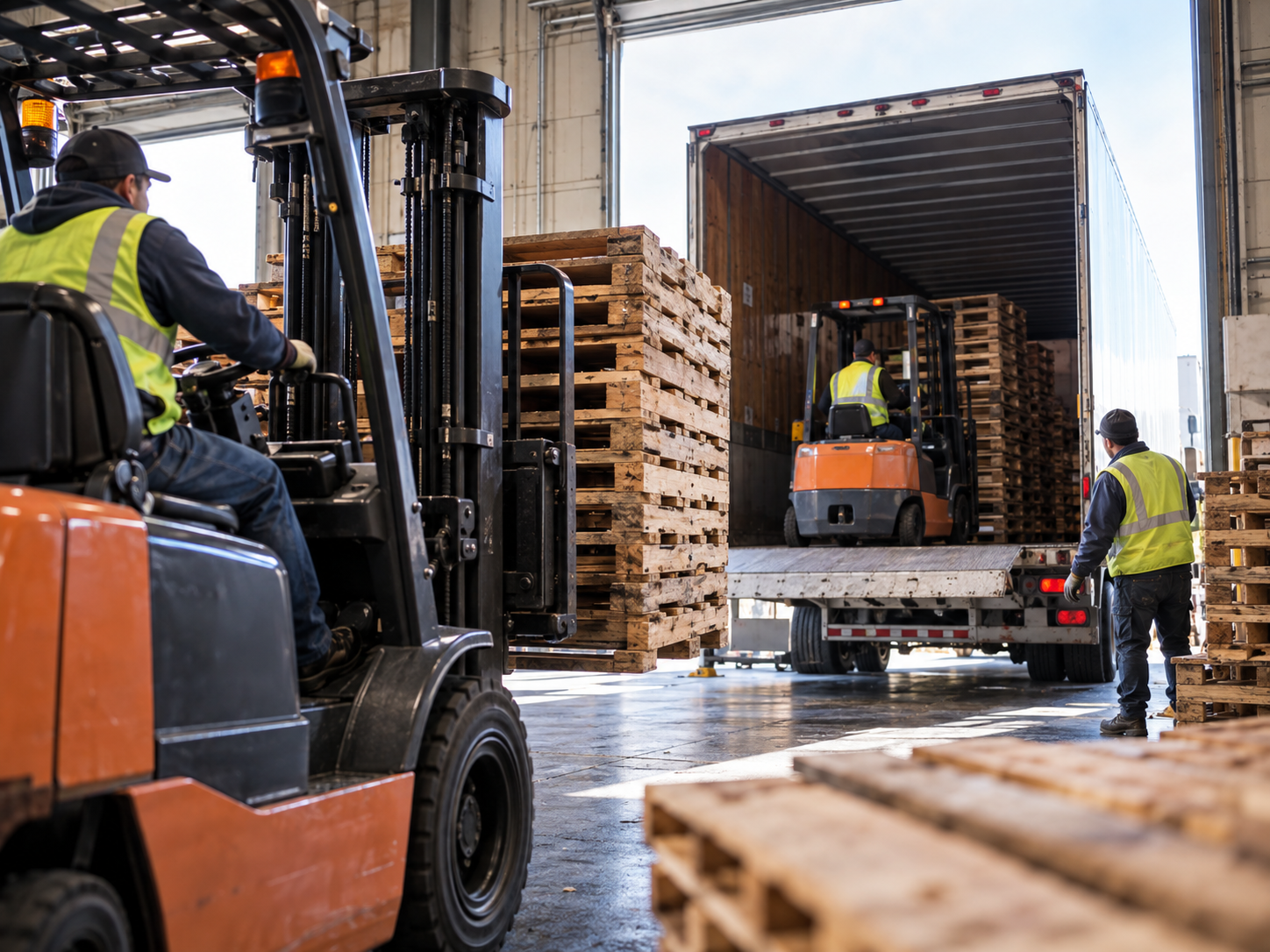
We place an empty enclosed 53-foot semi-truck trailer at the facility. Warehouse personnel load pallets into the trailer throughout normal operations. When it fills, we pick it up and replace it with another empty trailer according to the service arrangement.
Each trailer holds up to 600 pallets, depending on the pallet mix and how the facility loads it.
That setup changes pallet removal from a series of cleanup projects into an ongoing collection process.
Instead of moving pallets to a temporary outdoor stack, reorganizing the stack as it grows, and moving everything again for pickup, employees can send eligible pallets toward the trailer after they leave active use.
The Chicago service area also supports one-time pickup and recurring pallet removal. Facilities can review our Chicago pallet services to compare the available options based on pallet quantity and frequency.
Build Pallet Removal Into Receiving
The easiest time to decide what happens to a pallet is when employees have already unloaded it.
If a receiving team removes product from an inbound pallet and immediately knows whether that pallet returns to inventory, goes to recycling, or requires separate review, the warehouse avoids creating another mixed pile to sort later.
Keep the process simple enough to use during a busy shift.
For example, a facility might maintain one area for reusable company-owned pallets and direct eligible unwanted pallets toward the drop trailer. Anything with unclear ownership or markings goes into a small review area until a supervisor determines where it belongs.
That approach reduces repeated handling.
A pallet shouldn’t travel from receiving to a temporary stack, from that stack to another corner of the yard, and then back across the property when removal day arrives. Every extra movement uses equipment time and adds another task to the shift.
Keep Pallet Ownership Straight
Warehouses along major logistics corridors may receive freight from many vendors, carriers, customers, and supply chain partners.
That means the pallet under an inbound load doesn’t automatically belong to the facility.
Before employees load pallets into a recycling trailer, establish a process for identifying company-owned pallets and separating anything that belongs to another organization or requires a specific return process.
Paint, stamps, branding, or other markings may indicate that a pallet needs separate handling.
Reusable pallets should also remain out of the recycling stream if the warehouse still needs them for outbound loads.
Clear sorting instructions protect usable inventory and make the collection process easier for each shift to follow.
Trailer Placement Has to Work With an Active Chicago Warehouse Yard
Choosing a drop trailer location requires more than finding an open parking space.
Facilities along a busy freight corridor may already have inbound trailers waiting for doors, outbound loads staging in the yard, tractors moving equipment, employee parking, dumpsters, and other service vehicles sharing the property.
The recycling trailer needs enough space for delivery, loading, retrieval, and exchange without disrupting those movements.
Review:
- Active dock doors
- Trailer staging lanes
- Forklift and yard equipment routes
- Gates and turning space
- Emergency access
- Employee and visitor traffic
- Pavement conditions
- Other trailers stored onsite
Consider the yard during its busiest shift rather than evaluating placement during a quiet afternoon.
A location that looks convenient while most dock doors are empty may become a problem once inbound traffic picks up.
The trailer should also sit close enough to the pallet generation point that employees will actually use it. A collection area at the far end of a large property may create unnecessary forklift travel every time receiving removes another pallet from service.
Plan Exchanges Before the Trailer Reaches Capacity
A drop trailer works best when someone monitors how quickly it fills.
Waiting until the trailer has no remaining capacity creates the same issue the program was supposed to solve. New pallets start stacking outside while the facility waits for the next exchange.
Assign one person or job role to track the trailer. A receiving supervisor, warehouse manager, facilities lead, or another designated employee can watch the fill rate and coordinate service before space runs out.
Record how long each trailer cycle lasts.
After several exchanges, the warehouse will have useful operating data. One facility may fill a trailer at a fairly consistent pace. Another may see large changes around promotional inventory, seasonal shipments, production schedules, or major inbound deliveries.
Service frequency should reflect that actual pattern.
Watch for Changes in Pallet Flow
Warehouse operations don’t stay static.
A new customer, product line, retailer account, supplier, or shipping schedule can change pallet volume quickly. Expanding receiving capacity or adding another shift may have the same effect.
Review the pallet recycling process whenever the facility experiences a meaningful operational change.
If employees suddenly fill the trailer faster, the exchange schedule may need adjustment. If pallet volume drops for an extended period, recurring pickup may become more practical.
Facilities should also watch where pallets start appearing.
A new stack near a dock door usually means something in the process has changed. Employees may not know which pallets belong in the trailer, the trailer may be approaching capacity too often, or the route to the collection point may no longer work efficiently.
Small piles often expose workflow problems before they become large cleanup jobs.
One-Time Pickup Still Has a Place
Not every Chicago warehouse needs a trailer sitting onsite.
Facilities that generate excess pallets occasionally may get better results from scheduled removal. Inventory cleanouts, one-time projects, construction work, facility moves, seasonal surges, and unusual inbound shipments can all create temporary pallet accumulation.
In those cases, gather the approximate quantity, pallet dimensions, condition, and photos of the inventory before requesting pickup.
Recurring service becomes worth considering when the same pile keeps returning.
The Chicago location page states that free haul-off and drop trailer haul-off require a minimum of 100 pallets. Pallet value and the appropriate service arrangement depend on details such as quantity, type, condition, location, and pickup requirements.
Build Chicago Pallet Recycling Around the Warehouse, Not the Pallet Pile
A pallet pile shows what has already happened. The better planning information comes from watching how pallets move through the warehouse every week.
Track where excess pallets originate, where employees place them, how frequently they accumulate, and how many times the team handles them before removal.
Facilities with occasional volume can schedule pickup when needed. High-volume warehouses that continually generate eligible wood pallets may get a cleaner process from a dedicated drop trailer and planned exchanges.
At The Pallet Squad, we coordinate pallet pickup, recycling, and drop trailer programs for Chicago-area facilities and businesses nationwide. To discuss an I-55 corridor warehouse, request a pallet service quote with your location, approximate pallet quantity, common pallet sizes, and expected removal frequency.
A useful Chicago pallet recycling plan gives employees a clear destination for excess pallets before those pallets begin competing with freight, docks, and yard space.