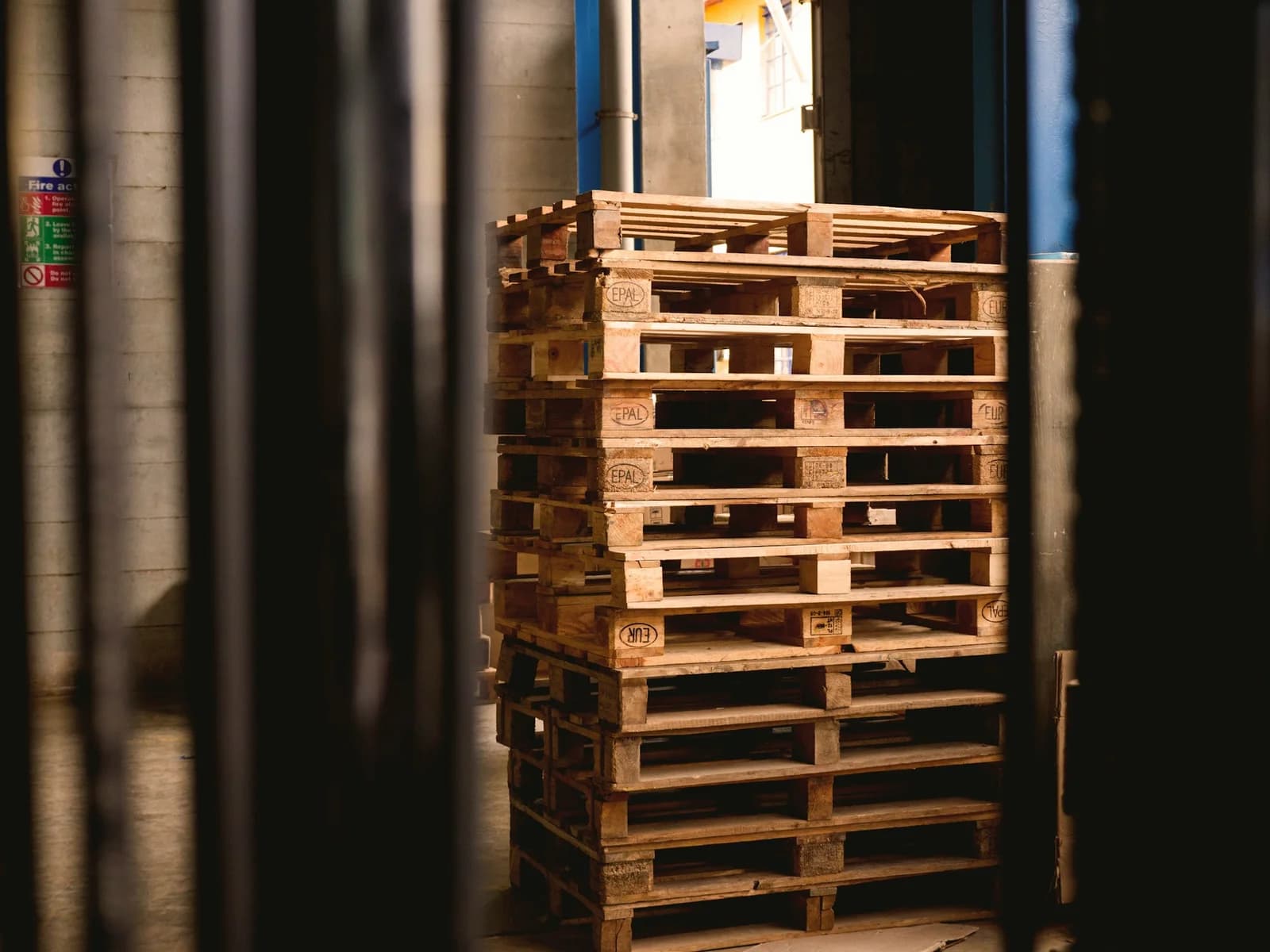
A used pallet is generally eligible for resale when your business owns it, the size has an active market, and the pallet is reusable or worth repairing. Quantity matters too. A stack of standard, consistently sized pallets is much easier for a buyer to collect and put back into circulation than a small pile of mixed, heavily damaged pallets.
That doesn’t mean every pallet needs to look new. Many used pallets have scuffs, stains from normal handling, replacement boards, or other signs of previous use. The real question is whether another business could safely use the pallet after inspection and, when necessary, repair.
Your Business Must Own the Pallets
Ownership is the first thing to confirm before trying to sell used pallets.
Some pallets are purchased by the business using them. Others belong to a rental or pooling company and are only moving through the facility with a shipment. Painted or branded pallets marked as the property of CHEP, PECO, LPR, IPP, or another pooling company generally need to be returned to their owner rather than sold.
Receiving merchandise on a pallet does not always transfer ownership of that pallet. CHEP and PECO both state that their pooled pallets remain company property and should be recovered rather than sold or discarded.
Your receiving records or supplier agreement may also clarify who owns the pallets after delivery.
Pallet Size Affects Resale Demand
The pallet’s dimensions play a major role in resale eligibility.
The 48-by-40-inch pallet is widely used throughout North American grocery, retail, manufacturing, and distribution networks. Because so many operations use this footprint, standard 48-by-40 pallets often have a larger resale market than uncommon sizes.
The Pallet Squad primarily works with standard 48-by-40 GMA pallets but may also accept other dimensions depending on the location, condition, quantity, and current need.
Odd-size pallets aren’t automatically worthless. A buyer may be interested when:
- The pallets are consistently sized
- There is demand from a nearby manufacturer or distributor
- The business generates them regularly
- The quantity is large enough to justify collection
- The pallets were built for a common regional product or industry
A stack containing ten different sizes is harder to resell. The buyer has to sort it, find separate customers, or break down pallets that don’t match current demand.
Before requesting a quote, measure the pallet from stringer length to deck-board length. Don’t rely on a visual estimate. A pallet that looks like a standard 48-by-40 may be slightly different.
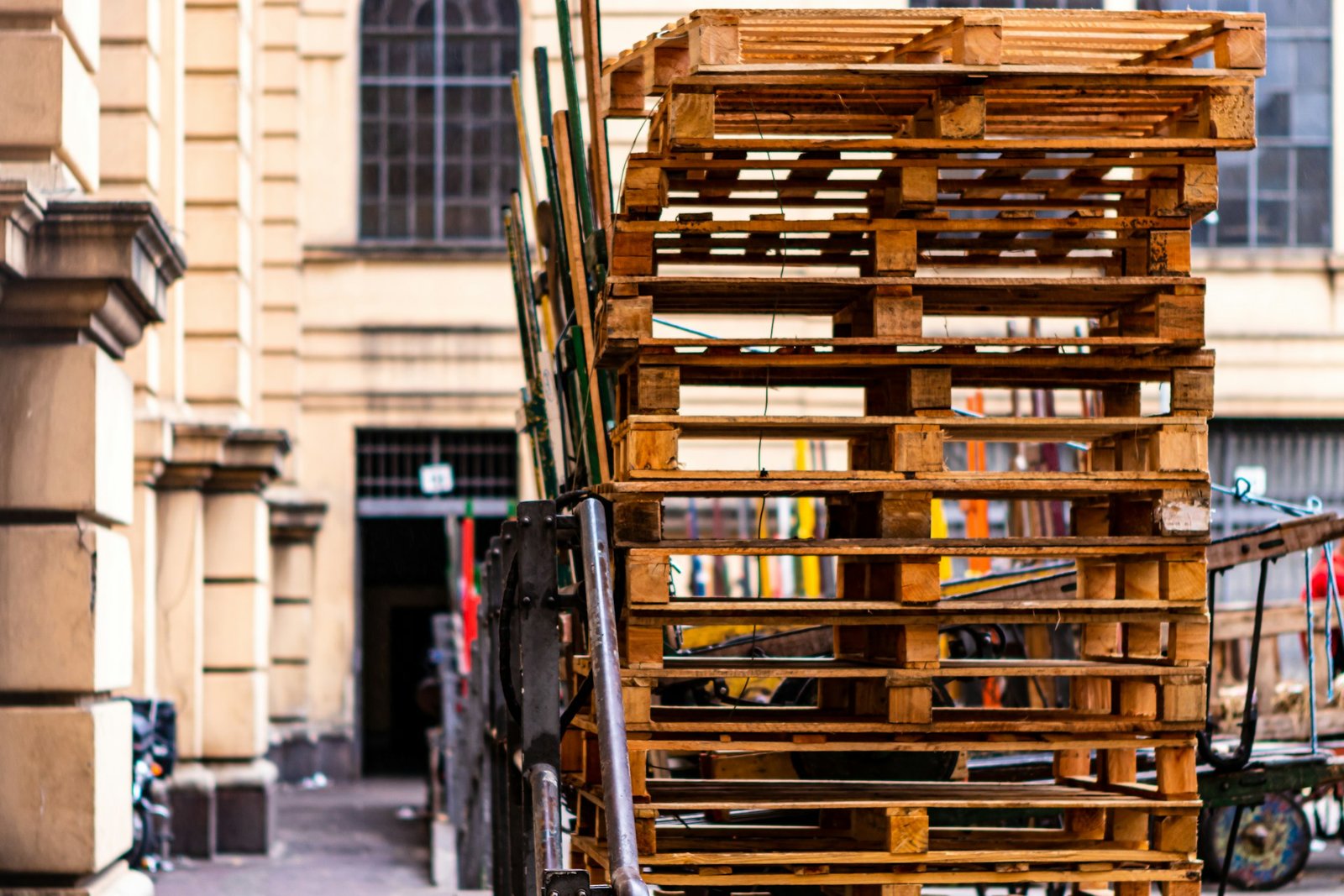
A resale pallet should still have enough structural integrity to be reused or repaired.
What Condition Do Used Pallets Need to Be In?
A resale pallet should still have enough structural integrity to be reused or repaired.
Buyers typically inspect the deck boards, stringers, blocks, fasteners, and overall shape. They’re looking for damage that affects handling or makes repair impractical.
A pallet is more likely to qualify when:
- The frame remains square
- Most boards are intact
- Stringers or blocks are structurally sound
- Nails aren’t protruding
- The pallet can be stacked and moved safely
- There is no severe rot, fire damage, or contamination
Normal wear is expected. Scratches, faded wood, minor discoloration, old labels, or a professionally replaced board do not necessarily disqualify a pallet.
The Pallet Squad purchases pallets in various conditions, including lightly used and some damaged pallets. Final eligibility and pricing depend on the extent of the damage, pallet type, location, and load.
Repairable Pallets May Still Have Value
A cracked board doesn’t always make a pallet scrap.
Pallet recyclers regularly inspect and repair used pallets before placing them back into circulation. Depending on the pallet, repairs might include replacing a deck board, reinforcing a stringer, removing damaged fasteners, or rebuilding part of the pallet.
The repair still needs to make economic sense.
A common-size pallet with one broken board may be worth repairing because there is a ready market for it. An unusual pallet with several broken stringers may require more labor and material than the finished pallet is worth.
Keep repairable pallets separate from pallets that have collapsed, rotted, burned, or broken into loose pieces. That makes it easier for the buyer to understand what is actually in the load.
Quantity and Consistency Matter
Even usable pallets may not qualify for paid pickup when there aren’t enough of them.
Sending a truck and crew to collect pallets has a cost. Buyers consider travel distance, loading time, fuel, sorting labor, pallet value, and how efficiently the load will fit on a trailer.
There is no universal minimum quantity. A buyer may collect a smaller number of high-demand pallets nearby while requiring a larger load for an out-of-area pickup.
Consistency also makes a load more useful. One hundred matching 48-by-40 pallets are easier to evaluate and resell than one hundred pallets containing several sizes, styles, and conditions.
Businesses that generate pallets continuously may be better candidates for recurring service. The Pallet Squad provides one-time pickup as well as ongoing pickup and drop-trailer options for businesses with steady pallet volume. Some enclosed drop trailers can hold up to 600 pallets, depending on how they are loaded.
Contamination Can Make Pallets Unsellable
Pallet condition isn’t limited to broken wood.
Pallets exposed to leaking chemicals, oil, spoiled food, strong odors, pests, mold, or unknown substances may be unsuitable for resale. Surface dirt from normal warehouse use is different from contamination that has soaked into the wood.
Buyers need to know what the pallets carried and how they were stored. Be upfront about spills, outdoor exposure, or unusual residue when submitting photos.
Pallets stored directly on wet soil for long periods may also develop rot or moisture damage. Even when the top boards look acceptable, the bottom boards and stringer ends may be weak.
Keep used pallets away from trash, loose debris, leaking containers, and standing water whenever possible. Cleaner storage protects the resale value and makes pickup easier.
Location and Pickup Access Affect Eligibility
A good pallet load can become difficult to collect when the truck cannot reach it.
Before scheduling pickup, consider:
- Can a semi-truck or pickup vehicle reach the pallet area?
- Is there a loading dock, forklift, or pallet jack available?
- Are the pallets stacked safely?
- Are they blocked by equipment, dumpsters, or stored products?
- Will the driver need to hand-load loose pallets?
- Are there restricted receiving hours or gate procedures?
Pallets should be stacked together near an accessible dock, roll-up door, yard entrance, or loading area. Avoid mixing them with cardboard, shrink wrap, damaged shelving, or general waste.
The Pallet Squad recommends sending photos so the team can review the pallet condition, quantity, and access before pickup is scheduled. Their guide to free pallet pickup explains how reusable, repairable, and scrap pallets may require different pickup arrangements.
How to Prepare Used Pallets for a Quote
You don’t need to grade every pallet yourself, but a little sorting makes the quote more accurate.
Count the Pallets
Give the buyer a realistic estimate. If the stack is large, count the number of pallets in one column and multiply it by the number of columns.
Measure the Size
Measure the length and width of each major pallet group. Note whether they are stringer pallets, block pallets, two-way entry, or four-way entry if you know.
Separate Different Conditions
Keep reusable pallets apart from badly broken pieces. You can also separate matching pallets from mixed sizes.
Remove Trash and Loose Material
Take off shrink wrap, cardboard, straps, and loose product packaging. Don’t load unrelated waste between the pallets.
A clean stack is easier to count, inspect, move, and load.
Send Clear Photos
Include a wide photo of the entire quantity and closer photos showing the average condition. Photograph any major damage or contamination too.
To find out what your load qualifies for, contact The Pallet Squad through its sell pallets and schedule pickup service. Include your location, pallet count, dimensions, condition, and a few current photos.
What Happens to Pallets That Cannot Be Resold?
A pallet that doesn’t qualify for resale may still have recyclable material.
Severely damaged pallets can sometimes be dismantled so usable boards, blocks, or stringers can be recovered. Wood that cannot be repaired or reused may be processed through another recycling or disposal route, depending on its condition and local options.
This is why it’s useful to separate reusable pallets from true scrap. Reuse generally preserves more of the pallet’s original value than immediately treating the entire load as waste.
The U.S. Environmental Protection Agency’s waste management hierarchy prioritizes source reduction and reuse before recycling, energy recovery, and disposal.
Frequently Asked Questions About Used Pallet Resale
Can broken pallets still be sold?
Sometimes. Pallets with limited damage may be repairable and still have value. Pallets with severe structural failure, rot, contamination, or extensive missing material are less likely to qualify.
Are 48-by-40 pallets worth more?
Standard 48-by-40 pallets often have stronger demand because they are commonly used across North American supply chains. Value still depends on grade, condition, quantity, and the buyer’s current needs.
Can I sell painted pallets?
Only when your business owns them. Branded rental or pooled pallets should be separated and returned to the company named on the pallet.
Do pallets need heat-treatment stamps to be resold?
Not necessarily. Heat-treatment requirements depend on how the next customer will use the pallet. Export pallets require proper treatment and markings, but many domestic pallet applications do not.
Will a buyer pick up a small pallet stack?
It depends on location, pallet type, condition, and demand. Send the count and photos before moving the pallets or assuming pickup will be available.
How much are used pallets worth?
There is no single price for every used pallet. Buyers consider dimensions, grade, repair needs, quantity, location, and current market demand. The best way to get an accurate number is to request a quote for the specific load.
Find Out What Your Used Pallets Qualify For
Used pallet resale comes down to more than appearance. The buyer needs to confirm that the pallets belong to your business, match a usable size, have enough remaining value, and can be collected efficiently.
Sort the load, measure the pallets, take a few clear photos, and send The Pallet Squad the details. The team can review what you have and explain whether the pallets qualify for purchase, free pickup, recurring removal, or another option.