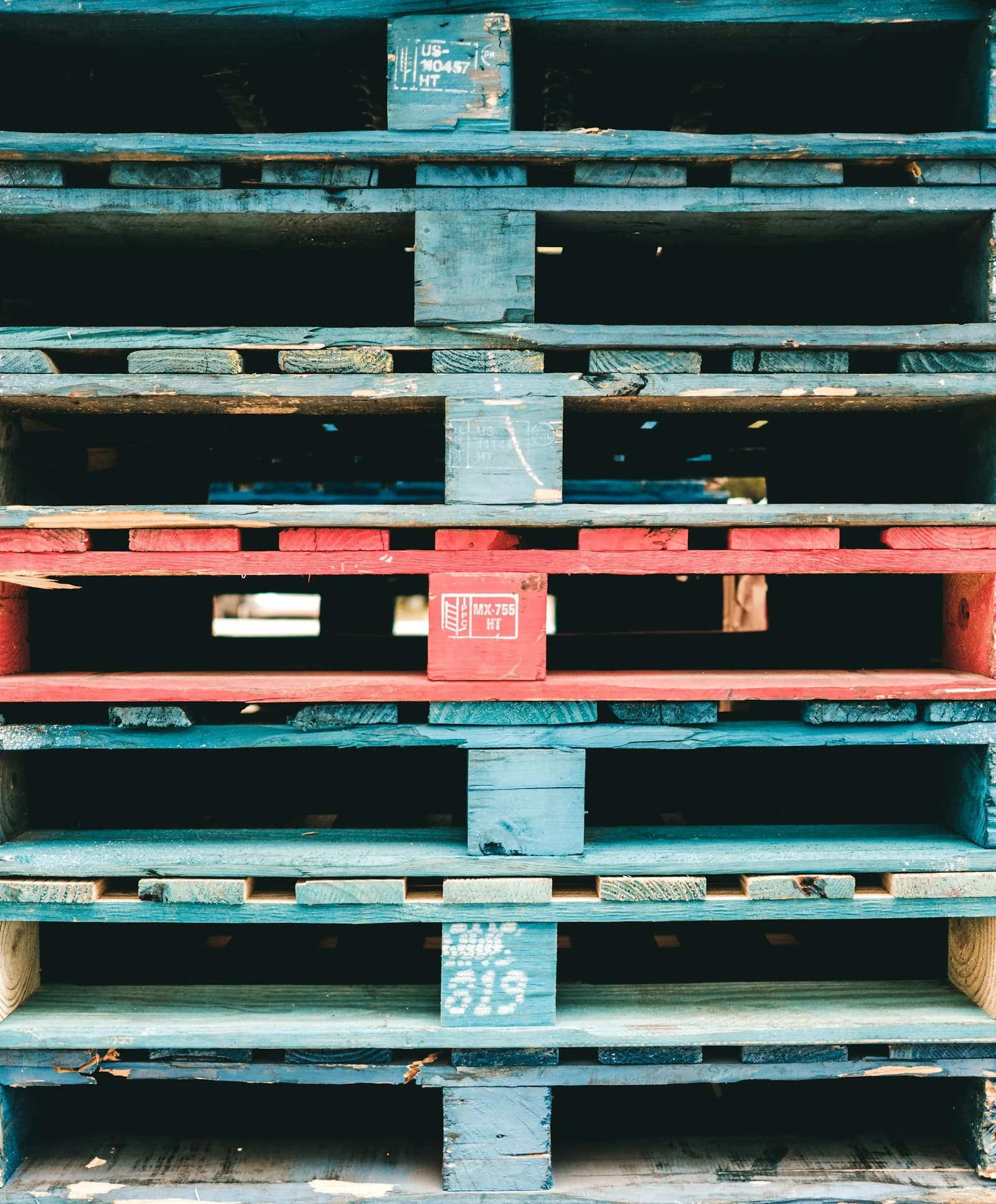
Paint makes pooled pallets easier to identify as they move between manufacturers, warehouses, distribution centers, retailers, and pallet depots.
Under a pallet pooling system, a business rents or uses pallets from a provider rather than purchasing each pallet outright. The provider continues to own the pallets and manages their collection, inspection, repair, and redistribution.
Color gives warehouse teams a quick visual clue that a pallet belongs to a managed pool. It also makes accidentally mixed, misplaced, or stray pallets easier to spot.
Still, color isn’t a universal classification system. A red pallet doesn’t always come from the same company, especially when comparing North American and European supply chains. Always read the name, logo, or “property of” marking before deciding what to do with it.
What Do Blue Pallets Mean?
Blue wooden pallets are most commonly associated with CHEP, a large pallet pooling company.
CHEP pallets are typically painted blue and marked with the CHEP name or wording such as “Property of CHEP.” They remain CHEP’s property and aren’t meant to be bought, sold, traded, discarded, or converted into furniture or other projects. CHEP asks businesses that receive stray blue pallets to arrange for their return.
You’ll often see blue pallets moving through grocery, retail, manufacturing, and consumer goods supply chains. Receiving a product on one doesn’t mean the receiving business now owns the pallet.
If several blue pallets are gathering near your dock, separate them from your company-owned pallets. Check the markings and follow the return instructions provided by the pool operator or the company that sent the shipment.
What Do Red Pallets Mean?
In North America, red pallets are commonly associated with PECO Pallet. PECO’s red block pallets operate within a rental pool throughout the United States, Canada, and Mexico. PECO states that these pallets remain its property and should be recovered rather than sold or discarded.
In parts of Europe, red pallets may belong to LPR, short for La Palette Rouge. LPR also operates a pallet pooling system, particularly within grocery, retail, and fast-moving consumer goods supply chains.
This is a good example of why paint alone isn’t enough. Look for:
- The company name or logo
- “Property of” wording
- Branded blocks or stencils
- A serial number or tracking label
- Return or recovery instructions
A faded red pallet might look like an ordinary recycled pallet from across the warehouse. The branded markings are usually a better identifier than the remaining paint.
What Do Brown Pallets Mean?
Brick-brown pallets are most often associated with IPP, a pallet pooling provider with a strong presence in European supply chains.
IPP identifies its pallets with brown paint and markings such as “Property of IPP,” “Property of IPP Logipal,” or “Property PP.” The company also notes that its name appears on the pallet so it can still be identified when the paint becomes worn or dirty.
A U.S. warehouse may still encounter an IPP pallet if it receives imported products or works with an international distribution network.
As with blue and red pool pallets, a brown IPP pallet shouldn’t be treated as an unclaimed pallet simply because it was left behind after unloading.
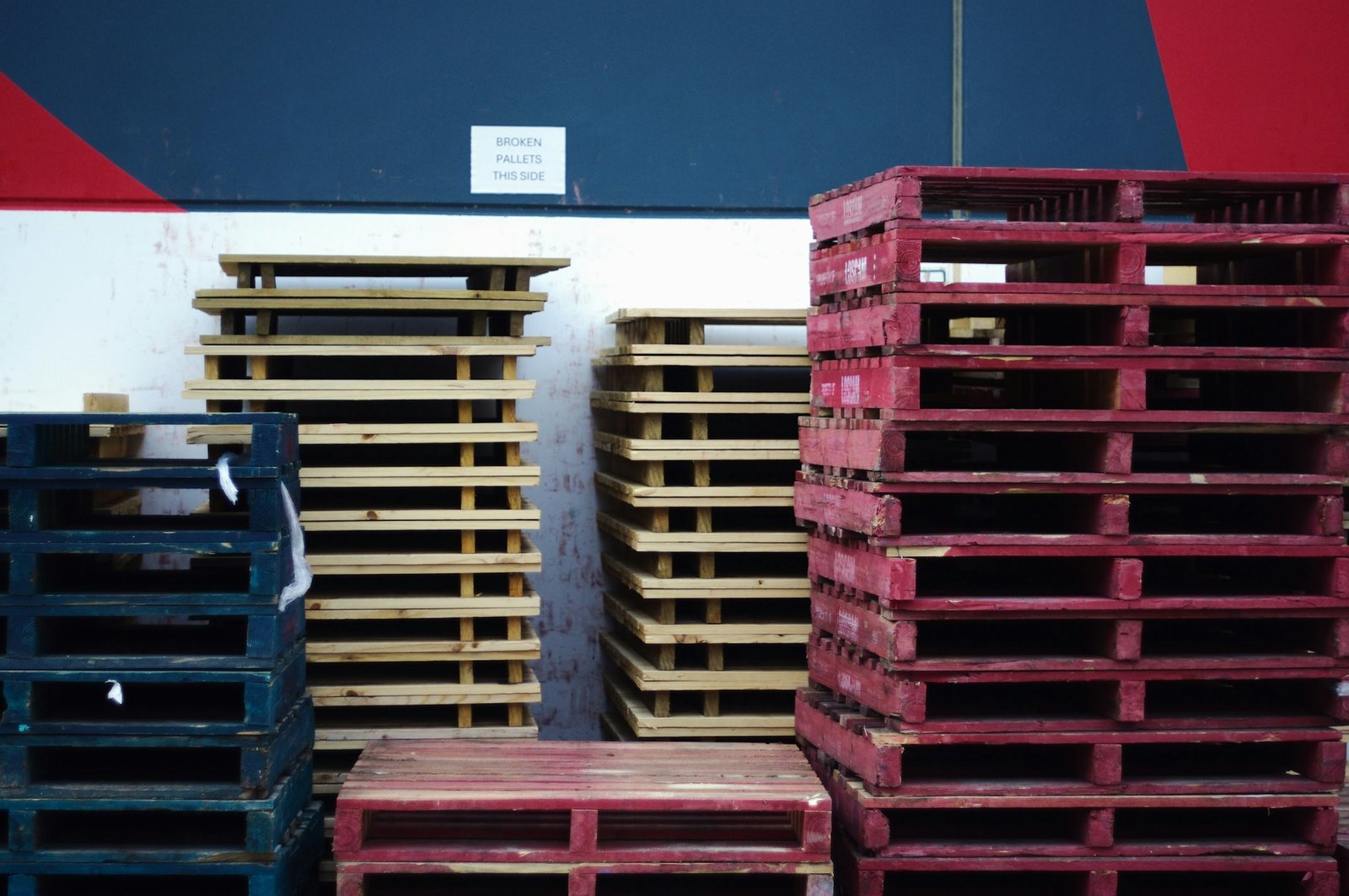
Does the Paint Show How a Pallet Was Treated?
No. Pallet color usually identifies ownership, branding, or an internal tracking system. It doesn’t confirm that the pallet is heat-treated, export-ready, food-safe, chemically treated, or approved for a particular product.
Treatment information appears in stamps and codes rather than paint color.
For international shipping, regulated wood packaging must meet ISPM 15 requirements and carry the proper certification mark. That mark identifies information such as the country, approved producer or treatment provider, and treatment method. The USDA explains that wood packaging entering the United States must be properly treated, marked, and free of regulated pests.
The Pallet Squad’s guide to wood pallet markings explains common codes such as HT for heat treatment and how those markings differ from company branding.
Don’t assume a blue, red, or brown pallet meets your shipping requirements based on color. Verify the stamp.
Can Your Business Sell Painted Pallets?
Not every painted pallet is off-limits, but branded pool pallets generally aren’t yours to sell.
Before adding any colored pallets to a buyback or pickup load, inspect them for ownership markings. A pallet buyer needs to distinguish between pallets your business owns and assets belonging to CHEP, PECO, IPP, LPR, or another pool operator.
The same rule applies to damaged pallets. A cracked board doesn’t cancel the original company’s ownership. Pooling companies often collect damaged pallets so they can repair or responsibly recycle them within their own system.
Unpainted “whitewood” pallets are more commonly bought, sold, repaired, and exchanged through the general used-pallet market. Their value depends on size, style, condition, quantity, and local demand.
Businesses with company-owned pallets can review The Pallet Squad’s guide to reselling used pallets before preparing a load for pickup.
What to Do With Painted Pallets at Your Facility
The easiest approach is to sort painted pallets as soon as they’re unloaded.
Create a separate area for pallets that show pool-company colors or branding. This keeps them from being mixed into outgoing orders, sold with regular pallets, or accidentally damaged during handling.
Next, confirm the owner by checking the pallet’s blocks, sideboards, stencils, and labels. Contact the pool provider or the company that shipped the product to arrange the correct return process.
For facilities that receive recurring shipments, it’s worth documenting where each type of pallet should go. A short note in the receiving procedure can prevent weeks of confusion later.
Your process might state:
- Company-owned pallets go into the reusable pallet stack.
- Broken company-owned pallets go into the repair or scrap area.
- Branded pooled pallets are separated by owner.
- Unknown pallets are held until ownership is verified.
This matters when your business schedules a pallet pickup. Sorting in advance gives the pallet company a more accurate count and avoids loading assets that don’t belong in the sale.
The Pallet Squad works with businesses that need to buy pallets, remove eligible used pallets, or create a recurring pallet program. You can request a pallet quote with details about your pallet sizes, condition, quantity, and pickup needs.
What About Green, Yellow, Black, or Custom-Painted Pallets?
Other colors don’t have one consistent meaning across the pallet industry.
Some companies paint pallets for internal identification. A manufacturer might use one color for production pallets and another for finished shipments. Warehouses sometimes mark pallets by department, customer, facility, product category, or inspection status.
Paint may also have been added by a previous owner without representing a formal pallet pool.
For that reason, don’t rely on a color chart alone. Check the actual pallet for ownership language and ask your supplier when the source isn’t clear.
A privately painted pallet that your business owns may still be reusable or sellable. A pallet with a recognizable rental-company logo is a different situation.
Questions Businesses Ask About Colored Pallets
Are blue pallets free to take?
No. Blue CHEP pallets remain the property of CHEP, even when they’re found outside the normal return network. They should be reported or returned rather than taken, sold, or repurposed.
Can I use a painted pallet for another shipment?
Only when your company owns the pallet or has permission through the applicable pool agreement. Sending a rented pallet into another supply chain can make it harder for the owner to recover.
Are painted pallets worth more?
Not necessarily. Paint doesn’t determine resale value. Ownership, size, construction, condition, and local demand matter much more. A durable pool pallet may look valuable, but it generally isn’t available for resale by the business that received it.
Does faded paint mean the pallet is no longer owned?
No. Pool pallets remain company property even when the paint is chipped, dirty, or nearly gone. Look for stamped blocks, logos, carved lettering, and ownership wording.
Are colored pallets safe to use?
Color doesn’t confirm safety. Inspect every pallet for broken boards, protruding nails, contamination, severe moisture damage, and structural weakness. Confirm any required treatment markings before using it for export.
Know What You Have Before Scheduling Pickup
Blue, red, and brown pallets aren’t painted just to stand out. In many cases, the color shows that the pallet belongs to a managed rental pool and needs to return to its owner.
Separate those pallets from your regular inventory, check the markings, and don’t assume every pallet behind the warehouse is available to sell.
For information about international treatment and certification markings, review the USDA guidance for wood packaging material
Not sure which pallets your business owns or what’s eligible for pickup? Send The Pallet Squad a few details about your inventory, and we’ll help you sort out the next step.