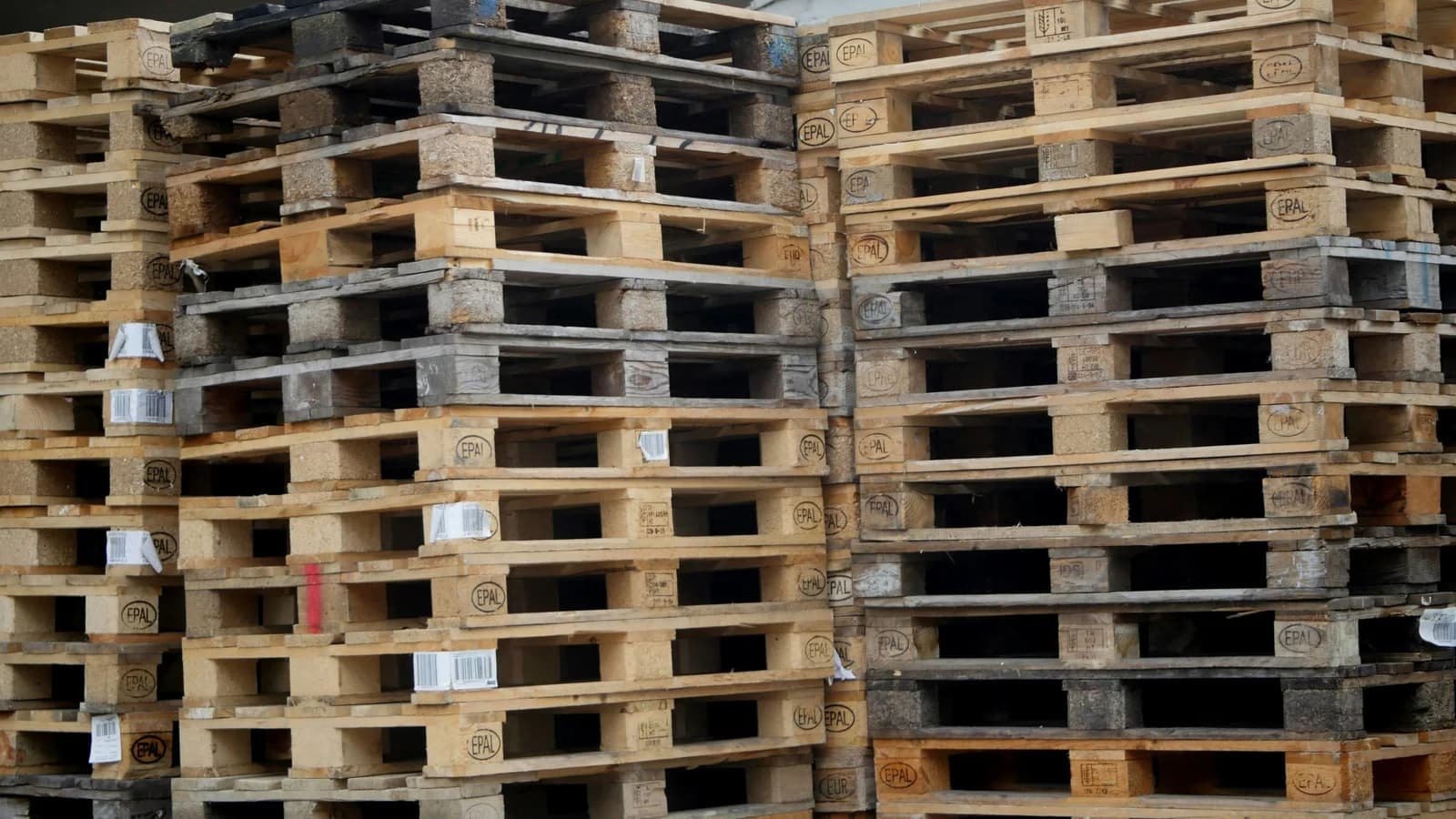
Walk into almost any warehouse yard, and you’ll see it: stacks of pallets in every condition imaginable. Some look nearly new. Others have clearly been through dozens of trips. And somewhere in between is the real question most operations teams don’t formally ask:
How long should we actually keep reusing these?
When it comes to wood pallet reuse, the answer isn’t a fixed number. It’s a balance between performance, cost, and risk. Reuse too little, and you overspend. Reuse too long, and you increase the chances of damage, delays, and safety issues.
Let’s break down how pallet reuse really works in practice and how to know when a pallet has reached the end of its useful life.
The Short Answer
A typical wooden pallet can be reused:
- 5 to 15+ trips in standard distribution environments
- Fewer cycles in high-impact or heavy-load operations
- More cycles if it’s consistently repaired and handled properly
But that range doesn’t tell the whole story.
Because pallets don’t “fail” on a schedule, they fail based on how they’re used.
Why Some Pallets Last 3 Trips and Others Last 20
Two pallets built the same day can have completely different lifespans.
What changes?
1. Load Type
- Lightweight consumer goods → longer life
- Dense materials (beverages, chemicals, steel) → faster wear
2. Handling Environment
- Smooth, controlled warehouse → minimal damage
- High-speed, high-impact docks → accelerated breakdown
3. Freight Distance
- Short local deliveries → less stress
- Long-haul, multi-touch shipments → more damage over time
4. Storage Conditions
- Indoor storage → preserved integrity
- Outdoor exposure → moisture, warping, and degradation
5. Repair Practices
- Regular repair → extended lifecycle
- No repair process → early disposal
Pallet lifespan is less about time and more about stress cycles.
What Actually Happens During Reuse Cycles
Each time a pallet moves through your operation, it experiences:
- Forklift entry pressure
- Load weight compression
- Vibration during transport
- Environmental exposure
- Stacking and unstacking stress
These forces don’t break pallets immediately, but they weaken them gradually.
Think of pallet reuse like tire wear:
You don’t notice damage all at once, but performance declines over time.
The 3 Stages of Wood Pallet Reuse
Instead of thinking in “number of uses,” it’s more useful to think in lifecycle stages.
Stage 1: Full Performance (Like-New Condition)
- Strong structural integrity
- No repairs
- Handles full load capacity easily
- Ideal for high-value or sensitive shipments
This is where new pallets or freshly repaired high-grade pallets sit.
Stage 2: Functional Reuse (Core Workhorse Phase)
- Minor repairs or wear
- Still structurally sound
- Suitable for most outbound shipments
- Most common phase for recycled pallets
This is where the majority of pallets spend their life.
For most operations, this stage delivers the best balance of cost and performance.
Stage 3: End-of-Life (High Risk Zone)
- Cracked stringers
- Loose or missing boards
- Reduced load capacity
- Increased risk of failure
At this point, pallets should be:
- Repaired (if possible)
- Or removed from circulation
Continuing to reuse pallets in this stage increases the likelihood of:
- Load collapse
- Product damage
- Safety incidents
How Repair Extends Pallet Life
One of the biggest advantages of wood pallet reuse is repairability.
A pallet doesn’t need to be perfect to remain useful.
Common repairs include:
- Replacing broken deck boards
- Reinforcing stringers
- Re-nailing loose components
- Rebuilding partial sections
A well-managed repair process can:
- Extend pallet life by multiple cycles
- Reduce the need for new pallet purchases
- Maintain consistent inventory levels
In many cases, a repaired pallet returns to Stage 2 and continues performing reliably.
When Reuse Becomes a Risk
There’s a tipping point where reuse stops saving money and starts costing it.
Signs a pallet has reached that point:
- Visible structural cracks
- Flexing under normal load
- Repeated repairs in the same area
- Difficulty handling forklifts
- Increased product damage tied to pallet condition
At this stage, the cost of one failure can exceed the cost of replacement.
The Hidden Cost of Over-Reusing Pallets
Trying to “get one more trip” out of a pallet can lead to:
- Damaged freight
- Rework at the dock
- Safety risks for operators
- Delayed shipments
- Customer complaints
The goal of wood pallet reuse is not maximum usage, it’s optimal usage.
How to Build a Smarter Pallet Reuse System
Instead of guessing, high-performing operations manage reuse intentionally.
1. Separate pallets by condition
- Ready-to-use
- Repairable
- Scrap
2. Inspect regularly
- Quick visual checks at receiving and shipping
- Remove weak pallets early
3. Standardize grading
- Define what qualifies as usable vs. rejected
4. Integrate recycling and pickup
- Remove scrap pallets consistently
- Prevent yard buildup
5. Track replacement rates
- Monitor how many pallets are replaced vs reused
This turns pallet reuse into a controlled system, not a reactive decision.
The Bigger Picture: Why Wood Pallet Reuse Matters
Beyond cost savings, wood pallet reuse supports:
- Reduced material waste
- Lower demand for new lumber
- Cleaner warehouse operations
- Improved sustainability reporting
In high-volume supply chains, even small improvements in reuse efficiency create a significant impact.
So… How Many Times Should You Reuse a Pallet?
Here’s the practical answer:
- Reuse until performance declines, not until failure occurs
- Repair when cost-effective
- Replace before the risk outweighs the savings
There’s no universal number, but there is a clear principle:
A pallet should stay in circulation only as long as it remains safe, stable, and predictable.
Wood pallet reuse isn’t about squeezing every possible trip out of a pallet. It’s about managing lifecycle intelligently.
By understanding how pallets wear, when to repair them, and when to remove them, operations teams can:
- Reduce costs
- Prevent damage
- Improve safety
- Maintain a consistent pallet supply
The best pallet programs don’t ask “how many times can we use this?” They ask, “Is this pallet still performing the way we need it to?”