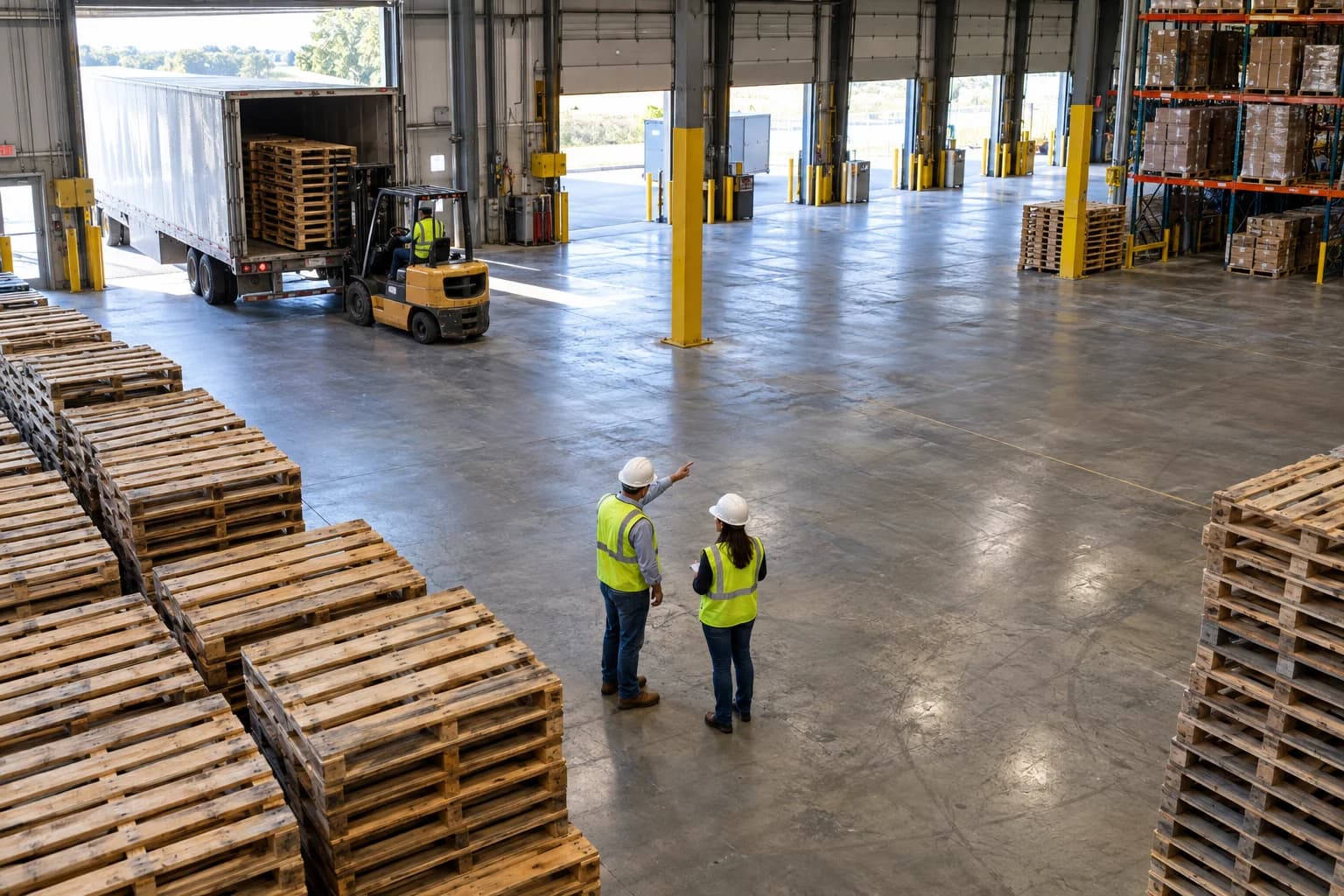
Cincinnati pallet removal should be part of the expansion plan before a warehouse adds inventory, dock activity, equipment, or staff. Growth usually increases the number of wood pallets moving through a facility, including pallets that no longer fit the operation’s shipping needs. Without a clear removal process, those extras start competing for the same floor, dock, and yard space the expansion was supposed to create.
At The Pallet Squad, we work with warehouses and distribution centers that need ongoing pallet recycling with drop trailers, scheduled pallet pickup, and other removal options. Planning that service early gives the facility a defined destination for excess pallets instead of leaving employees to find space after operations ramp up.
Why Cincinnati Pallet Removal Belongs in the Expansion Plan
Warehouse expansion planning often focuses on product storage, racking, equipment paths, labor, and outbound capacity. Pallets affect every one of those areas.
Higher receiving volume brings more pallets into the building. New customers or product lines may introduce different pallet sizes and conditions. Changes to shipping specifications can also leave the warehouse with pallets it owns but no longer uses.
Those pallets don’t disappear when the active inventory moves forward. Employees still need to identify, stage, transport, and remove them.
A warehouse that waits until after the expansion may discover that its new floor plan lacks a practical pallet staging area. The designated space might block a dock door, interfere with trailer movement, or sit too far from the employees who handle pallets during each shift.
Expansion creates a useful opportunity to decide where unwanted pallets will go and how they will leave the facility.
Estimate Pallet Volume After the Expansion
Start with the expected operation, not the pallet pile behind the warehouse today.
Review the projected number of inbound loads, outbound shipments, and pallets removed from active use. Consider whether the expansion will add a new shift, increase receiving hours, or introduce customers with different pallet requirements.
Warehouse teams should also separate predictable volume from temporary volume. Construction materials, equipment deliveries, and opening inventory may create a one-time increase in pallets. Ongoing production and distribution activity create the volume that the removal plan must handle after the expansion settles into normal operations.
Track details such as:
- How many excess pallets the facility currently generates each week
- How quickly that number may change after expansion
- Whether pallet volume stays steady or rises during seasonal peaks
- Which pallets belong to the business
- Whether usable pallets remain mixed with broken or unwanted material
- How frequently the warehouse currently schedules removal
This information makes it easier to compare a scheduled pallet pickup service with an ongoing drop trailer program.
Give Excess Pallets a Defined Place in the New Layout
An expansion plan should show where employees will take pallets after removing them from use. “Behind the building” isn’t specific enough.
Choose a location that fits the warehouse’s equipment routes and daily workflow. Employees should be able to move pallets without crossing busy pedestrian areas, blocking active dock doors, or creating another temporary pile along the way.
The location also needs enough space for safe handling. OSHA’s materials handling and storage requirements require facilities to keep aisles and passageways clear and store materials securely against sliding or collapse. Each operation still needs to apply its own safety rules, equipment procedures, and site requirements.
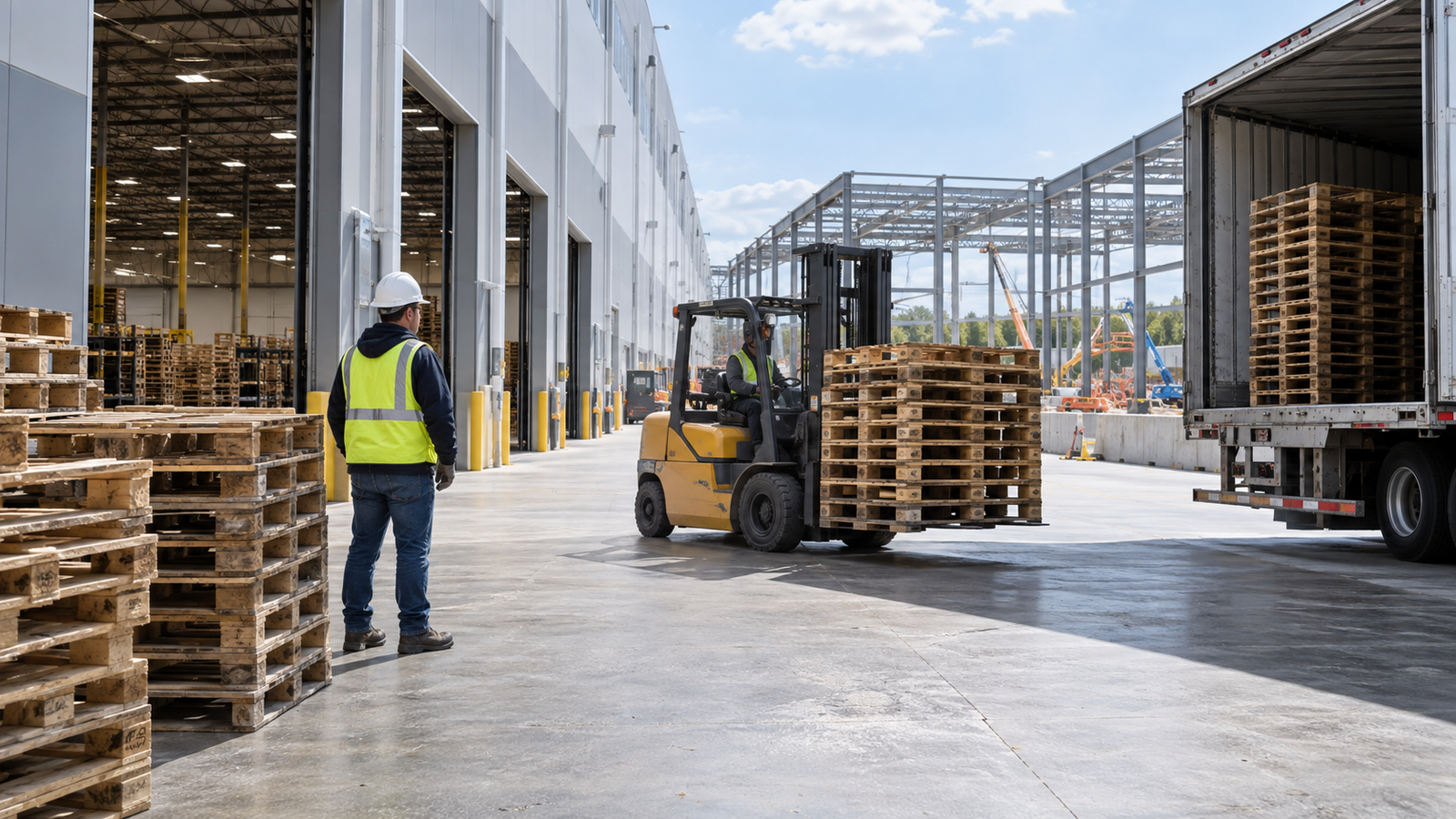
If the warehouse plans to use an on-site trailer, the layout must account for more than the trailer’s footprint. The service provider needs room to place, retrieve, and exchange it. Drivers need clear access, while the warehouse needs a safe route for loading pallets.
Planning these movements on paper before the expansion opens is much easier than changing traffic patterns after employees establish new routines.
Decide Between Pallet Pickup and a Drop Trailer
A one-time or recurring pickup may suit a facility that generates moderate pallet volume. The warehouse stages the pallets in an agreed area, then schedules removal based on its needs.
A drop trailer works differently. The trailer stays on-site and becomes the designated collection point. Employees load eligible wood pallets as they accumulate, and the provider retrieves or exchanges the trailer when it reaches the agreed service point.
The Pallet Squad’s drop trailer pallet recycling service uses an enclosed 53-foot semi-truck trailer. The empty trailer option has a listed capacity of up to 600 pallets, although actual loading depends on the pallet mix and service arrangement.
This option fits qualifying warehouses, distribution centers, manufacturers, and other high-volume facilities with consistent pallet accumulation. Instead of creating a new stack and arranging another individual pickup each time, the operation has an established collection process.
A warehouse doesn’t need to guess which option will work. Monitor current pallet volume, apply the expansion forecast, and look at how quickly the same removal need will return.
Build Pallet Removal Into the Dock Workflow
The facility layout establishes where pallets go. The workflow determines whether they get there consistently.
Assign responsibility for identifying unwanted pallets, moving them to the collection area, and monitoring volume. If the warehouse runs several shifts, every shift should follow the same basic process.
Employees also need clear instructions on which pallets belong in the program. Pallets owned by a pooling company, vendor, customer, or other third party may require a separate return process. Warehouse teams shouldn’t assume that every pallet near the dock belongs in a recycling or resale load.
A simple routine could include:
- Inspecting pallets when they leave active circulation
- Separating company-owned pallets from third-party assets
- Moving eligible pallets to the assigned pickup area or trailer
- Recording estimated volume or remaining trailer capacity
- Notifying the designated contact before removal becomes urgent
Connect those steps to work the facility already performs. A receiving team might move unwanted pallets after unloading an inbound trailer. Another operation may handle them during an end-of-shift dock cleanup.
The routine should fit the warehouse rather than add a complicated layer that employees eventually stop following.
Plan for the Transition Period
The weeks around an expansion rarely reflect normal warehouse activity. Construction crews may still occupy part of the property. New inventory can arrive in large waves, and employees may move materials several times while racking and work areas come online.
Create a temporary pallet removal plan for this transition.
Identify where opening-phase pallets will go, who will assess them, and how frequently the warehouse will review the staging area. If the facility expects a large one-time accumulation, arrange pickup before that pile begins interfering with contractors, employee parking, or new equipment deliveries.
Then establish the long-term process for regular operations.
Keeping those two phases separate prevents a temporary cleanup from becoming the warehouse’s default pallet program. It also gives managers a chance to compare projected pallet volume with what the expanded facility actually generates.
Review the Process After Operations Ramp Up
Forecasts give the warehouse a starting point. Actual activity shows whether the removal schedule fits.
During the first few weeks, track how quickly excess pallets accumulate and how often employees move them. Look for stacks forming outside the assigned area. Check whether the trailer or staging location conflicts with active docks, yard traffic, or equipment routes.
Ask the employees doing the work what slows them down. They may find that the collection point sits too far from receiving or that certain pallet types need clearer instructions.
Managers should also compare pallet flow across shifts. A daytime team may follow the new process closely while an overnight shift lacks access to the same contact or equipment.
Small adjustments made early can keep the pallet process from turning into a recurring warehouse problem.
Include Pallet Removal Before the Expanded Space Opens
A larger facility needs a pallet removal process that matches its new volume. Otherwise, excess pallets gradually take back the space the business just added.
Before the expanded warehouse opens, estimate incoming pallet volume, assign a collection area, choose between scheduled pickup and drop trailer service, and document who handles each part of the workflow. Revisit the setup after operations reach a normal pace.
The Pallet Squad coordinates nationwide pallet pickup and drop trailer recycling for qualifying commercial facilities. If your Cincinnati warehouse is expanding, request a pallet service quote with your location, approximate pallet volume, expected growth, and preferred service frequency. We’ll use those details to evaluate the appropriate removal setup for the facility.