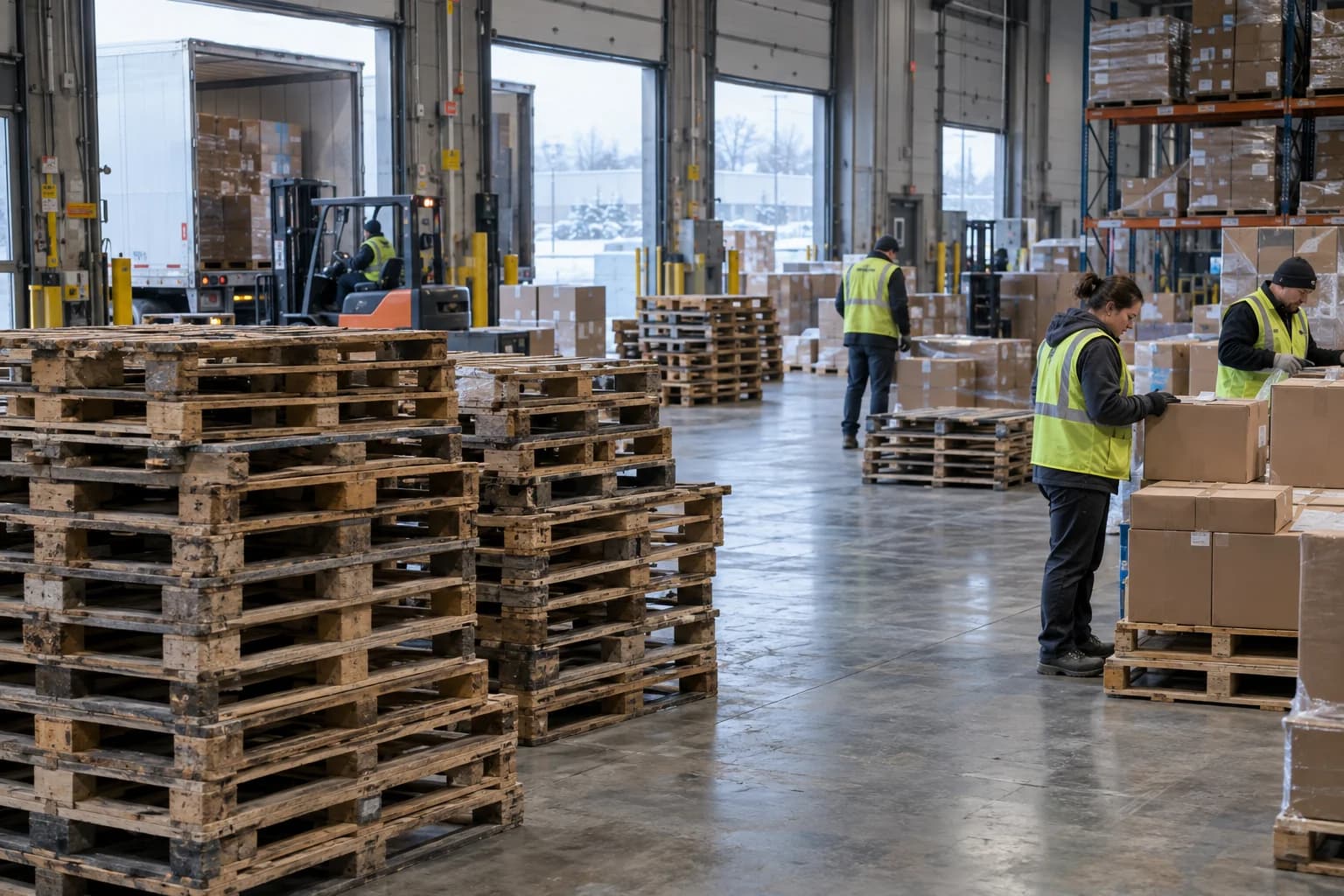
Indianapolis pallet recycling works best after peak retail season when distribution centers separate pallet types, track how quickly excess inventory accumulates, and establish a dependable removal schedule. For facilities that keep generating used wood pallets, an empty drop trailer creates a designated collection point while the post-holiday return surge moves through receiving.
At The Pallet Squad, we work with warehouses and distribution centers that need ongoing pallet pickup and recycling. Instead of letting post-peak pallets spread across the dock or yard, teams can load eligible pallets into a trailer as they accumulate. Once the trailer fills, we coordinate its removal and exchange based on the service arrangement.
Why Pallet Returns Increase After Peak Retail Season
Peak retail season often changes pallet flow in both directions. Before the holidays, distribution centers move large amounts of inventory to stores and fulfillment locations. Afterward, returned merchandise, unsold seasonal products, packaging, transfers, and vendor shipments begin moving back through the network.
That reverse flow can bring wood pallets into the facility faster than normal outbound operations use them. At the same time, employees may remove damaged or inconsistent pallets from circulation while inspecting returned loads.
The result is a temporary imbalance. Pallets keep arriving, but fewer leave with outbound freight.
This buildup rarely happens in one clean stack. Some pallets remain usable. Others need recycling. Branded, painted, pooled, or vendor-owned pallets may require a separate return process. Odd sizes might not fit the facility’s regular shipping requirements.
Without a defined system, those categories start mixing together. Employees then spend extra time sorting stacks, moving pallets between staging areas, and trying to determine which pallets the facility actually owns.
Start Indianapolis Pallet Recycling With a Post-Peak Count
Before scheduling removal, estimate what the facility has and how quickly the volume continues to grow. An exact count of every pallet isn’t always necessary, but your recycling provider needs a useful picture of the material.
Record details such as:
- Approximate number of excess pallets
- Common pallet sizes
- General condition
- Whether the facility owns the pallets
- Current storage locations
- Expected weekly accumulation
- Access restrictions for pickup or trailer placement
Take photos of the larger groups. A short video of the pallet storage area can also show the volume, pallet condition, and available access more clearly than a written description.
This information helps distinguish a one-time seasonal cleanup from an ongoing recycling need. A facility that has one large post-holiday pile may need a scheduled pallet pickup service. A distribution center that continues generating pallets every week may be a better fit for a drop trailer program.
Separate Owned Pallets From Returnable Pallets
Not every pallet that enters the facility belongs in the recycling stream.
Retail distribution centers may handle pallets owned by vendors, carriers, pooling companies, or other supply chain partners. Markings, paint colors, stamps, and branding can indicate that a pallet must return through a specific program.
Create a holding area for pallets with unclear ownership. A supervisor or designated employee can review them before they enter a recycling trailer. This keeps questionable pallets out of the main collection process without forcing every receiving employee to make ownership decisions during a busy shift.
Separating pallets early also protects usable inventory. A standard pallet that meets the facility’s shipping requirements should remain available for outbound loads rather than getting mixed into a recycling stack.
Use clear labels for each category. Keep instructions short enough for employees to follow while unloading trucks, processing returns, and moving product.
Use an Empty Drop Trailer for Ongoing Pallet Returns
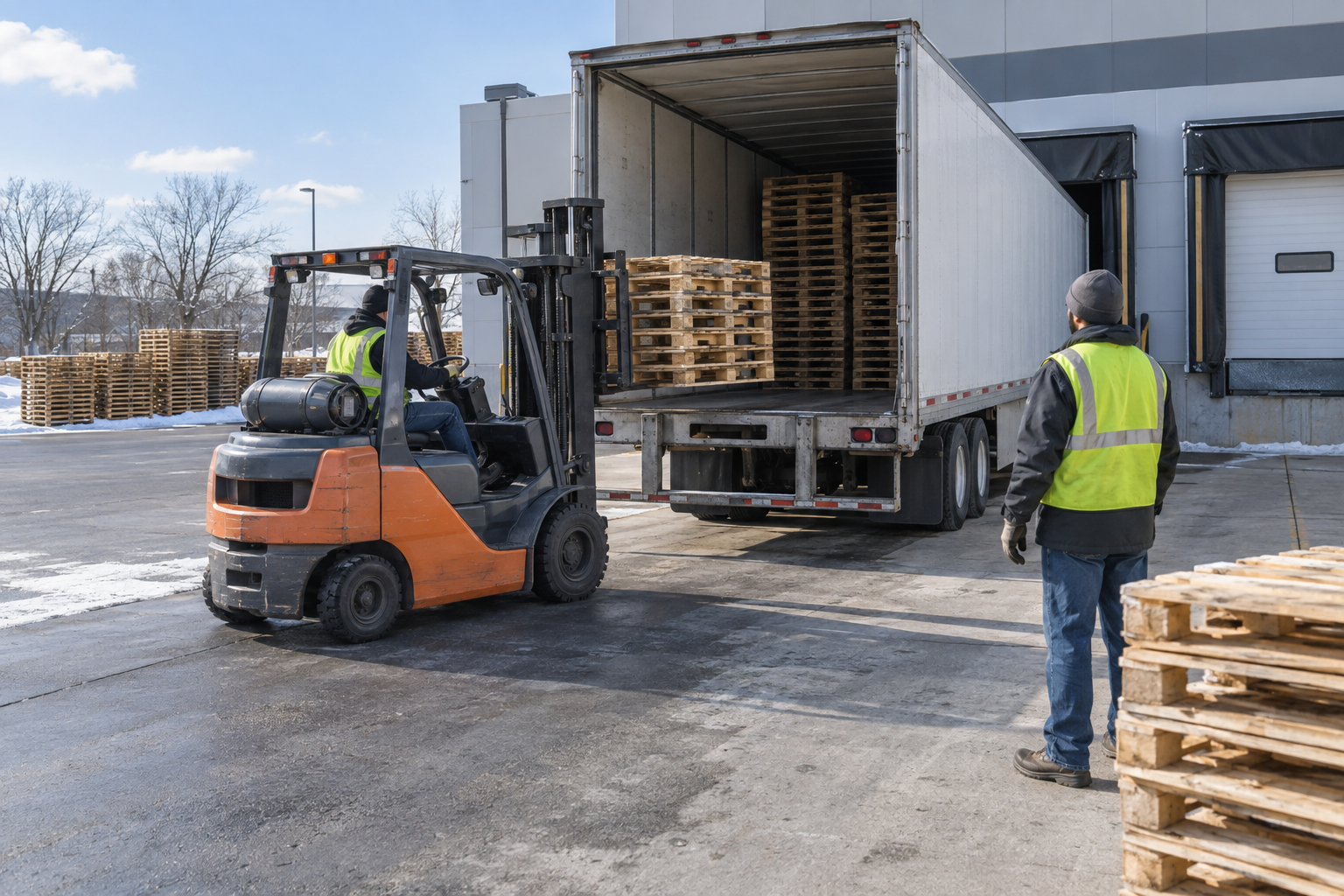
An empty drop trailer gives high-volume facilities a consistent place to collect eligible wood pallets. The Pallet Squad places an enclosed 53-foot semi-truck trailer at the business. Facility personnel load it over time, and we pick it up and swap it with another empty trailer when it reaches the appropriate capacity.
Each trailer holds up to 600 pallets, depending on the pallet mix and loading method. This setup works particularly well when pallets continue arriving throughout the post-peak return period.
Our drop trailer pallet recycling service changes the process from repeated cleanup to ongoing collection. Employees move approved pallets toward their removal destination as part of the normal warehouse workflow.
The trailer also creates a defined footprint. Pallet stacks no longer need to expand into open yard space as return volume changes from week to week.
Before placement, the facility needs to confirm that drivers can safely deliver, retrieve, and exchange the trailer. The selected location should account for active dock doors, tractor-trailer traffic, employee parking, gates, pavement conditions, and forklift routes.
Build Pallet Sorting Into the Returns Workflow
Post-peak operations already require decisions about returned products. Teams inspect merchandise, identify damage, determine whether inventory can return to stock, and route goods to the correct destination. Pallet sorting should fit into that existing flow.
Decide where employees will remove an unsuitable pallet from service. Then give that pallet a direct path to the recycling collection point.
If workers unload returned merchandise in receiving, the sorting area should sit close enough to reduce unnecessary forklift travel without blocking inbound activity. Facilities that process returns in another part of the building may need a dedicated transfer route to the trailer.
Avoid building temporary mixed piles with plans to sort them later. That approach requires employees to handle the same pallets again. It also makes the available pallet inventory harder to count.
The Indianapolis pallet service page explains the local options for pallet pickup, buying, supply, and drop trailer service. Indianapolis facilities can use that information to compare a one-time removal with a recurring program.
Keep Dock and Yard Access Clear
Pallet buildup becomes an operational issue once stacks interfere with dock doors, staging areas, traffic lanes, or access to equipment.
Choose one temporary review area for questionable pallets rather than allowing small stacks to form throughout the building. Establish a maximum amount that can remain there before a supervisor must make a decision.
Employees should also keep travel routes clear. The Occupational Safety and Health Administration’s materials-handling guidance states that storage areas must remain free from accumulations that create hazards and that aisles used for mechanical handling need sufficient clearance.
Each facility remains responsible for its own safety procedures, equipment rules, trailer placement, and employee training. A recycling plan should fit those established requirements.
Track How Quickly the Trailer Fills
The first post-peak cycle gives the facility useful planning data.
Record when employees begin loading the trailer, when it approaches capacity, and when the exchange occurs. Note whether pallets accumulate outside the trailer while the facility waits for removal.
These details reveal the actual post-peak pallet volume. They also show whether the service schedule needs to change while retail returns remain high.
Avoid waiting until employees have completely filled the available space before requesting the next exchange. A full trailer with no replacement plan sends new pallets back to the dock or yard.
Assign one person or role to monitor capacity and communicate with the recycling provider. Choose a backup for nights, weekends, vacations, and shift changes. Everyone who uses the program should know who tracks the trailer and where to report a problem.
Decide When the Seasonal Program Should Change
Post-peak pallet volume eventually settles. That doesn’t always mean the recycling program should end.
Compare the seasonal collection rate with the facility’s normal weekly volume. If excess pallets continue to accumulate predictably, the drop trailer may still make sense as an ongoing part of warehouse operations.
A slower facility might transition back to recurring pickup. Another location may keep the trailer but schedule exchanges less frequently. The right arrangement depends on pallet volume, site access, available space, and how often employees would otherwise manage outdoor stacks.
Review the program after major changes in receiving volume, retailer accounts, return policies, or facility layout. A schedule based on last year’s operations may no longer match the current flow.
Plan Post-Peak Pallet Removal Before the Yard Fills
Indianapolis distribution centers should prepare for excess pallets while planning the rest of their peak-season reverse logistics. Decide how employees will identify eligible pallets, where they will place them, and who will monitor the accumulation.
For a one-time surge, schedule pickup before stacks begin interfering with normal warehouse work. If the same pallet buildup returns every week, an empty drop trailer creates a more consistent collection process.
The Pallet Squad coordinates pallet recycling, pickup, and drop trailer programs for qualifying facilities in Indianapolis and nationwide. To discuss your pallet volume and post-peak schedule, request a pallet service quote and include the approximate quantity, pallet types, facility location, and expected removal frequency.