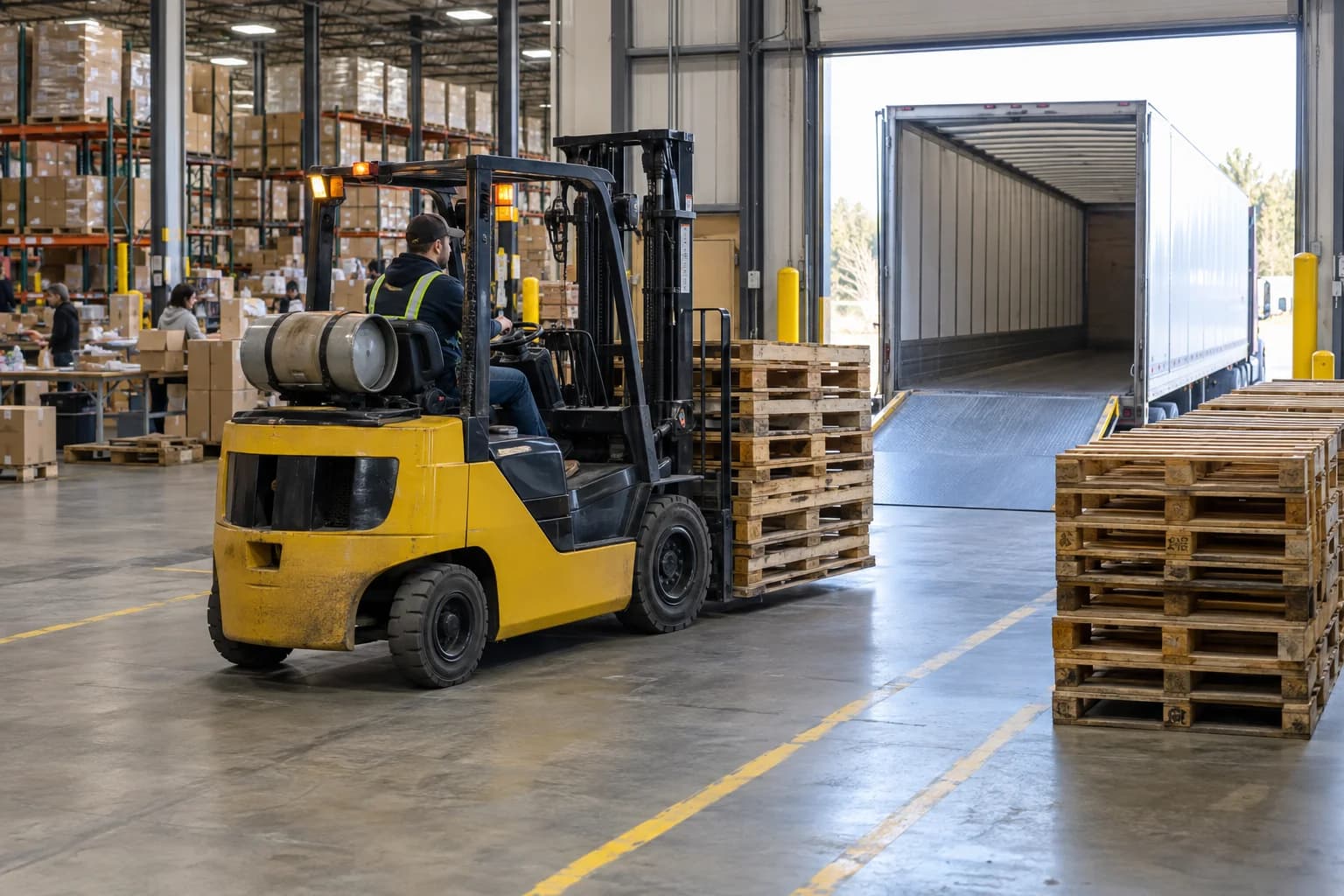
Columbus drop trailer pallet recycling gives high-volume e-commerce fulfillment centers a dedicated place to collect used wood pallets as orders move through the building. Instead of allowing excess pallets to spread across receiving, staging areas, or the yard, employees load eligible pallets into an enclosed trailer kept at the facility. Once it fills, the service provider removes it and replaces it with an empty trailer according to the service arrangement.
At The Pallet Squad, we coordinate drop trailer programs for warehouses and distribution facilities that generate pallets on a regular basis. For fulfillment centers with changing order volume, the program creates a consistent removal process without requiring someone to schedule a separate pickup each time another pallet stack appears.
Why E-Commerce Fulfillment Creates an Uneven Pallet Flow
Pallet volume rarely stays level inside an e-commerce fulfillment center.
Inbound shipments bring merchandise into receiving on pallets, but individual customer orders often leave the building as boxes or smaller parcels. That difference means pallets can enter the facility faster than they leave with outbound freight.
Promotions, seasonal inventory, product launches, returns, and changes in customer demand can make that imbalance more noticeable. A fulfillment center might generate a manageable number of excess pallets during an average week, then receive several large inbound shipments within a few days.
Once employees unload the merchandise, those pallets need a clear destination. Some remain suitable for internal use or outbound freight. Others qualify for recycling or resale. Pallets with unclear ownership, unusual dimensions, or specific markings may need a separate process.
Without a defined collection system, the facility starts creating temporary stacks wherever space remains available. Those stacks then compete with product staging, empty carts, equipment, inbound freight, and the next wave of inventory.
How Columbus Drop Trailer Pallet Recycling Works
The Pallet Squad’s drop trailer service includes an empty-trailer option for businesses that generate used pallets they want to sell or have removed.
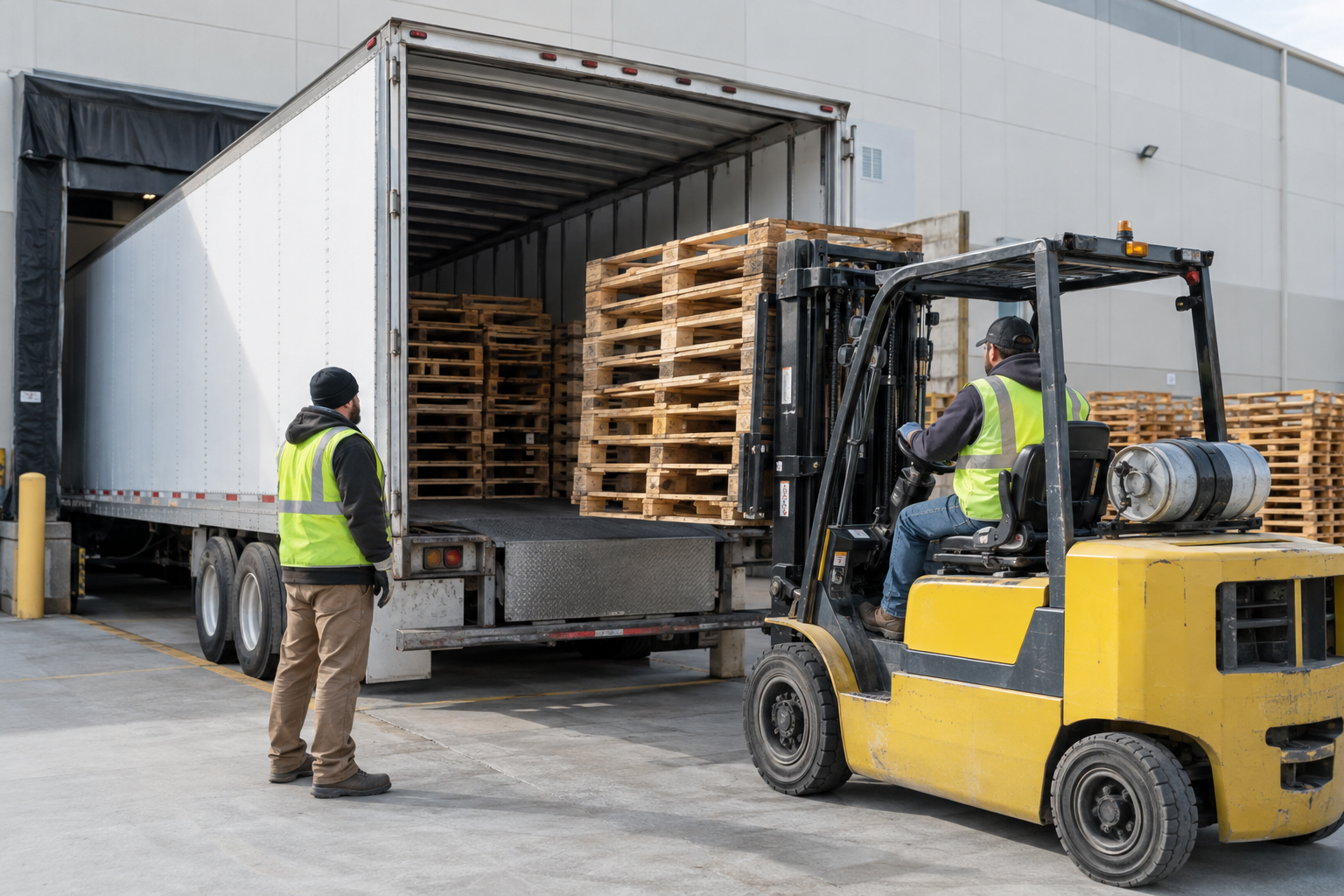
We place an enclosed 53-foot semi-truck trailer at the facility. Warehouse personnel load eligible wood pallets into it throughout the week. When the trailer fills, we pick it up and swap it with another empty trailer.
Each trailer holds up to 600 pallets, depending on the pallet mix and how the facility loads them.
The trailer remains on-site as a designated collection point. Employees don’t need to build a large outdoor pile and wait for someone to arrange removal. Pallets can move toward their final destination as soon as the warehouse takes them out of circulation.
Fulfillment centers that purchase pallets also have another option. The Pallet Squad can deliver a trailer filled with pallets for the facility to unload as needed. As that inventory runs low, the business places its next order, and we exchange the empty trailer for another loaded one.
The two arrangements address different sides of pallet flow. One collects excess pallets for removal. The other keeps purchased pallet inventory available at the facility.
Match the Program to the Facility’s Actual Volume
A drop trailer works best when used pallets accumulate consistently and in qualifying quantities. It usually doesn’t make sense for a business that finds a few unwanted pallets after an occasional delivery.
Start by tracking pallet activity over several normal operating weeks. Then include a promotional period, inventory reset, or other high-volume cycle if one is approaching.
Record:
- The approximate number of excess pallets generated each week
- The most common pallet dimensions
- General pallet condition
- Where the pallets currently accumulate
- How many times employees move them before removal
- How often the facility requests pickup
- Changes in volume during sales or return periods
This information shows whether the facility has a one-time cleanup need or an ongoing recycling requirement. Columbus businesses can review the local pickup, buying, supply, and drop trailer options on our Columbus pallet service page.
The Columbus location page states that free pickup or drop trailer haul-off requires a minimum of 100 pallets. Eligibility and any potential pallet value still depend on factors such as size, condition, quantity, ownership, location, and service requirements.
Choose a Trailer Location That Works During Busy Shifts
An available parking space isn’t automatically a suitable drop trailer location.
The trailer needs enough room for delivery, retrieval, and exchange. Drivers must be able to enter the property, position the trailer, and leave without interfering with normal traffic. Warehouse personnel also need a practical loading route.
Before service begins, review the proposed location with the people responsible for receiving, shipping, facilities, and workplace safety. Consider how the yard operates during its busiest hours rather than judging the space during a quiet period.
Check for:
- Active loading dock doors
- Trailer staging lanes
- Forklift and powered equipment routes
- Employee and visitor parking
- Gates, fences, tight turns, and overhead clearance
- Emergency access
- Pavement and drainage conditions
- Pedestrian traffic near the loading route
The trailer should remain close enough for regular use without blocking freight movement. Placing it too far from receiving creates unnecessary travel, while placing it too close to an active dock may interfere with incoming loads.
Facility managers should evaluate placement under their own safety procedures. The Occupational Safety and Health Administration’s warehousing guidance covers common warehouse concerns involving loading docks, material handling, storage, and powered industrial trucks.
Separate Pallets Before Employees Load the Trailer
A drop trailer works smoothly when employees know what belongs inside it.
Create a short standard based on the service arrangement. Explain which pallet sizes and conditions employees should load, what must stay out, and where they should place questionable pallets for review.
Ownership deserves particular attention. Fulfillment centers may receive pallets that belong to vendors, carriers, pooling companies, or other supply chain partners. Paint, stamps, branding, or other markings may identify pallets that require a separate return process.
Assign one supervisor or designated employee to review unclear pallets. Receiving teams shouldn’t have to research ownership or make complicated grading decisions while unloading an active shipment.
Sorting pallets when employees remove them from use also prevents repeated handling. If workers create a mixed pile first, someone must move and sort those pallets again before loading the trailer. A direct route from the decision point to the proper collection area keeps the process simpler.
Connect Pallet Collection to the Receiving Workflow
Fulfillment centers already have procedures for moving inbound merchandise from receiving to storage, replenishment, or order-picking areas. Pallet collection should become part of that established sequence.
Decide where employees determine whether a pallet will return to inventory or leave circulation. Then create a clear route from that point to the drop trailer.
For example, a receiving team might unload merchandise, inspect the empty pallet, and place reusable pallets in an approved inventory area. Eligible unwanted pallets move toward the trailer. Anything with uncertain ownership goes to a small review area.
Keep that review area controlled. If questionable pallets sit indefinitely, the facility has simply created a second pallet accumulation problem.
Short instructions usually work better than a complicated grading system. Photos of acceptable and unacceptable examples can make the standard easier to follow across shifts.
Monitor Capacity Before the Trailer Is Full
Someone at the facility needs to track how quickly the trailer fills.
Waiting until no space remains creates a gap between the full trailer and the next exchange. During that gap, newly generated pallets return to the dock, yard, or another temporary holding area.
Assign responsibility to a specific role, such as a receiving supervisor, facilities manager, or warehouse lead. Name a backup for weekends, vacations, and shift changes.
Track the start and end dates of each trailer cycle. Note whether certain events change the fill rate, including:
- Large inventory arrivals
- Holiday order preparation
- Product launches
- Promotional campaigns
- Returns processing
- Vendor or carrier changes
- Warehouse layout changes
After several exchanges, the facility will have a clearer picture of its normal pallet volume. That information supports better scheduling and reveals whether the exchange frequency needs to change during busier periods.
Plan for Seasonal E-Commerce Volume Changes
A fixed schedule may not fit every month of an e-commerce operation.
Inbound inventory often rises before a major sales period. Returns may increase afterward. New retailer relationships, marketplace promotions, or changes in inventory strategy can also shift how quickly pallets accumulate.
Review the drop trailer schedule before expected volume increases. The operations team should know who will watch capacity, how employees will handle an unusually fast fill rate, and where eligible pallets will go if an exchange is already pending.
Once demand settles, compare the busy-period volume with the facility’s normal rate. A different exchange frequency may make sense during slower months.
Drop trailer service turns this adjustment into a scheduling decision rather than a new cleanup project. The trailer remains the collection point while the service frequency reflects the facility’s current pallet flow.
Set Up a Columbus Drop Trailer Program Around Your Operation
A fulfillment center should have a clear answer for every unwanted pallet that comes off an inbound load. Employees need to know whether the pallet returns to inventory, goes into the recycling trailer, or requires separate review.
Columbus drop trailer pallet recycling works best for facilities that generate qualifying pallet volume, have room for safe trailer placement, and want a repeatable collection system. The facility loads eligible pallets as they accumulate, monitors capacity, and coordinates exchanges before the trailer runs out of space.
At The Pallet Squad, we work with fulfillment centers, warehouses, and distribution operations in Columbus and nationwide. To discuss a recurring pallet recycling program, request a pallet service quote and include your facility location, approximate pallet quantity, common sizes, and expected pickup frequency.