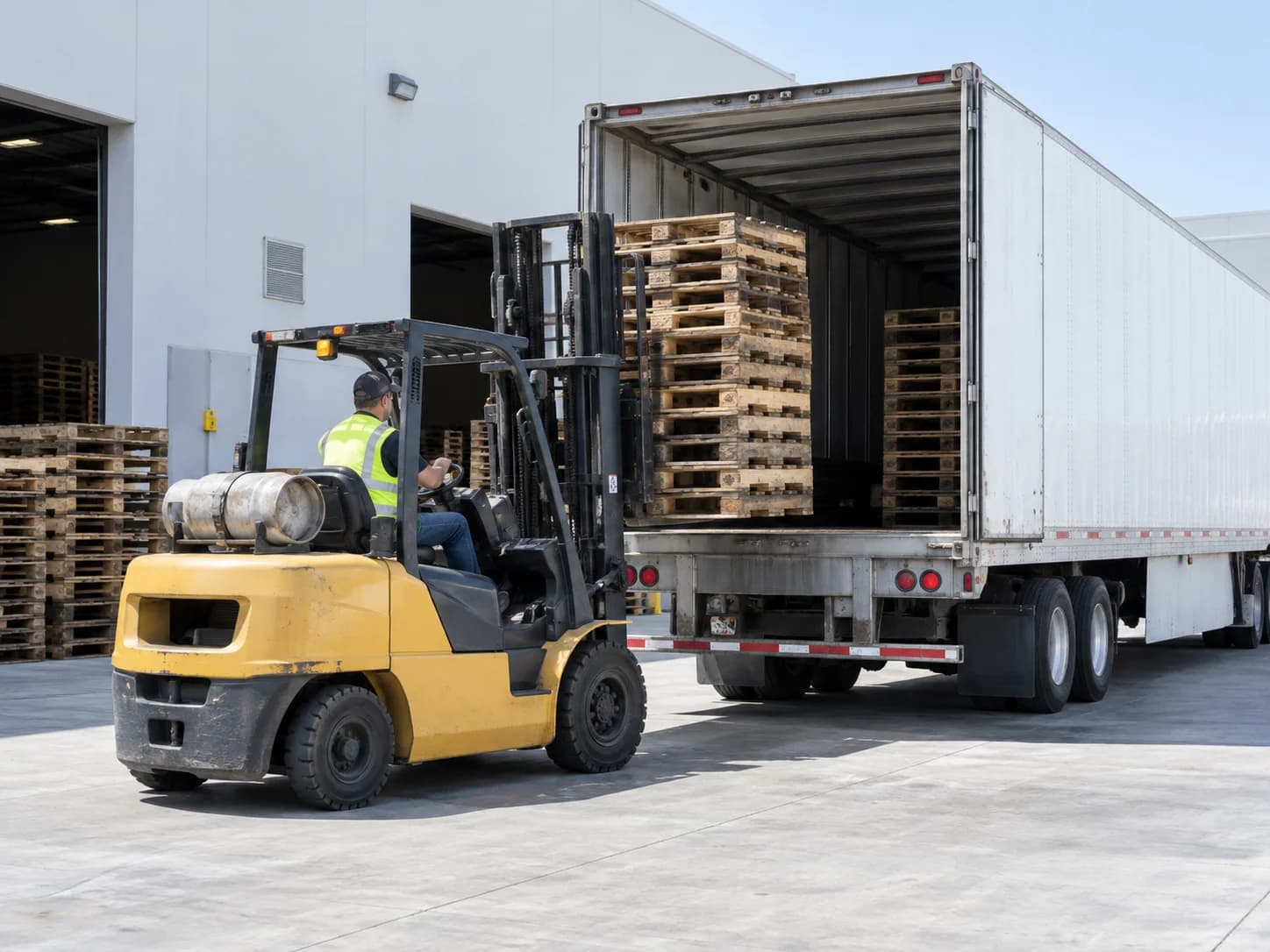
For warehouses that generate used wood pallets week after week, drop trailer pallet recycling usually creates a cleaner operating process than continuing to build stacks in the yard. Instead of moving pallets outside, reorganizing the pile, and arranging removal after it grows, employees load pallets into a dedicated trailer as they accumulate. At The Pallet Squad, our drop trailer program gives high-volume warehouses and distribution centers a designated collection point for ongoing pallet recycling.
Yard stacking still has a place, especially when pallet volume is occasional. The difference comes down to how frequently the same pile returns and how much work your team does between pickups.
Why Yard Pallet Stacks Become an Ongoing Warehouse Task
A few used pallets behind the building rarely create much concern. The issue starts when receiving keeps adding to the stack.
Employees move pallets away from docks to make room for inbound freight. A forklift operator shifts the pile because another trailer needs the space. Someone separates reusable pallets from damaged ones before pickup. After the hauler leaves, the process starts over with the next group.
None of those individual tasks seems significant. Together, they create another recurring material-handling job.
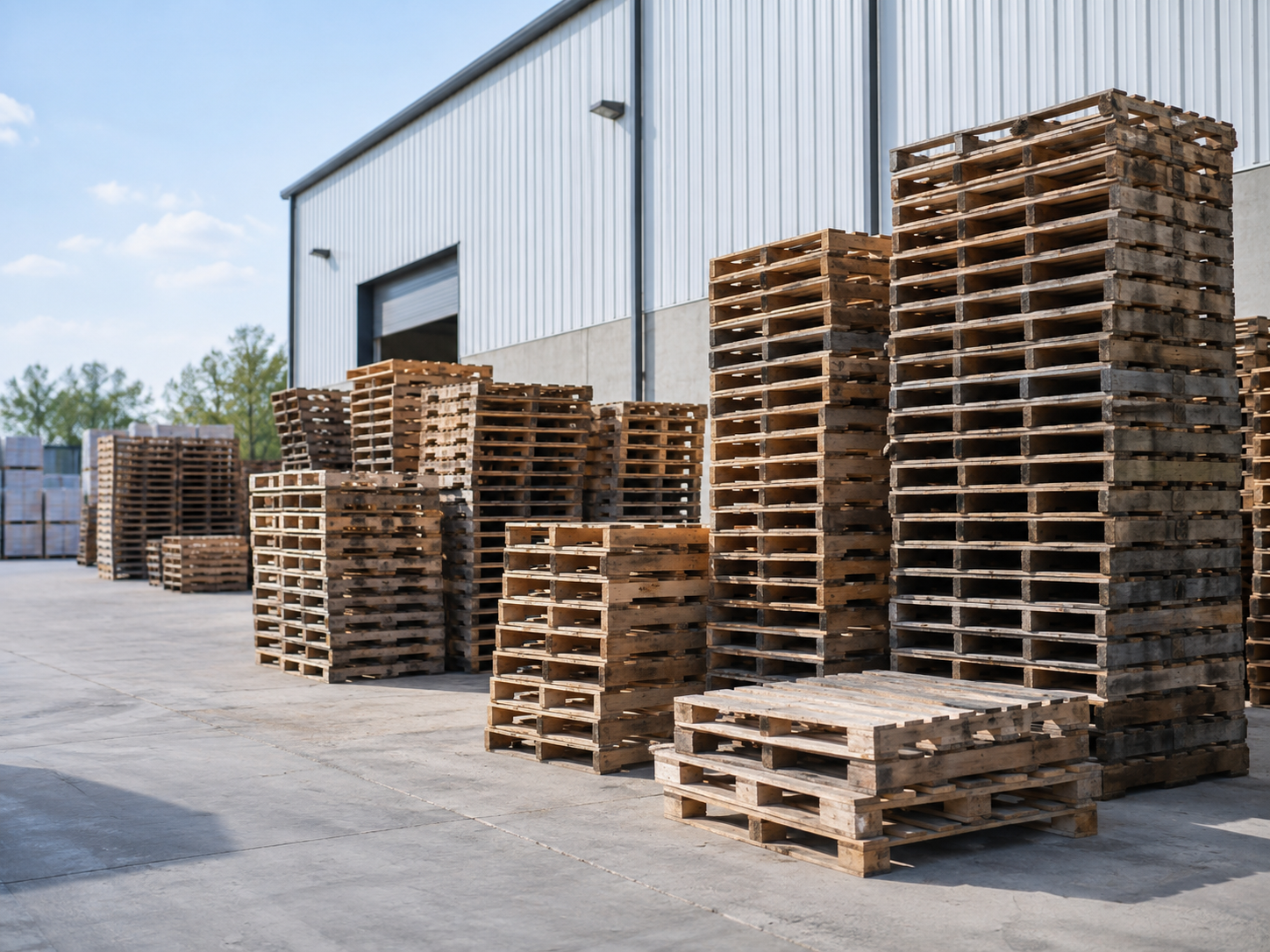
Outdoor pallet stacks also require a dedicated footprint. That area needs to remain accessible without interfering with active docks, equipment routes, parking, staging areas, or other yard operations. As volume changes, the space needed for the pallet pile changes with it.
For a warehouse that receives excess pallets only once in a while, that may be reasonable. Facilities generating them continuously usually need a more repeatable collection process.
How Drop Trailer Pallet Recycling Changes the Process
With drop trailer pallet recycling, The Pallet Squad places an empty enclosed 53-foot semi-truck trailer at the facility. Warehouse personnel load used and unwanted wood pallets into the trailer throughout normal operations.
When the trailer fills, we coordinate pickup and exchange it with another empty trailer according to the service arrangement.
The trailer becomes the collection point.
That changes the workflow because pallets start moving toward their removal destination as soon as employees take them out of use. The warehouse doesn’t need to create a temporary outdoor pile and then move the same pallets again when pickup day arrives.
Our empty drop trailers hold up to 600 pallets, giving qualifying high-volume facilities substantial on-site collection capacity without spreading pallet stacks across the yard.
Drop Trailer Pallet Recycling Reduces Repeated Pallet Handling
One of the biggest differences between the two approaches is the number of times employees touch the same pallet.
With yard stacking, a pallet might leave receiving, move to an outdoor storage area, get shifted as the stack grows, and move again when the pickup vehicle arrives. Mixed stacks may require another round of sorting before removal.
A drop trailer shortens that path.
Once the warehouse determines that a pallet belongs in the recycling program, employees move it to the trailer rather than another temporary holding area. The exact handling process depends on the facility, equipment, trailer location, and internal safety procedures, but the destination stays consistent.
For busy distribution centers, cutting out unnecessary pallet movements matters. Every extra movement uses equipment time and occupies an employee who could be handling product, trailers, receiving, or outbound work instead.
Yard Space Becomes Easier to Plan Around
A pallet pile changes size constantly.
After pickup, it may occupy very little space. Two weeks later, the same area may hold hundreds of pallets. Operations teams either reserve enough room for the largest expected pile or start finding new places to put pallets as volume grows.
A drop trailer gives the facility a defined footprint.
The warehouse still needs an appropriate location for the trailer and enough room for delivery, loading, removal, and normal yard traffic. Once that location is established, though, pallet collection stays centered in one known area instead of expanding across available yard space.
That distinction becomes especially useful in facilities where outdoor space already supports trailer staging, employee parking, inbound freight, dumpsters, or other operational needs.
Pallet Storage Still Needs to Follow Facility Safety Rules
Switching from yard stacks to a trailer doesn’t replace warehouse safety procedures.
If your facility stacks pallets outside, your team needs to manage those stacks properly. OSHA’s general materials handling and storage requirements state that stored material must not create a hazard and that materials stored in tiers need to remain stable and secure against sliding or collapse. OSHA also requires aisles and passageways used for mechanical handling to remain clear.
A drop trailer changes where pallets accumulate, but your facility still needs safe trailer placement, clear equipment routes, appropriate loading practices, and internal procedures for damaged material.
The practical advantage comes from having one established collection point rather than allowing new stacks to form wherever space happens to be available.
A Trailer Makes Pallet Volume Easier to See
Yard piles can make pallet volume surprisingly difficult to judge.
Pallets may sit in separate areas, get mixed with usable inventory, or disappear behind other stored materials. Different shifts may also use different staging locations.
A dedicated trailer creates a clearer collection process. Someone at the facility still needs to monitor how quickly it fills, but the warehouse now has a consistent place to watch pallet accumulation.
That information becomes useful over time.
If the trailer consistently fills faster during certain production periods or receiving cycles, the operations team has real evidence about how its used pallet volume changes. Service frequency can then reflect actual pallet flow instead of waiting until a yard pile looks too large.
What If Your Pallet Volume Isn’t High Enough for a Drop Trailer?
A drop trailer won’t fit every business.
If your facility generates a moderate pallet pile after an occasional project, inventory change, seasonal event, or cleanout, a standard pallet pickup service may make more sense.
Recurring pickup also works for businesses that generate pallets consistently but don’t produce enough volume to justify keeping a trailer on-site.
The useful question is how often your team solves the same problem.
If employees clear one pallet pile and another appears shortly afterward, the facility has moved beyond a one-time cleanup issue. That pattern is worth discussing when evaluating drop trailer service.
Used Pallets in a Drop Trailer May Still Have Value
Putting pallets into a drop trailer doesn’t automatically determine whether they will qualify for buyback, free haul-off, or another recycling arrangement.
Our empty trailer program serves businesses generating pallets they want hauled off as well as companies interested in selling qualifying used pallets.
Pallet size, type, condition, quantity, location, ownership, and pickup requirements all affect whether pallets have resale value. Facilities with potentially reusable inventory can review our used pallet selling process before assuming every pallet belongs in the same category.
That evaluation matters because warehouse teams should know which pallets belong to the business and which ones need a different return process.
The trailer handles the collection side of the operation. The pallet details determine what happens within the appropriate recycling or resale arrangement.
When a Drop Trailer Makes More Sense Than Yard Stacking
Look at the way pallets move through the facility rather than focusing only on the pile sitting outside today.
A drop trailer becomes worth considering when used pallets accumulate steadily, employees keep moving them between temporary storage areas, and standard pickups repeatedly leave the warehouse waiting for the next pile to grow.
The facility also needs enough space to position and service the trailer without creating problems for normal yard operations.
For warehouses and distribution centers with predictable volume, drop trailer pallet recycling creates a simple sequence: identify the pallets, load them into the designated trailer, monitor capacity, and coordinate the exchange.
Yard stacking requires the warehouse to manage the pallets as stored material until someone removes them. The more frequently that cycle repeats, the more valuable a dedicated collection process becomes.
Build the Recycling Process Around Your Actual Pallet Flow
The best way to compare yard stacking with a drop trailer is to watch what your warehouse already does.
Track how quickly unwanted pallets accumulate. Pay attention to where employees put them, how often they move the same stacks, and how frequently someone needs to arrange removal. Look at whether pallet piles compete with dock access, staging, or other yard activity.
If the issue happens once, schedule the appropriate pickup.
If it keeps happening, the warehouse probably needs an ongoing process.
At The Pallet Squad, we coordinate nationwide pallet pickup and drop trailer recycling for warehouses, distribution centers, manufacturers, and other qualifying high-volume facilities. If your operation regularly has used pallets stacking up outside, request drop trailer service and tell us your location, approximate pallet volume, and how frequently those pallets accumulate.
A useful pallet recycling setup gives your team a clear answer every time another used pallet comes off the warehouse floor: it already has somewhere to go.