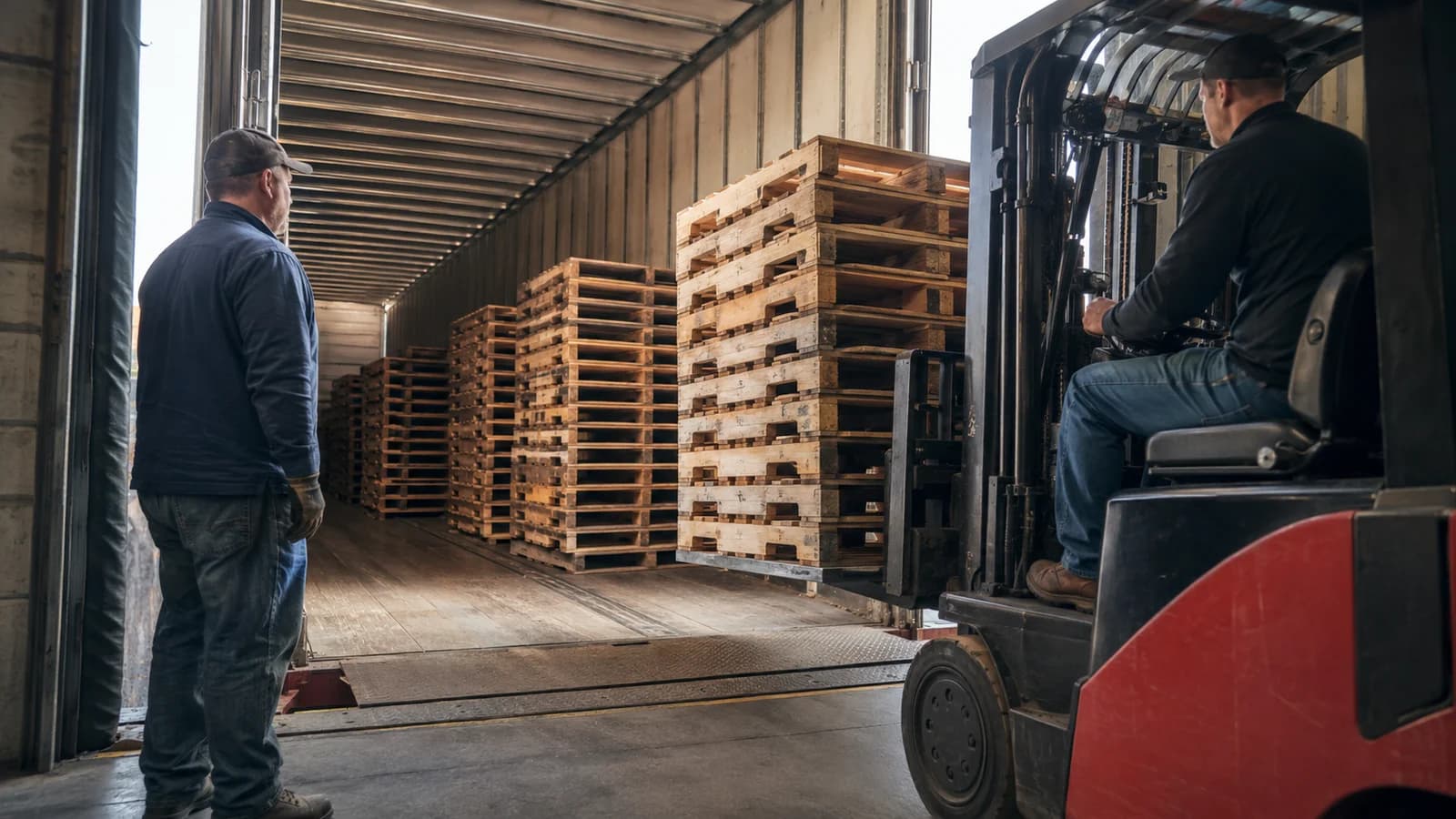
Preparing for a pallet recycling drop trailer starts with choosing a safe trailer location, confirming what pallets will go into it, and giving employees a clear loading process. Your warehouse also needs enough room for the trailer to arrive, remain on-site, and leave without interfering with normal dock or yard traffic. At The Pallet Squad, we work with warehouses and distribution centers that need a consistent way to collect used wood pallets as they accumulate.
A little planning before the trailer arrives prevents confusion later. It also makes the program easier for warehouse employees to use during a normal shift, which matters more than creating a complicated procedure that no one follows.
Confirm That a Pallet Recycling Drop Trailer Fits Your Volume
A drop trailer works best for facilities that generate used or unwanted wood pallets on a predictable, ongoing basis. Instead of arranging a separate pickup whenever stacks begin taking over the dock or yard, the warehouse gets a designated trailer that employees can load over time.
Review how quickly pallets accumulate at your location. Look at recent receiving volume, the number of pallets removed from circulation, and how often your team currently requests pickup. Seasonal peaks and large incoming shipments may change that pace.
This review gives you useful information when discussing drop trailer pallet recycling with our team. It also helps determine how the trailer should fit into daily warehouse activity.
If pallet accumulation remains occasional or unpredictable, a scheduled pickup may make more sense. Businesses with qualifying quantities can also review our used pallet selling and pickup process.
Choose the Trailer Location Before Delivery Day
The trailer needs a permanent or regularly available position that works for both employees and drivers. Waiting until delivery day to choose that spot can create delays, block working areas, or force the trailer into an inconvenient location.
Walk the yard with the people who manage receiving, shipping, and facility safety. Identify a location that gives the delivery driver adequate access while keeping the trailer close enough for warehouse employees to use.
The placement decision should account for:
- Active dock doors and loading schedules
- Normal tractor-trailer routes through the property
- Employee and visitor parking
- Forklift and other powered equipment traffic
- Emergency access areas
- Gates, fences, overhead clearance, and tight turns
- Surface conditions where the trailer will remain
Consider how the site changes throughout the day. A quiet area during the morning may become a staging lane before the evening shift. The trailer location needs to work during peak activity, not simply when the yard is empty.
Your facility should evaluate the final location under its own safety program. The Occupational Safety and Health Administration’s warehousing guidance covers common concerns involving loading docks, materials handling, forklifts, and storage areas.
Establish a Clear Loading Route
Once you choose the trailer location, trace the route employees will use to bring pallets to it. The shortest route isn’t always the most practical one.
Employees shouldn’t have to move pallets through congested receiving areas or across frequently used pedestrian paths. Avoid placing the trailer where loading activity could interfere with inbound freight, outbound staging, or access to equipment.
Check the route during an active shift. Watch for blind corners, uneven surfaces, narrow passages, and locations where materials tend to collect. Facility managers should address any internal traffic concerns before employees begin loading the trailer.
Decide which equipment your team will use and who has permission to operate it. Follow the equipment manufacturer’s instructions and your facility’s training requirements. A simple, consistent route reduces improvisation and makes the drop trailer easier to include in daily work.
Decide Which Pallets Belong in the Trailer
Employees need to know exactly what the pallet recycling drop trailer accepts under your service arrangement. Without clear instructions, unrelated materials or pallets that shouldn’t enter the recycling stream may end up inside.
Discuss the expected pallet types with us before service begins. Pallet ownership, size, condition, and quantity can affect how pallets should be handled. Some marked or pooled pallets may belong to another company and require a separate return process.
Create a short written standard for the employees who will load the trailer. Post it near the loading point and include photos if your facility handles several pallet categories. The instructions should explain what belongs in the trailer, what stays out, and where employees should place questionable pallets for review.
Avoid asking every employee to make a complicated grading decision during a busy shift. Assign a supervisor or designated employee to answer questions and resolve exceptions.
Separate Pallets Before They Reach the Trailer
Sorting pallets at the point where employees remove them from use usually works better than creating a mixed stack and sorting it later.
Set up clearly marked areas for pallets that are ready for the drop trailer and pallets that require review. If your operation also keeps reusable pallets for internal use, store them separately so employees don’t accidentally load needed inventory.
Mixed stacks create unnecessary handling. Someone has to move the same pallets again, inspect them under time pressure, and return usable pallets to storage. Clear separation keeps the trailer-loading process moving and gives purchasing teams a more accurate view of available pallet inventory.
Employees also need a plan for damaged pallets. Don’t leave loose boards, protruding fasteners, or unstable pallet stacks in an active travel area. Your facility’s safety procedures should define how employees isolate and handle damaged material.
Assign Responsibility for the Program
Drop trailer service works more smoothly when one person or role owns the process. That person doesn’t need to load every pallet, but someone should monitor trailer use and communicate with the service provider.
The responsible employee can:
- Check that only approved pallets enter the trailer
- Watch how quickly the trailer fills
- Report access or loading problems
- Coordinate internal communication before pickup
- Keep service contacts and facility instructions current
Assign a backup for vacations, schedule changes, or overnight operations. Drivers and warehouse employees should know whom to contact if the primary person isn’t available.
For facilities with several shifts, include drop trailer instructions in shift handoffs. The second or third shift shouldn’t have to guess whether a trailer is ready for pickup or whether a pallet stack still needs review.
Create a Consistent Loading Method
A trailer’s usable capacity depends partly on how employees load it. Scattered or unstable pallet placement wastes room and can complicate removal.
Before loading begins, give employees clear instructions based on the trailer setup and your facility’s approved handling practices. Keep pallet placement orderly and avoid leaving loose material in the path employees use to enter or access the loading area.
Don’t rely on an informal explanation given to one shift. Document the loading method and include it in supervisor training. If the first few loads reveal a problem, adjust the procedure and share the change with everyone involved.
Supervisors should periodically inspect the loading area. They can catch mixed materials, unstable placement, or access problems before those issues become routine.
Determine How Your Team Will Track Trailer Capacity
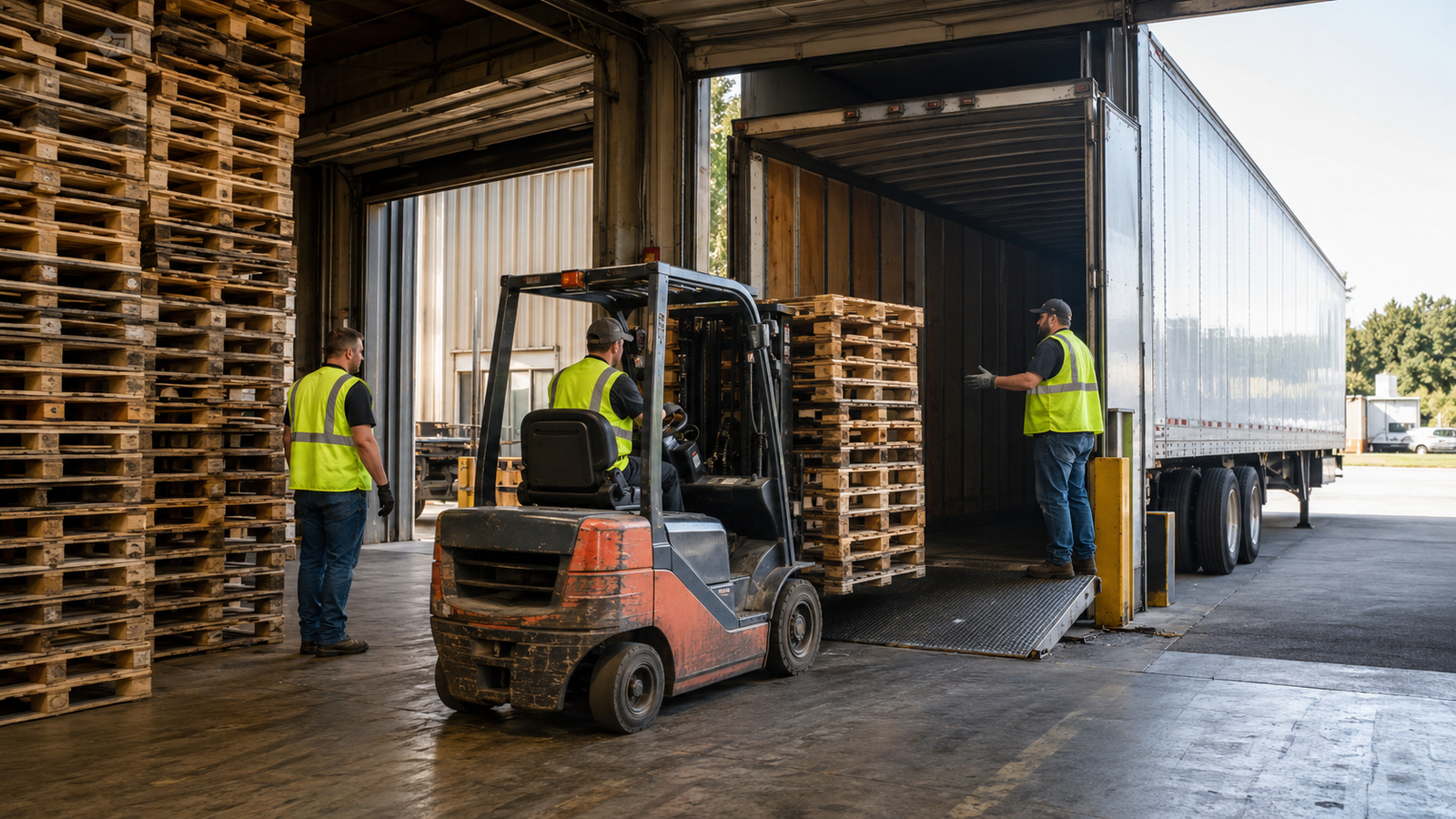
Your warehouse needs a reliable way to recognize when the trailer is approaching its practical loading limit. Waiting until there’s no room left can leave new pallets with nowhere to go while pickup gets arranged.
Choose a simple internal trigger for contacting us. That trigger might use a visual capacity check, an estimated pallet count, or the facility’s recent loading rate. The right method depends on how quickly your warehouse generates pallets and who monitors the trailer.
Track the first few service cycles closely. Record the date loading begins, when the pickup request occurs, and whether pallets accumulate outside the trailer while your team waits for the exchange. Those details reveal whether the timing fits actual warehouse volume.
Seasonal changes also deserve attention. A trailer that fills gradually during a slower month could fill much faster during a busy receiving period.
Prepare for Pickup and Trailer Exchange
Before pickup, confirm that drivers can reach the trailer without moving stored goods, parked vehicles, or temporary equipment. Employees should clear the access route and follow the facility’s normal yard procedures.
Tell the appropriate departments when an exchange or removal will occur. Receiving and shipping teams may need to adjust yard activity around the service window. Security staff should also have the correct provider and access information if the facility controls entry.
Review the trailer area after each pickup. Look for loose materials, damaged pavement, blocked markings, or operational changes that affect future placement. Construction, new storage areas, and revised traffic patterns can make a previously suitable location less practical.
Make Drop Trailer Recycling Part of Normal Warehouse Work
The most useful drop trailer process fits the way your warehouse already handles incoming pallets. Employees should know where unwanted pallets go, how to load them, and who monitors the trailer without stopping to recreate the process each week.
Start with a defined location and loading route. Confirm acceptable pallet types, assign responsibility, and establish a pickup trigger. Then review the first service cycles and correct any issues that create extra handling or interfere with yard traffic.
The Pallet Squad coordinates ongoing pallet recycling with drop trailers for qualifying warehouses, distribution centers, and other high-volume facilities nationwide. To discuss your pallet volume and site needs, request a pallet service quote and select the option to schedule a drop trailer.