Pallet buyback vs. free pallet pickup usually comes down to one question: Do your used pallets have enough resale value to justify purchasing them, or is reliable removal the bigger priority? Reusable pallets in desirable sizes, conditions, quantities, and locations may qualify for buyback. Other loads may make more sense for free haul-off or pallet recycling. For warehouses and distribution centers that generate used pallets continuously, a drop trailer can turn either situation into a much easier recurring process.
At The Pallet Squad, we handle used pallet pickup, pallet buyback, and ongoing drop trailer recycling for businesses. The right option depends on what your facility actually generates rather than simply how many pallets are sitting behind the dock.
Pallet Buyback vs. Free Pallet Pickup: The Main Difference
A pallet buyback means your pallets have been evaluated for potential resale value. If they meet the right requirements, the pallet buyer purchases them and coordinates removal.
Free haul-off works differently. The value to your operation is the removal itself. Instead of receiving payment for the pallets, your business gets qualifying unwanted pallets out of the warehouse, yard, or loading area without paying a standard hauling charge.
Neither option automatically applies to every stack of pallets.
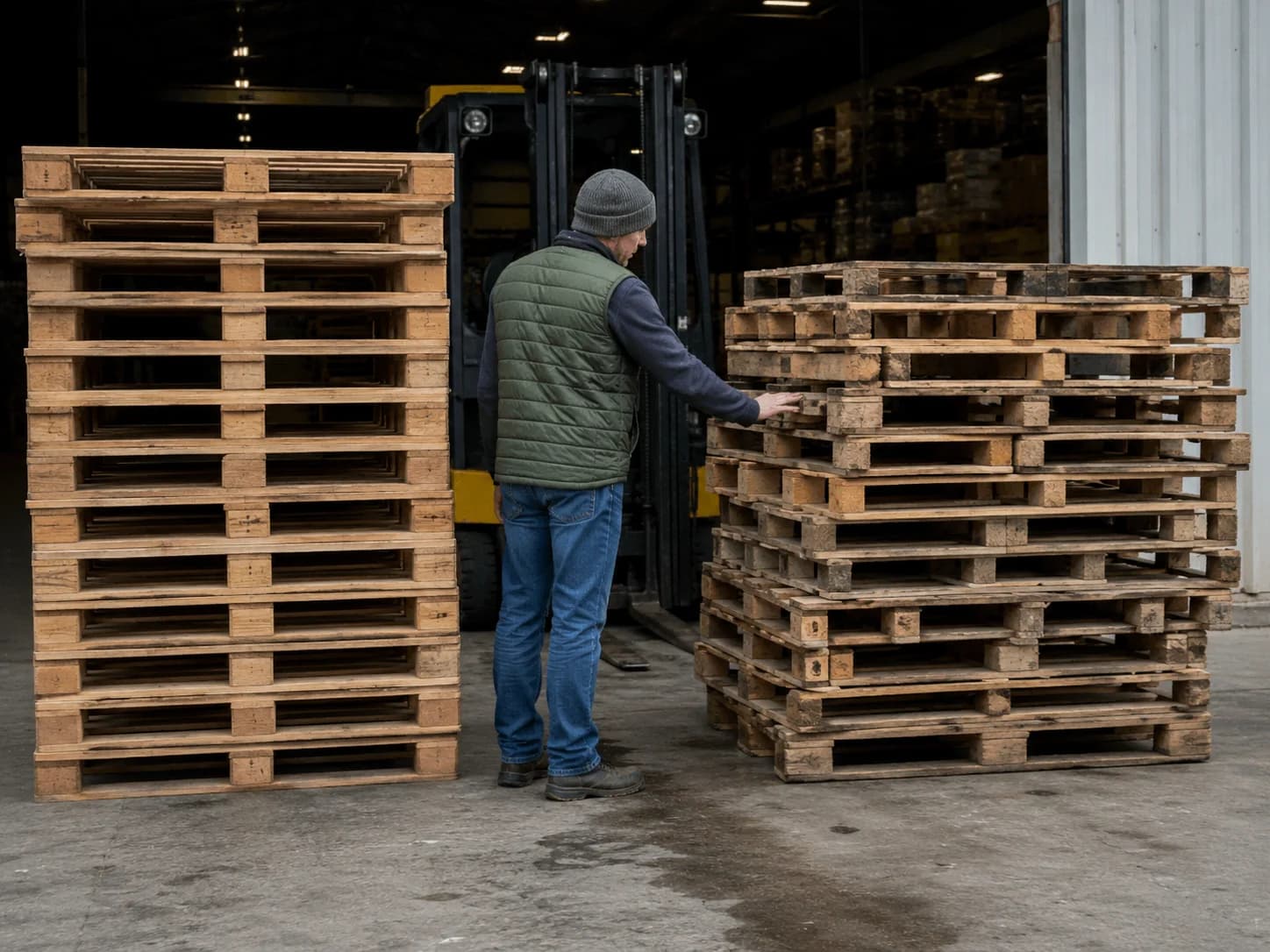
Pallet type, size, condition, volume, location, and pickup requirements all affect what makes sense. A neat stack of reusable, commonly needed pallets presents a different opportunity than a mixed group of damaged or irregular pallets that primarily needs to leave the property.
That distinction matters for warehouse teams because a pallet pile can look valuable without necessarily being practical for resale.
What Makes Used Pallets More Likely to Qualify for Buyback?
Used pallet value depends on whether there is a practical next use for the pallets.
Common pallet sizes generally have broader demand than unusual dimensions. Overall condition matters because reusable pallets need to remain suitable for another service cycle. Quantity also affects the economics of pickup. Sending a truck for a substantial, organized load is very different from coordinating transportation for a small number of scattered pallets.
Our Sell My Pallets process looks at factors including pallet size, type, overall condition, quantity, location, and pickup requirements before determining whether purchasing the pallets is an option.
Ownership matters too. Before putting pallets into a resale or recycling stream, warehouse teams should know that the pallets belong to the business and are actually available for removal.
The practical takeaway is simple: Don’t assume that every wood pallet has the same resale value. Give the pallet buyer enough information to evaluate the actual inventory.
When Free Haul-Off Makes More Sense
Sometimes clearing the space matters more than earning money from the pallets.
A warehouse may have pallets accumulating after an inventory change, facility cleanout, seasonal rush, or unexpected inbound volume. Other facilities generate unwanted pallets every week and simply need a dependable way to keep them from occupying working space.
Free pallet pickup may fit when the pallets qualify for removal but don’t make sense as a pallet buyback load.
For an operations manager, that still has value. Pallets sitting around the building require space. Employees may repeatedly move them to reach product, equipment, staging areas, or dock doors. Eventually, someone has to decide where they go.
A removal process gives the team a destination before the pile becomes another project.
Mixed Pallet Loads Need an Evaluation
Real warehouse pallet piles rarely arrive perfectly sorted.
You may have reusable pallets mixed with broken boards, different dimensions, or pallets that came through separate receiving channels. That makes photographs, approximate quantities, dimensions, and condition details useful before scheduling service.
A mixed load doesn’t automatically fall into either the buyback or haul-off category.
The buyer first needs to understand what is actually there. In some cases, reusable inventory may have value while other pallets need a different recovery path.
Sorting before pickup also gives the warehouse better information about its pallet flow. If one particular pallet type keeps accumulating every month, that pattern may justify a recurring removal program instead of repeatedly treating the excess as a one-time problem.
High Pallet Volume Changes the Decision
A warehouse that clears 150 pallets once has a different problem from a distribution center producing large quantities of unwanted pallets throughout the year.
For recurring volume, the bigger question becomes how the facility collects pallets between pickups.
Stacking them wherever space happens to be available creates extra handling. Employees move the same pallets several times. Dock areas get crowded. The operations team eventually has to schedule another pickup, and then the cycle starts again.
This is where drop trailer pallet recycling becomes especially useful.
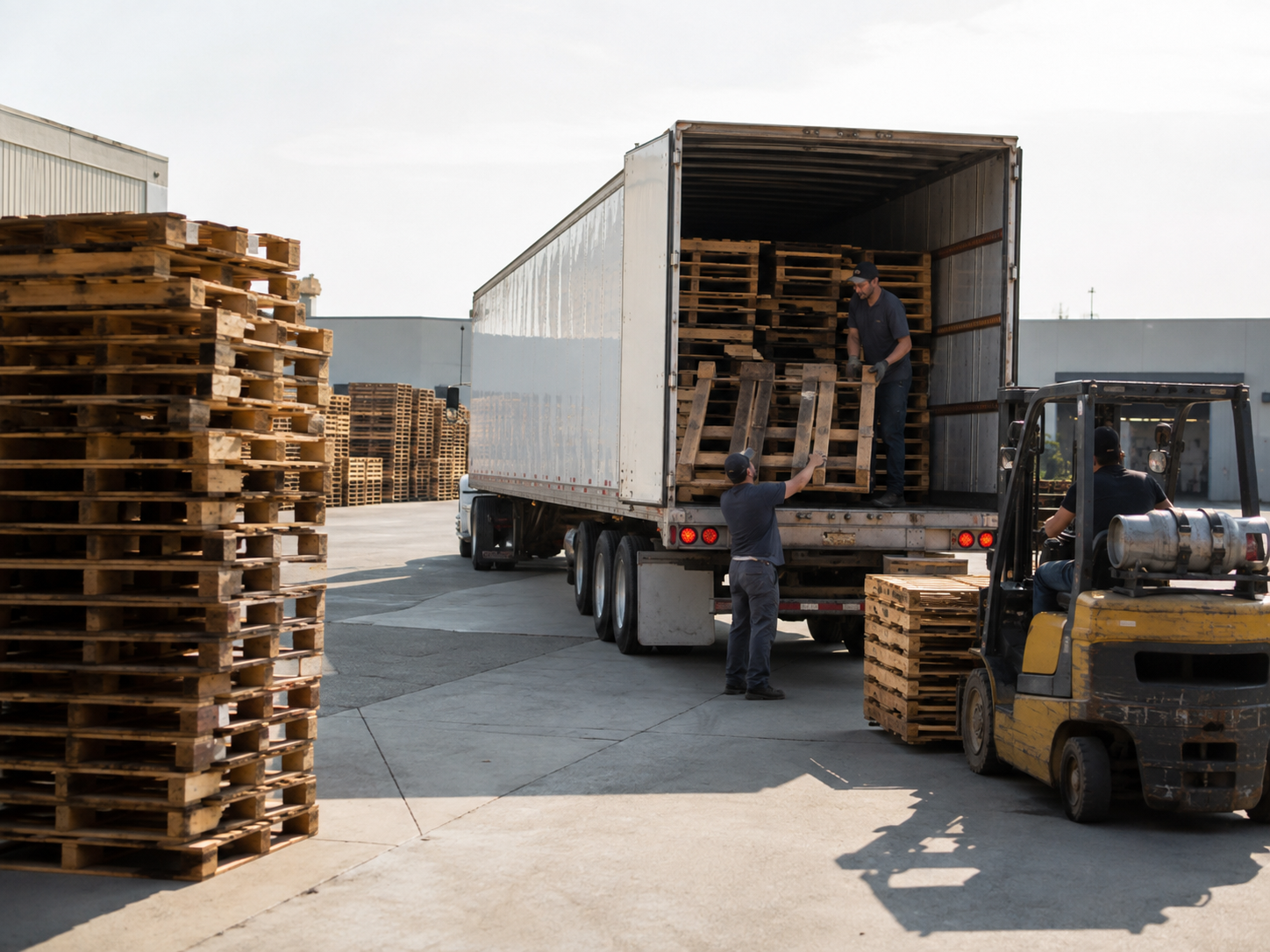
With the empty-trailer option, The Pallet Squad places an enclosed 53-foot semi-truck trailer at the facility. Warehouse personnel load unwanted pallets into it as they accumulate. When the trailer is full, we coordinate pickup and exchange it with another empty trailer. The site lists a capacity of up to 600 pallets per trailer.
Instead of building pallet piles around the property, the operation has a designated collection point.
A Drop Trailer Can Support Buyback or Free Haul-Off
Drop trailer service doesn’t automatically mean the pallets are being given away.
The Pallet Squad’s empty-trailer program applies to companies generating pallets they want hauled off for free or pallets they want to sell. The same basic workflow gives the facility a place to collect them while the appropriate recovery arrangement is established.
That distinction is useful for high-volume facilities.
The warehouse doesn’t have to wait until a pile becomes large enough to interfere with operations before thinking about removal. Employees load pallets into the trailer as part of their normal workflow. Once the trailer reaches the appropriate point for exchange, the next movement can be coordinated.
For distribution centers with predictable pallet accumulation, that turns pallet recycling into an ongoing process rather than a series of cleanups.
Look at the Cost of Managing the Pallets Internally
Pallet value isn’t limited to a buyback rate.
Consider what happens while unwanted pallets stay at the facility.
How much usable yard or warehouse space do they occupy? How often does a forklift operator move them? Does someone have to reorganize stacks before every pickup? Are pallets being moved from the dock to the yard and then moved again when the hauler arrives?
Those tasks consume labor and equipment time even if they never appear as a separate pallet disposal expense.
A free haul-off arrangement may therefore make operational sense even when a warehouse would prefer to sell every pallet. The removal process itself eliminates work that the facility would otherwise have to absorb.
Don’t Treat Reusable Wood Pallets as Ordinary Trash
Used wood pallets often have another path after their first trip through a warehouse.
Some remain suitable for reuse or resale. Others enter recycling or material recovery channels. The U.S. Environmental Protection Agency identifies pallets as a major portion of wood packaging and tracks pallet recycling in its wood material data.
That makes early sorting useful. Once warehouse teams know which pallets belong in normal inventory, which may qualify for resale, and which need removal, they can keep those streams from getting mixed together.
For high-volume facilities, establishing that process before pallets accumulate usually requires less work than sorting a large yard pile later.
What Information Should You Provide Before Scheduling Pickup?
A pallet company needs enough information to determine whether buyback, free haul-off, recurring pickup, or drop trailer service fits the facility.
Start with the location and an approximate pallet count. Include the pallet dimensions or types if you know them, along with a general description of their condition. Photos or video make the initial review much easier.
You should also explain how quickly the pallets accumulate.
A warehouse with 300 pallets after a one-time cleanout may need a standard pickup. Another facility may generate that quantity repeatedly. The second operation has a recurring pallet-management issue, which makes a drop trailer worth discussing.
Accurate information upfront keeps the conversation focused on the right service instead of forcing the warehouse to figure out the answer on its own.
Choose Based on the Pallet Flow, Not Just Today’s Pile
Pallet buyback vs. free pallet pickup shouldn’t be decided solely by what is sitting in the yard today.
Look at why the pallets are there, what condition they’re in, how quickly the quantity grows, and whether the same problem will return after the next pickup.
If your facility generates reusable pallets with consistent demand, a buyback arrangement may recover value from that inventory. If removal is the main priority, free haul-off may provide the cleaner solution. Warehouses and distribution centers with steady pallet accumulation should also consider whether an ongoing drop trailer program would reduce the handling required between pickups.
At The Pallet Squad, we evaluate the pallet details and pickup needs before determining the appropriate option. If your warehouse has excess pallets now or generates them throughout the month, request a pallet pickup quote with the location, approximate quantity, pallet details, photos, and expected pickup frequency.
A good pallet recycling plan should answer two questions clearly: where do the used pallets go, and what happens when that collection point fills up?