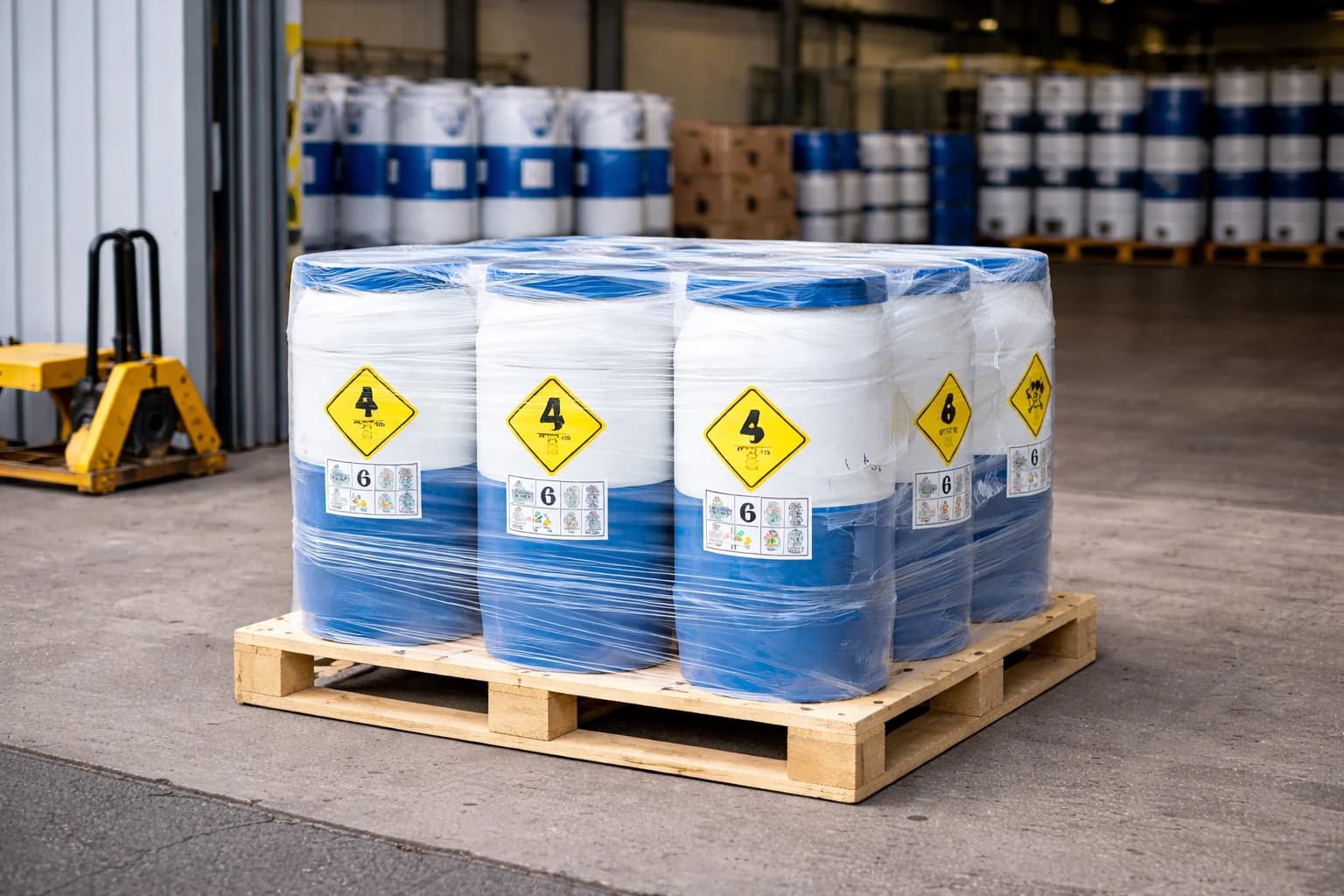
Shipping and storing chemicals introduces risks that standard freight simply doesn’t carry. Whether you’re handling 55-gallon drums, IBC totes, pails, or packaged chemical cartons, load stability and structural integrity are critical. A pallet failure in a chemical environment isn’t just a freight issue; it can become a safety hazard, environmental concern, and regulatory problem.
That’s why selecting the right pallets for chemicals is a foundational part of safe chemical logistics. The pallet must provide structural strength, minimize load shift, and withstand repeated handling without compromising containment.
This guide explains how pallet design improves stability, reduces damage risk, and supports safer chemical handling across warehouses and transport networks.
Why Chemical Loads Require Specialized Pallet Consideration
Chemical shipments present unique stress factors:
- High weight per unit (especially drums and liquid-filled containers)
- Concentrated point loads from drum rings or tote bases
- Shifting liquid weight during transport
- Strict safety expectations for leak prevention
- Regulatory handling standards for hazardous materials
Unlike dry goods, liquid weight moves. When trucks brake, turn, or encounter vibration, internal liquid motion shifts the center of gravity. If the pallet isn’t stable and rigid, that movement can increase tipping or collapse risk.
Understanding Common Chemical Packaging Types
Different chemical containers place different demands on pallets.
1. 55-Gallon Drums
- Heavy and cylindrical
- Load weight concentrated on narrow ring edges
- Often shrink-wrapped or banded in groups
Risk factors:
- Tipping during forklift turns
- Deck board crushing
- Uneven weight distribution
2. IBC Totes
- Large, high-capacity containers
- Significant weight is concentrated on the base supports
- High center of gravity
Risk factors:
- Structural stress during lifting
- Instability if the pallet flexes
- Increased risk during long-haul transit
3. Pails and Cartoned Chemicals
- Lighter but often stacked high
- Sensitive to load shift
- Frequently moved in high-volume warehouse environments
Risk factors:
- Load leaning
- Stretch wrap failure
- Deck gaps are causing instability
Each format demands a pallet strong enough to prevent deflection and designed to distribute weight evenly.
Key Features of Effective Pallets for Chemicals
1. Reinforced Structural Strength
Chemical loads are typically heavy. Pallets must:
- Support high static and dynamic weight
- Resist cracking under point-load pressure
- Maintain rigidity during forklift handling
Heavy-duty wood pallet construction, including thicker deck boards and reinforced stringers, reduces structural stress and prevents collapse.
2. Tight Deck Spacing for Drum Support
Drum edges create concentrated pressure points. Wide deck gaps can cause:
- Deck board splitting
- Uneven weight distribution
- Increased tipping risk
Tighter deck spacing provides better support and distributes weight more evenly across the pallet surface.
3. Four-Way Forklift Entry
Chemical shipments are often repositioned multiple times:
- Staging
- Cross-docking
- Warehouse relocation
- Final-mile loading
Four-way entry improves handling efficiency and reduces forklift repositioning, which lowers the chance of sudden tilts or impacts.
4. Reduced Deflection Under Load
Flexing pallets increases instability, especially with liquids.
A pallet that bends under weight can:
- Increase center-of-gravity shifts
- Stress container seams
- Cause the stretch wrap to loosen
- Create stacking instability
Rigid construction is essential for liquid and hazardous loads.
Preventing Load Shift During Transport
Chemical freight frequently travels long distances. During transit, forces such as braking, acceleration, and vibration stress both the container and the pallet.
To improve stability:
- Use reinforced pallets rated above the dynamic load requirements
- Strap loads securely at structural points
- Add corner boards to prevent band damage
- Ensure pallet footprint fully supports the load (no overhang)
Proper pallet design reduces movement at the base, which minimizes stress throughout the load.
Racking and Storage Considerations
Chemical warehouses often use racking systems. Pallet deflection in racking can create instability and safety hazards.
When selecting pallets for chemicals stored in racking:
- Ensure pallet design supports rack beam spacing
- Avoid under-spec pallets that sag under weight
- Confirm compatibility with forklift and pallet jack equipment
Stronger pallets improve both storage safety and long-term durability.
Reducing Freight Claims and Safety Incidents
Damage in chemical shipping can lead to:
- Product loss
- Cleanup costs
- Environmental reporting requirements
- Delayed deliveries
- Customer dissatisfaction
Strong pallet programs reduce:
- Container tipping
- Load shift
- Deck board failure
- Structural collapse
By improving base stability, pallets help prevent the cascading issues that turn minor handling errors into serious incidents.
Sustainability and Recycling in Chemical Operations
Wood pallets offer practical sustainability benefits in chemical supply chains:
- Repairable and reusable
- Recyclable at the end of life
- Compatible with pallet pickup and recycling programs
- Reduced landfill impact compared to disposal
A structured recycling and pickup program keeps chemical facilities clean and reduces scrap accumulation in sensitive environments.
Multi-Location Chemical Distribution Networks
Companies distributing chemicals across multiple facilities benefit from standardized pallet programs.
Standardization ensures:
- Consistent load performance
- Unified safety standards
- Predictable procurement costs
- Fewer operational surprises
Centralized pallet management reduces risk across the entire network.
Shipping chemicals safely starts from the ground up. The right pallets for chemicals provide the strength, rigidity, and stability needed to protect drums, totes, and packaged materials throughout handling and transport.
When pallet construction matches the demands of liquid weight, heavy loads, and strict safety expectations, operations gain:
- Reduced damage risk
- Fewer freight claims
- Improved warehouse safety
- Greater shipment stability
- More predictable supply performance
Strong pallets aren’t just packaging; they’re a critical safety component in chemical logistics.
Contact The Pallet Squad
If you need durable pallets for chemicals that improve load stability and reduce handling risk, contact The Pallet Squad for reinforced wood pallet solutions, delivery, pickup, and recycling programs built for industrial and chemical operations.