Choosing the right pallet type isn’t just a packaging decision, it directly affects warehouse throughput, load stability, freight damage rates, and even forklift efficiency. One of the most common questions operations teams ask when reviewing pallet programs is: Stringer vs block pallets, which one is better?
Both are widely used in manufacturing, distribution, food logistics, and retail shipping. But they’re built differently, behave differently under load, and perform best in different environments. If your operation is scaling, running high-volume outbound, or experiencing pallet-related issues like load shift, broken boards, or racking failures, this comparison matters.
This guide breaks down the real-world differences between stringer vs block wooden pallets, how each performs in warehouses and freight, and how to choose the right option for your operation.
1. The Quick Definition: Stringer vs Block Pallets
Before comparing performance, it helps to define the construction styles:
Stringer pallets
A stringer pallet is built using long boards (stringers) that run the length of the pallet. The deck boards are nailed across the top, and sometimes boards are added to the bottom for reinforcement.
- Common in North America
- Often lighter and cost-effective
- Can be 2-way or 4-way entry (if notched)
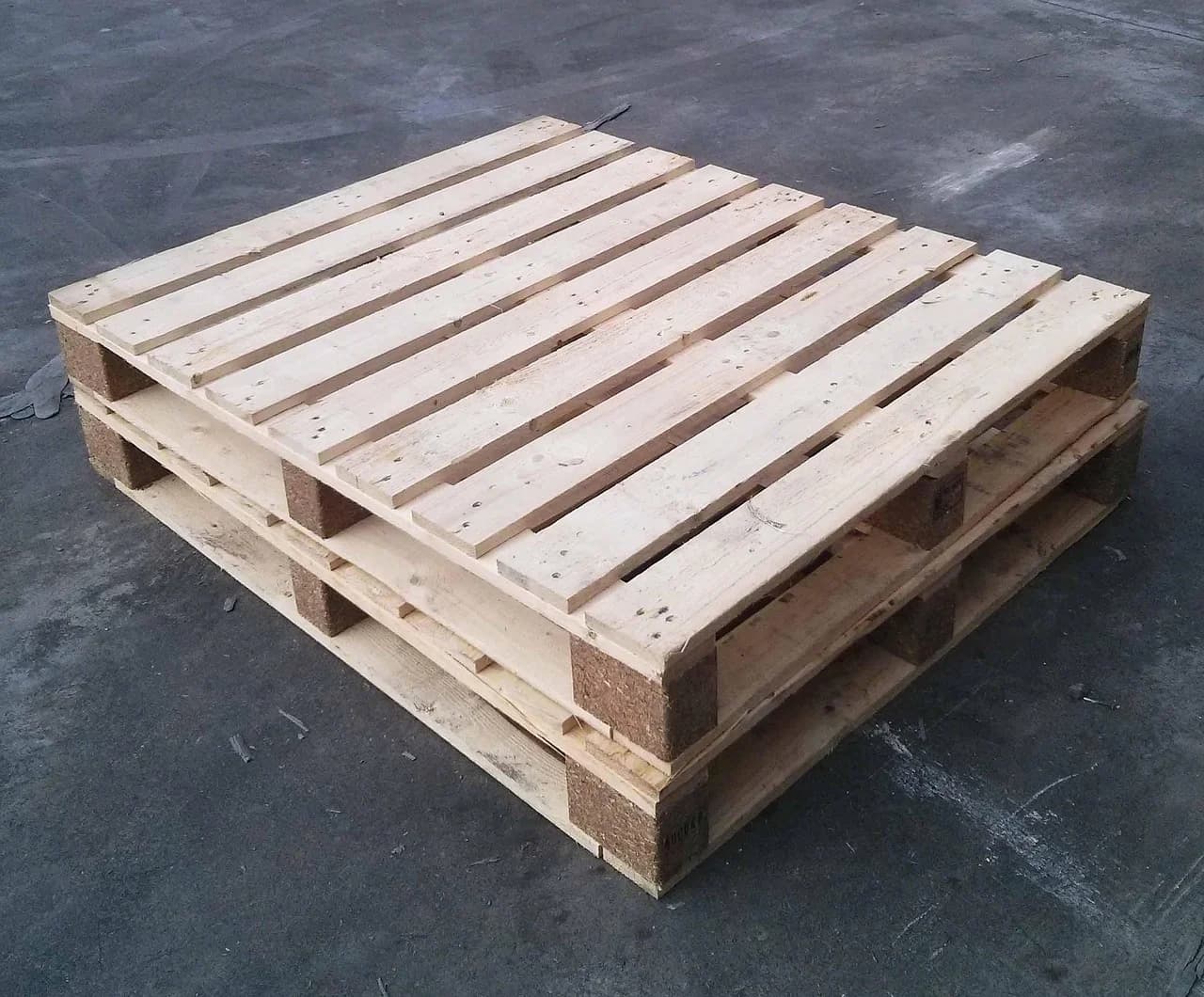
Block pallets
A block pallet uses blocks (typically wood) at the corners and center to support the top deck. This design is often more rigid and usually supports true 4-way entry.
- Common in higher-volume, more engineered pallet systems
- Typically stronger for heavy loads and racking
- Often used in export and automated environments
Both designs can be recycled, repaired, and customized, but their structural differences create meaningful performance differences in warehouse operations.
2. Forklift and Pallet Jack Access: Handling Performance Matters
Handling is one of the biggest day-to-day differences in stringer vs block pallets.
Stringer pallets
- Standard stringer pallets may be 2-way entry, meaning forks enter from two sides.
- Notched stringers allow 4-way entry, but fork access may still be tighter depending on the notch design.
- Pallet jacks can sometimes struggle if entry is restricted or deck boards are damaged.
Best for simple warehouse workflows with consistent forklift access patterns.
Block pallets
- Typically provide true 4-way entry, making them easier to handle in tight aisles and high-traffic docks.
- Faster loading/unloading because operators don’t have to “hunt” for entry sides.
- Generally smoother for pallet jack usage due to more open access.
Best for operations focused on speed, flexibility, and consistent handling patterns.
If your facility prioritizes fast movement and high throughput, block pallets often reduce handling friction.
3. Strength and Load Performance: Which Holds Up Better?
Both pallet types can be built to carry heavy loads, but their structural characteristics differ.
Stringer pallet strength
Strength depends heavily on:
- stringer thickness
- deck board spacing
- nail patterns and repair quality
- whether it includes bottom deck support
Stringer pallets perform well for many standard loads, especially uniform cartons and stable unit loads.
However, stringer pallets may be more vulnerable to:
- stringer splitting under high stress
- reduced strength when notched for 4-way entry
- uneven load distribution with heavy point loads
Block pallet strength
Block pallets often perform better with:
- heavier industrial loads
- high-frequency handling
- situations requiring reduced deflection
The block-style design distributes weight through multiple support points, often improving stiffness and stability.
If you ship heavy industrial components, machinery, or dense product loads, block pallets frequently outperform stringers long term.
4. Racking Performance: Critical for Warehouses Using Storage Systems
If your pallets are stored in racking, this comparison becomes even more important.
Stringer pallets in racking
Stringer pallets can work well in racking, but performance varies based on:
- load weight
- rack beam spacing
- pallet design and bottom support
Notched stringers can reduce support surface area, which may impact racking stability under heavier loads.
Block pallets in racking
Block pallets are generally preferred for racking because:
- they provide more stable edge support
- they’re often stiffer under load
- they’re commonly designed for rack compatibility
For warehouses running selective racking, block pallets are frequently the better choice, especially for heavier or long-dwell loads.
5. Freight Stability: Which Reduces Load Shifts and Damage?
The pallet is the foundation of your unit load. If it flexes, cracks, or shifts, freight damage becomes more likely.
Stringer pallets for freight
Stringer pallets work well for:
- standard boxed freight
- shrink-wrapped consumer loads
- general warehouse-to-customer distribution
But load stability can suffer if:
- pallets are inconsistent in grade or repairs
- deck spacing is too wide
- stringers crack during transit or forklift entry
Block pallets for freight
Block pallets are often favored for freight stability because:
- their structure reduces flex under weight
- true 4-way entry reduces handling damage
- they perform well in long-haul freight where repeated touches occur
If freight damage is a concern, block pallets can improve stability, especially in high-vibration, long-haul shipping.
6. Cost Comparison: Upfront Price vs Total Cost of Ownership
Most procurement decisions start with per-unit cost, but performance depends on total cost over time.
Stringer pallets: cost advantages
- Often lower upfront cost
- Common and widely available
- Easier to source quickly in large quantities
For many operations, stringer pallets provide the best value-per-pallet on standard freight.
Block pallets: long-term value
Block pallets may cost more upfront, but can reduce long-term cost by:
- lasting longer in reuse cycles
- reducing load damage and claims
- improving handling efficiency
- performing better in racking and automation
If you measure cost per trip, block pallets often win in high-use environments.
7. Best-Fit Use Cases: Choosing What Works for Your Operation
Here’s a practical way to decide between stringer vs block pallets:
Choose stringer pallets if you have:
- standard 48×40 loads
- low-to-medium weight freight
- limited racking requirements
- predictable forklift entry patterns
- strong cost sensitivity on per-unit price
Choose block pallets if you have:
- high-volume throughput and frequent handling
- racking-heavy storage environments
- heavier industrial loads or uneven weight distribution
- tighter aisles requiring flexibility
- consistent reuse cycles and long-term asset value goals
The answer to stringer vs block pallets depends on your warehouse workflow, load type, and freight requirements. Stringer pallets are cost-effective and widely used for standard shipping environments. Block pallets tend to perform better for high-frequency handling, racking, heavier loads, and fast-moving distribution operations.
When you choose the pallet design that matches your real handling conditions, not just the cheapest quote, you get:
- safer loads
- fewer damages
- faster dock flow
- better warehouse performance
- more predictable pallet costs over time
Contact The Pallet Squad
If you’re deciding between stringer vs block wooden pallets and want the best fit for your operation, contact The Pallet Squad. We’ll help you select the right pallet type, grade, and supply program to improve performance, reduce damage, and keep your logistics running smoothly.