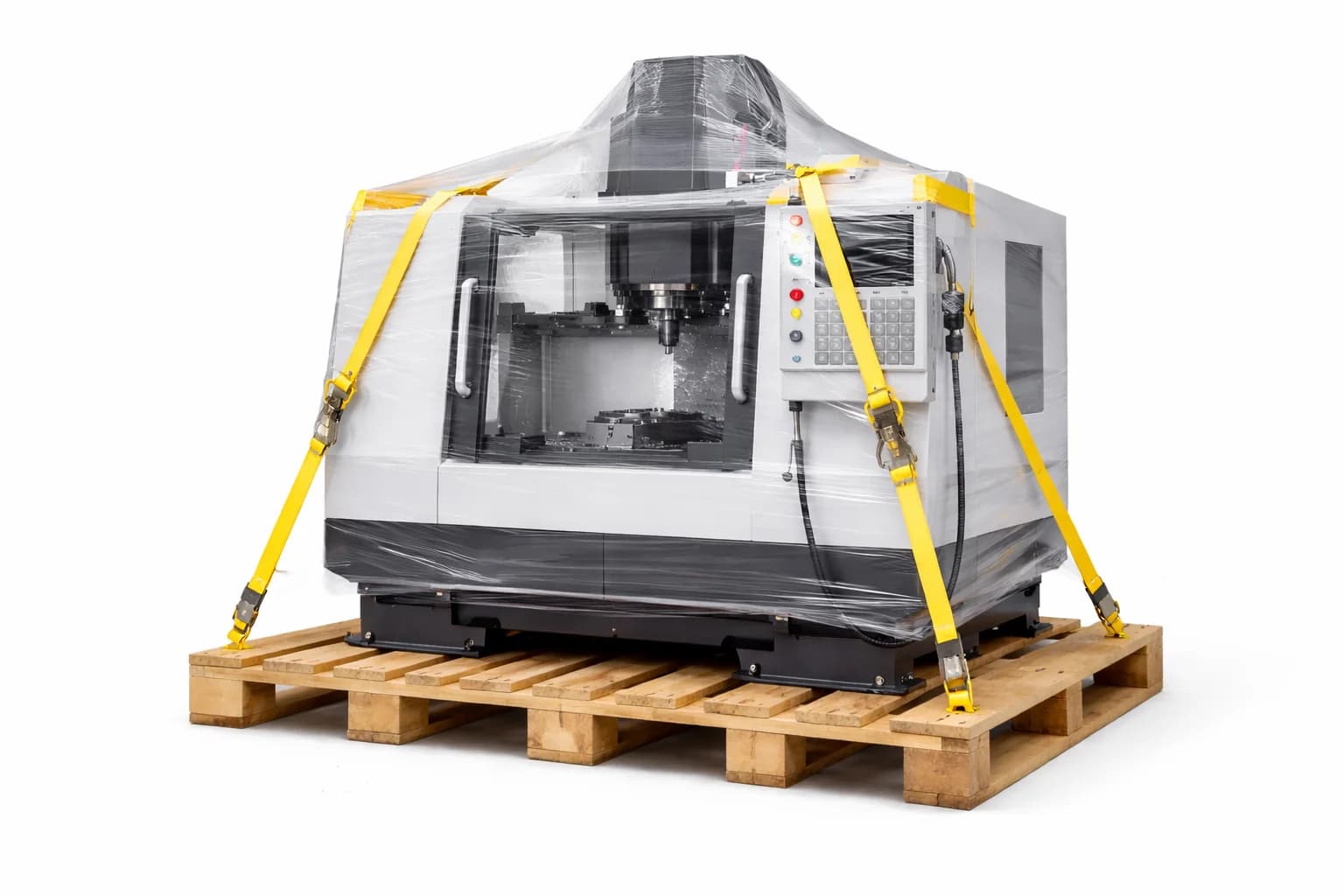
Shipping machinery is not like shipping cartons. Equipment is heavy, often irregularly shaped, and frequently has uneven weight distribution that stresses a pallet far beyond standard warehouse loads. One cracked stringer or unstable deck can lead to load shifts, crushed components, forklift incidents, or costly freight claims, especially when equipment is high-value and time-sensitive.
That’s why choosing the right wood pallets for machinery is a critical part of industrial logistics. The pallet isn’t just a platform, it’s a structural support system that must protect equipment through storage, handling, and transportation.
This guide explains how to choose safe pallet designs for machinery shipments, what features matter most, and how to reduce risk when moving high-value industrial equipment.
Why Machinery Requires Specialized Wood Pallets
Machinery shipments create unique challenges compared to general freight:
- High weight loads concentrated in small areas
- Point loads from equipment feet, skids, or frame rails
- High center of gravity, increasing tipping risk
- Sensitive components (motors, controls, sensors, shafts)
- Repeated handling across dock transfers and carriers
- Long-haul vibration and impacts during transport
For equipment like pumps, compressors, motors, CNC components, power units, generators, gearboxes, and assemblies, standard pallets can become a failure point. Machinery often requires wood pallets designed for strength, stability, and controlled handling.
1. Start With the Load: Dimensions, Weight, and Support Points
Before selecting wood pallets for machinery, define the equipment load accurately. The goal is to match pallet design to real forces, not just approximate weight.
Key questions to answer:
- What is the total weight of the machinery unit (including packaging/crate)?
- What is the footprint (length x width) of the base?
- Where are the support points (feet, rails, skid beams)?
- Is the weight evenly distributed, or heavily concentrated on one side?
- Will the equipment be transported loose, crated, or strapped?
Machinery often has a smaller contact area than the pallet surface. That creates stress concentrations that can break deck boards or stringers unless the pallet is engineered for point loads.
2. Key Safety Requirements for Wood Pallets Used in Machinery Shipping
High Load Capacity
Machinery pallets must support static and dynamic stress:
- Static load: weight while sitting on a floor or staging area
- Dynamic load: weight while being lifted, moved, or loaded
Because forklifts introduce leverage and shock, dynamic forces can exceed the “resting weight” of the machine. That’s why pallets built for machinery typically need reinforced stringers/blocks and tight deck design.
Low Deflection (Minimize Flex Under Load)
Flex is one of the biggest causes of load instability and equipment strain. Excess deflection can:
- shift strapping tension
- crack boards during lifting
- cause machinery to lean or twist
- stress sensitive mounting points
For heavy equipment, a pallet should be built to stay rigid, especially if it will be lifted multiple times through its journey.
Full Footprint Support
Wood pallets for machinery should minimize overhang and unsupported areas. Overhang increases risk during:
- forklift turns
- sudden stops in transit
- stacking or staging
For irregular loads, custom sizing or added support boards can reduce edge stress and prevent tipping.
Four-Way Entry Where Possible
Machinery loads may need repositioning during:
- warehouse staging
- cross-docking
- loading into trailers or containers
Four-way entry pallets reduce handling workarounds, which lowers the risk of:
- fork impacts
- uneven lifting
- rushed movements in tight spaces
Block pallets often provide true four-way entry, but reinforced stringer pallets can also work well depending on the environment.
3. Best Wood Pallet Designs for Machinery Shipments
Not all machinery shipments require the same design. The best pallet choice depends on weight, footprint, and how the load is handled.
Reinforced Stringer Pallets
Best for:
- heavy equipment with stable footprints
- domestic freight lanes
- operations that want a strong, cost-effective build
Design features include:
- thicker stringers
- tighter deck spacing
- extra bottom deck reinforcement
- increased fastener strength
These pallets handle heavy loads well when properly built and inspected.
Block Pallets for Stability and 4-Way Entry
Best for:
- high-value machinery with frequent touches
- warehouses using racking or automation
- operations needing faster handling flexibility
Benefits:
- more rigid structure
- better forklift access
- improved stability for uneven loads
Block pallets are often chosen for machinery because they reduce handling friction and tend to hold up well under repeated movement.
Custom Size Pallets for Irregular Equipment
Best for:
- equipment that doesn’t fit standard 48×40
- long frames or wide machinery bases
- loads with unusual support points
Custom wood pallets help prevent:
- overhang damage
- tipping risk
- wasted freight space
- stress cracks during lifting
For high-value equipment, custom sizing is often one of the highest-ROI upgrades.
Full-Deck Pallets for Sensitive Equipment
Best for:
- electronics-adjacent machinery
- equipment with small feet or concentrated point loads
- loads requiring better bottom support
Full-deck designs reduce pressure points by spreading load across more surface area.
4. Securing Machinery Safely on Wood Pallets
Even the best pallet fails if the load isn’t secured correctly.
Key securing practices include:
Strapping and Banding
- Use strapping rated for the load weight
- Apply bands to structural areas, not fragile components
- Protect edges with corner boards
Blocking and Bracing
- Use wood blocking to lock the machinery base in place
- Prevent lateral movement during transit
- Avoid placing pressure on hoses, wiring, or delicate parts
Stretch Wrap (When Appropriate)
Stretch wrap can stabilize packaged loads, but machinery usually requires strapping as the main securement method.
The objective is to make pallet + equipment behave as one stable unit, not two separate objects stacked together.
5. Freight Risk Reduction: Preventing Damage and Claims
High-value industrial equipment is costly to repair and difficult to replace quickly. A single damaged shipment can cause:
- delayed commissioning
- production downtime
- missed customer deadlines
- expensive returns and re-shipping
- reputational damage
Wood pallets for machinery should reduce risk by ensuring:
- pallet strength exceeds dynamic handling forces
- decks do not crack under point loads
- forklift entry is safe and consistent
- equipment remains stable under vibration and braking forces
For fragile components, additional protection such as crating, foam supports, and vibration-resistant packaging may be required, but the pallet still forms the base of the entire system.
6. Multi-Location and Industrial Networks: Standardize What Works
If your company ships machinery from multiple facilities, inconsistent pallet standards create risk.
A strong machinery pallet program standardizes:
- pallet sizes for key products
- minimum strength grade requirements
- inspection criteria
- supplier grading consistency
- delivery schedules and availability across regions
Standardization reduces:
- surprises during shipping
- load failures caused by mixed-quality pallets
- inconsistent freight performance between sites
When equipment value is high, consistency matters.
Machinery shipments demand more than a basic pallet. They require a stable, reinforced foundation engineered to handle high weight, uneven support points, and repeated handling. Choosing the right wood pallets for machinery improves:
- safety for workers and equipment
- shipment stability
- freight damage prevention
- operational reliability
- long-term cost control
When you treat pallet selection as an engineered support decision, not an afterthought, you reduce risk and protect the equipment that keeps your customers running.
Contact The Pallet Squad
Need durable wood pallets for machinery that support safe handling and reliable shipping for high-value industrial equipment? Contact The Pallet Squad to build a pallet program tailored to your equipment specs, freight lanes, and operational requirements.